

Key Takeaways
Defensive Driving
Defensive driving is a set of skills and habits that allow a driver to recognize and respond to hazards before they become emergencies. It goes beyond following traffic laws — it means actively anticipating what other drivers, pedestrians, and road conditions might do next. The goal is to reduce the chance of a crash by staying aware, maintaining safe spacing, and making deliberate decisions rather than reactive ones.
Defensive driving is formally defined by organizations like the National Safety Council as driving strategies that reduce risk by accounting for the actions of others and adverse environmental conditions, beyond what traffic law alone requires.
The Common Misunderstanding
Ask most drivers what defensive driving means, and you'll hear something like: "Drive slowly and let everyone go first." That's not wrong exactly — but it misses the point. Defensive driving isn't about timidity. Done well, it actually requires more attention and skill than ordinary driving, not less.
The term is sometimes used interchangeably with "cautious driving," but the two aren't the same thing. A cautious driver might slow down when they feel nervous. A defensive driver is constantly reading the environment — traffic patterns, road conditions, driver behavior around them — and making proactive adjustments before problems develop.
Understanding the distinction matters because it changes how you think about risk. Defensive driving is a mental framework as much as a set of physical techniques. It's also part of a broader conversation about safe driving in America that goes well beyond any single habit.
What Defensive Driving Actually Involves
At its core, defensive driving rests on a few key principles that can be learned and practiced by any driver:
- Scanning ahead: Rather than focusing only on the car directly in front of you, trained defensive drivers look 10–15 seconds down the road to spot developing hazards early — a merging truck, a light about to change, debris in the lane.
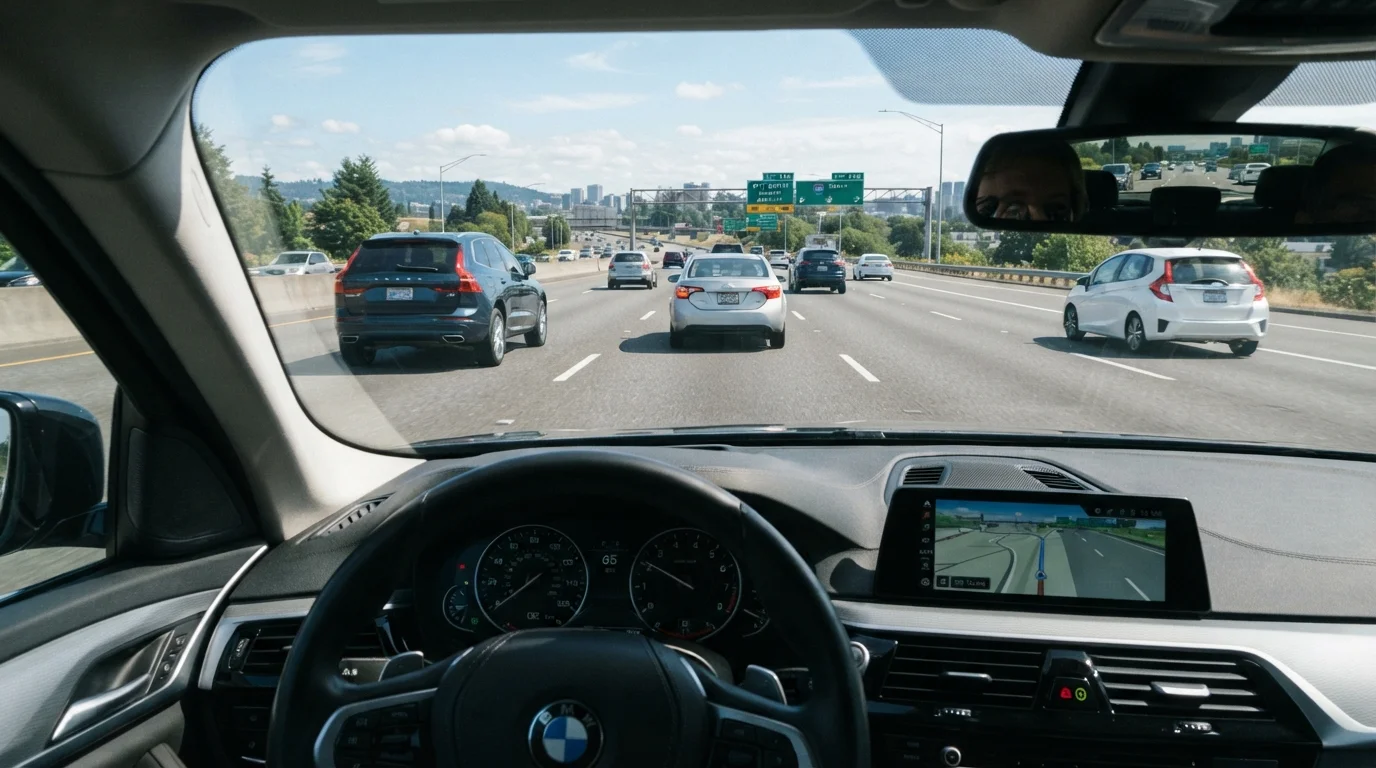
- Maintaining space: A safe following distance gives you time to react if the vehicle ahead stops suddenly. This is so important that it has its own dedicated research — see the science behind following distance for the numbers behind the two-second rule.
- Assuming others will make mistakes: Defensive drivers don't assume a vehicle will stop at a red light — they prepare for the possibility it won't. This isn't paranoia; it's practical hazard awareness.
- Staying predictable: Using signals, avoiding sudden movements, and maintaining consistent speeds help other drivers anticipate your actions, reducing the chance of confusion that leads to collisions.
- Eliminating distractions: Phones, passengers, food — anything that pulls attention away from the road undermines every other defensive skill.
94%
Of crashes linked to human choice or error
According to the National Highway Traffic Safety Administration (NHTSA), approximately 94% of serious crashes involve human error as a critical factor.
3 sec
Minimum recommended following distance on dry roads
Many driving safety organizations recommend at least a three-second following gap at highway speeds, increasing to six or more seconds in poor conditions.
What Defensive Driving Is Not
A few behaviors get mistakenly labeled as defensive driving when they can actually increase risk:
- Driving well below the speed limit: Significant speed differentials between vehicles create hazardous situations, especially on highways. The goal is appropriate speed for conditions — not the lowest possible speed.
- Constant braking: Pumping the brakes unnecessarily confuses drivers behind you and signals that you're not reading traffic flow effectively.
- Refusing to merge or change lanes: Hesitation and indecision can be as dangerous as aggressive maneuvering. Defensive driving involves making clear, confident decisions.
- Tailgating because "you're watching the other driver closely": Being alert does not mean following close. Tailgating dramatically reduces stopping distance regardless of how attentive the trailing driver is.
In short, defensive driving is active and intentional — not passive or fearful.
One Habit Worth Starting Today
Try narrating hazards out loud as you drive — say "car merging left" or "light turning yellow" as you spot them. This technique, used in professional driver training, helps build the habit of scanning ahead and processing what you see before you need to react. Even a week of deliberate practice can sharpen your road awareness noticeably.
Putting It Into Daily Practice
The good news is that defensive driving doesn't require a special course or a new vehicle — it requires consistent habits applied on every trip. Checking mirrors every 5–8 seconds, giving extra space in poor weather, and resisting the urge to react emotionally to other drivers' mistakes are all within reach of any driver willing to be deliberate.
Building these skills into your routine takes time and conscious effort, which is why resources like a practical framework for safer everyday driving can help you move from knowing the principles to actually applying them. Being aware of your vehicle's condition also plays a role — knowing what your car is telling you, including through dashboard warning lights, is part of staying prepared.
Defensive driving won't eliminate all risk. But it targets the kinds of preventable decisions that contribute to most crashes — and that's exactly where attention is best spent.