

Key Takeaways
Why Maintenance Matters from Day One
A new vehicle is one of the largest purchases most Americans make, yet many owners skip the habits that protect that investment. Routine maintenance isn't about being a car expert — it's about staying ahead of problems before they become expensive emergencies.
Neglected maintenance doesn't just shorten the life of a vehicle; it can create safety risks for everyone on the road. A tire that hasn't been rotated in years can wear unevenly, and brake fluid left unchecked can absorb moisture over time, reducing stopping power.
The good news: most foundational maintenance tasks are straightforward, and understanding them puts you firmly in control of your ownership experience. For a broader look at what owning a car actually involves, see our complete guide to car ownership costs, rights, and responsibilities.
Start with a Quick Walkaround
Once a month, spend five minutes walking around your vehicle before you drive. Check tire condition visually, look for fluid spots under the car, test your lights, and listen for anything unusual when you start the engine. This simple habit catches many problems early — before they escalate into larger repairs.
Essential Fluids: What They Do and When to Check Them
Your vehicle depends on several fluids to function safely. Here's what each one does and how often to check it:
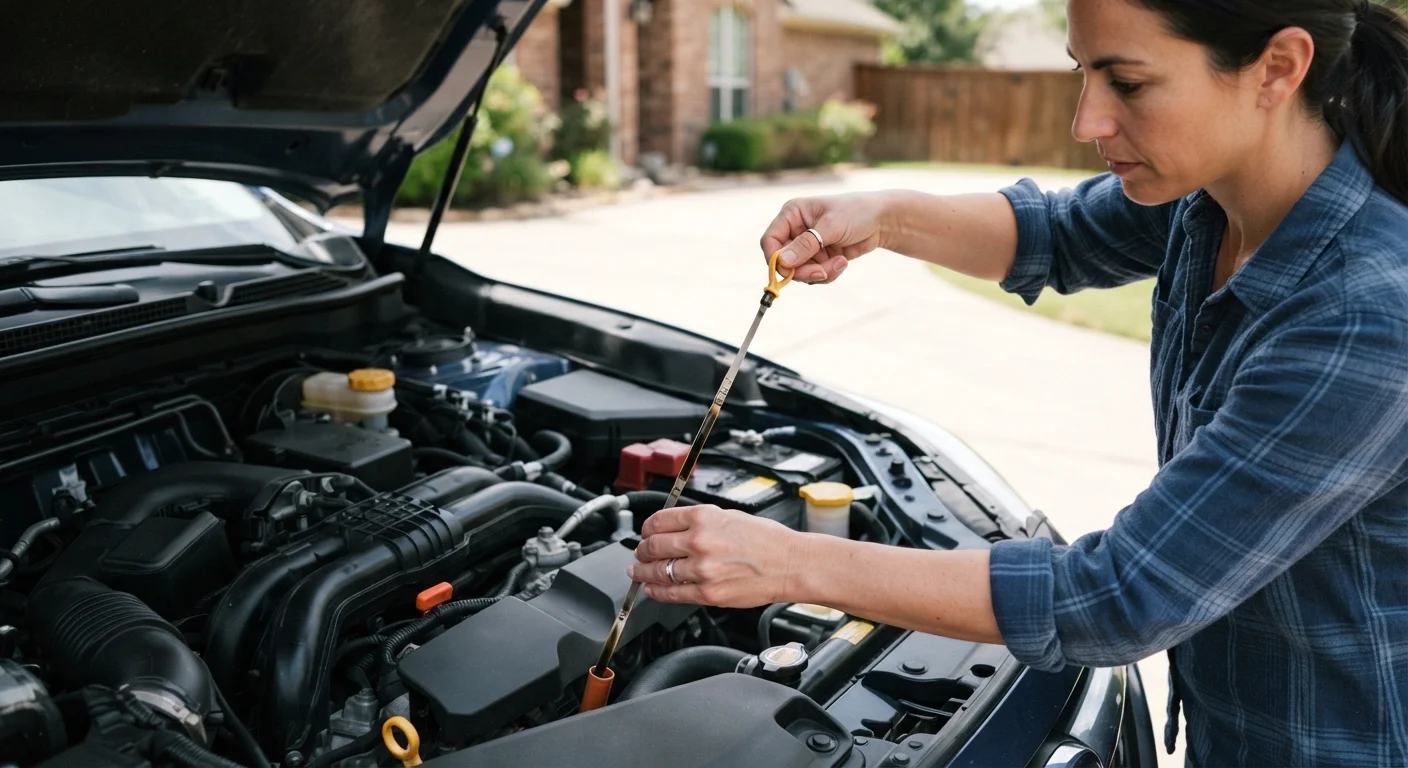
- Engine oil lubricates moving parts and reduces heat. Check the dipstick monthly with the engine cold, and follow your manual's interval for oil changes — commonly every 5,000 to 7,500 miles for conventional oil, or up to 10,000 miles for full synthetic, though this varies by vehicle.
- Coolant (antifreeze) regulates engine temperature and prevents freezing or overheating. Inspect the overflow reservoir every few months; never open the radiator cap on a hot engine.
- Brake fluid transfers your foot's pressure to the brakes. It's hygroscopic, meaning it absorbs moisture from the air over time, which can lower its boiling point. Most manufacturers recommend flushing it every two years.
- Transmission fluid keeps gear changes smooth. Some vehicles have a dipstick; others are sealed and require a shop visit to check.
- Power steering fluid and windshield washer fluid are simpler to check — locate the labeled reservoirs under the hood and top them up as needed.
1 in 3
Drivers with under-inflated tires
The U.S. Department of Transportation has estimated that roughly one-third of vehicles on the road have at least one significantly under-inflated tire.
$1,200+
Average cost of engine damage from low oil
Industry repair data consistently shows that running an engine low on oil is among the most expensive preventable failures owners face.
When any fluid appears dark, gritty, or has a burnt smell, that's a signal to have it evaluated promptly rather than just topping it up.
Filters, Tires, and Brakes: The Big Three
Beyond fluids, three maintenance areas have an outsized effect on performance and safety:
Filters
Your engine air filter prevents dust and debris from entering the engine. Most vehicles need it replaced every 15,000 to 30,000 miles — or sooner if you drive on dusty roads frequently. A clogged cabin air filter (which filters the air inside the car) reduces HVAC efficiency and can usually be swapped out by the owner without tools.
Tires
Tire pressure affects fuel efficiency, handling, and tread wear. Check all four tires (and the spare) monthly using an inexpensive gauge — the correct pressure is listed on a sticker inside the driver's door jamb, not on the tire's sidewall. Rotate tires every 5,000 to 7,500 miles to ensure even wear. Inspect tread depth regularly; a quick test is inserting a penny into a tread groove — if you can see all of Lincoln's head, the tread is low and replacement should be considered soon.
Brakes
Brake pads wear gradually and typically need replacement every 25,000 to 65,000 miles, depending on driving habits and vehicle type. Squealing or grinding noises, vibration when braking, or a longer stopping distance are signs the system needs professional inspection. Brake work affects your ability to stop safely, so this is one area where professional evaluation is always the right call.
Building good habits around these areas goes a long way. Our article on smart habits that extend the life of any vehicle covers daily and weekly behaviors that compound over time.
Reading Your Owner's Manual
The owner's manual is the most underused resource most car owners have. It contains the manufacturer's exact maintenance schedule — tailored to your specific engine, transmission, and climate conditions — and it takes precedence over general advice, including anything you read online.
Look for the maintenance schedule section, which typically lists services organized by mileage intervals (e.g., 5,000 / 15,000 / 30,000 miles). Each interval will specify which fluids to change, which parts to inspect, and which components to replace.
Don't rely on the oil-change sticker on your windshield — check your owner's manual for the interval that matches your actual driving conditions, whether that's mostly short city trips or long highway miles.
Manufacturers often distinguish between 'normal' and 'severe' driving conditions; short trips and stop-and-go traffic qualify as severe and typically require more frequent service.
Keep a simple notebook or phone note logging every service date, mileage, and what was done — it takes 30 seconds and can save you from duplicating work or missing critical intervals.
A service log removes guesswork, helps mechanics diagnose problems faster, and provides verifiable history that benefits resale value.
For a deeper walkthrough of how to interpret and apply these schedules, see understanding your car's scheduled maintenance intervals.
When to Call a Professional
Knowing your limits is as important as knowing what you can handle. Many checks — fluid levels, tire pressure, light bulb swaps — are safe and straightforward for most owners. But some tasks carry real risk if done incorrectly:
- Brake system repairs or fluid flushes
- Suspension and steering components
- Timing belt or timing chain replacement
- Electrical or sensor diagnostics
- Any work involving the fuel system
If a dashboard warning light stays on, strange smells (burning, fuel, or sulfur) appear, or you hear grinding, knocking, or hissing sounds, have the vehicle inspected by a qualified mechanic promptly. Don't ignore warning lights hoping they'll resolve on their own — the cost of a diagnostic check is far lower than the cost of a breakdown.
Maintaining detailed records of every service — whether you do it yourself or have it done at a shop — also pays off. A documented service history can support resale value and helps you track what's due next. For everything that comes with owning a car from insurance to legal obligations, explore our Car Ownership hub.
This article is for general informational purposes only. Always consult a qualified, licensed mechanic before performing repairs that could affect vehicle safety or your own well-being.