

Key Takeaways
Start here
What Is a Scheduled Maintenance Interval?
Next
How to Read Your Owner's Manual Schedule
Then
The Most Common Service Milestones Explained
Going deeper
Mileage vs. Time: Which Comes First?
Wrap up
Keeping Track of Where You Stand
What Is a Scheduled Maintenance Interval?
A scheduled maintenance interval is a manufacturer-defined point — measured in miles, months, or both — at which your vehicle needs specific service to keep running reliably. Think of it as a routine health check for your car, built around how components age under normal use.
These intervals aren't arbitrary. Engineers test each vehicle extensively and determine how long parts like engine oil, air filters, and brake fluid remain effective before they need attention. Following the schedule keeps wear-and-tear predictable and helps you avoid the kind of damage that comes from running components past their limits.
Maintenance interval
The mileage or time threshold set by the manufacturer at which a specific service should be performed on your vehicle.
Severe service conditions
Driving patterns — like frequent short trips, towing, or extreme temperatures — that cause components to wear faster and require more frequent maintenance.
Oil life monitor
An onboard system that tracks driving conditions and calculates when your engine oil needs to be changed, rather than relying solely on mileage.
Fluid degradation
The process by which automotive fluids — like brake fluid or coolant — lose their effectiveness over time due to heat, moisture, and chemical breakdown.
Minor vs. major service
Minor service covers basics like oil and filters; major service happens at longer intervals and includes deeper inspections of components like belts, plugs, and transmission fluid.
For a broader look at what responsible car ownership involves, the Car Ownership hub covers everything from insurance to day-to-day vehicle management.
How to Read Your Owner's Manual Schedule
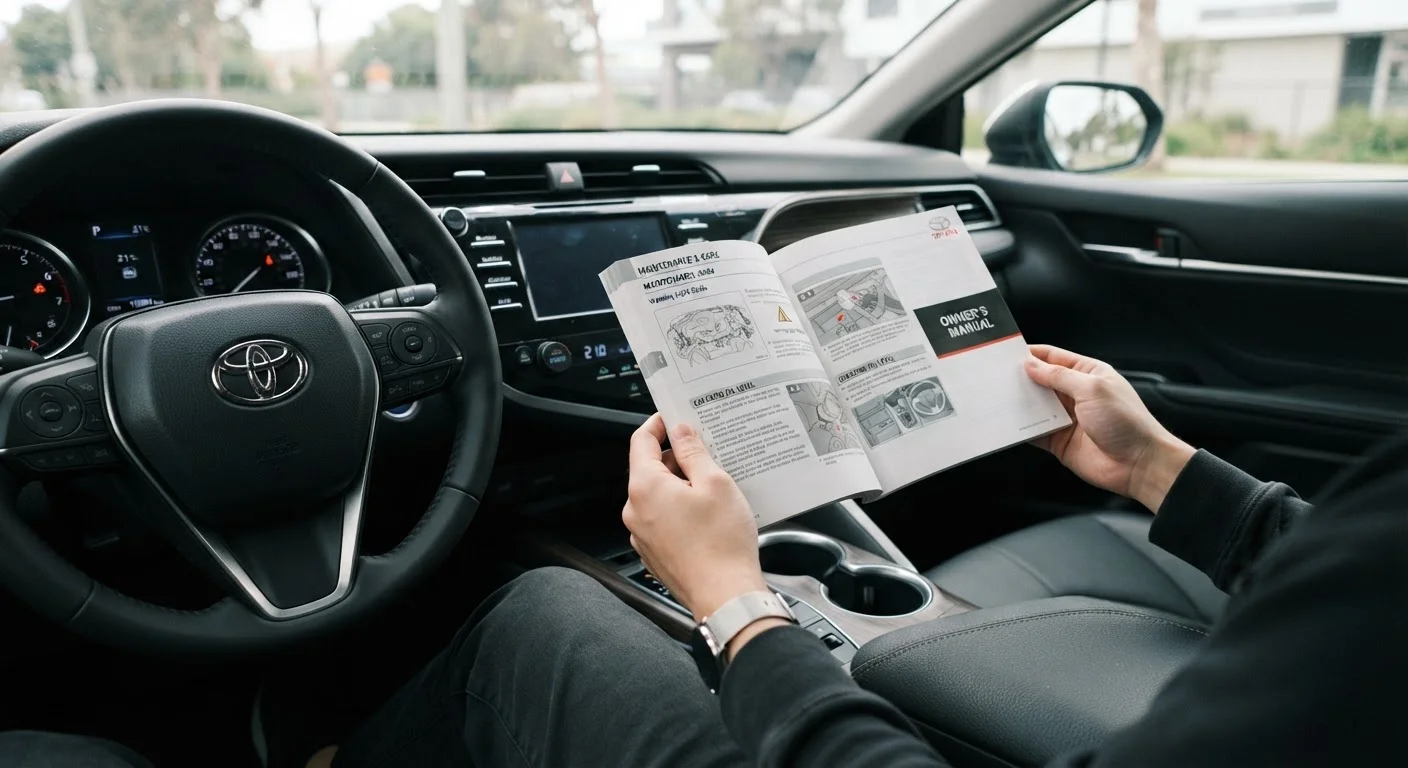
Your owner's manual is the most reliable source for your car's exact schedule — not the advice of a neighbor, not a generic internet rule. Open it to the maintenance section and you'll typically find a table or chart organized by mileage intervals (e.g., every 5,000, 15,000, or 30,000 miles) with a list of services required at each point.
Many manuals also divide schedules by driving conditions. Normal service covers highway commuters driving in moderate climates. Severe service applies if you frequently drive short trips under five miles, tow or haul heavy loads, operate in extreme heat or cold, or spend a lot of time idling in traffic. If your driving fits the severe category, your intervals will be shorter.
Save Your Manual Digitally
Take a photo of your maintenance schedule pages and store them in your phone's photo library or a cloud folder. This way, you always have access even if the physical manual gets lost or damaged. Some automakers also offer free apps that track service reminders specific to your vehicle.
If you've misplaced your manual, most manufacturers publish digital versions on their official websites. Search by your vehicle's year, make, and model — or use your VIN to locate the exact document.
The Most Common Service Milestones Explained
While every vehicle's schedule differs, several services appear across nearly all makes and models. Here's what each one addresses:
- Oil and filter change: Engine oil lubricates moving parts and removes heat. Over time it degrades and becomes less effective. For details on oil types and intervals, see Engine Oil Explained.
- Tire rotation: Moving tires between positions evens out wear and extends their usable life. This is usually due every 5,000–7,500 miles. Learn how rotation, balancing, and alignment differ in Tire Rotation, Balancing, and Alignment.
- Air filter replacement: A clogged engine air filter restricts airflow and can reduce performance and fuel efficiency.
- Brake inspection: Brake pads wear down gradually. Inspections catch low pad thickness before it becomes a metal-on-metal problem.
- Fluid checks and top-offs: Coolant, transmission fluid, brake fluid, and power steering fluid each have service lives. Low or degraded fluid in any system is a reliability risk.
- Spark plugs: These ignite the fuel-air mixture in the engine. Worn plugs cause misfires and poor fuel economy. Conventional plugs may need replacement around 30,000 miles; iridium plugs often last significantly longer.
For a practical reference covering what gets serviced and why it matters, see Routine Maintenance Every Car Owner Should Know About.
Mileage vs. Time: Which Comes First?
Most manufacturer schedules specify both a mileage threshold and a time threshold — for example, every 7,500 miles or 12 months, whichever comes first. The dual standard exists because components degrade even when a car isn't being driven heavily.
Rubber seals dry out. Brake fluid absorbs moisture from the air over time. Engine oil oxidizes regardless of miles traveled. If you drive very little — say, under 7,500 miles per year — the calendar still matters. A car that sits for a year without an oil change needs service even if the mileage trigger hasn't been reached.
Low Mileage Doesn't Mean Skip Service
Drivers who don't put many miles on their vehicles sometimes assume they can extend service intervals indefinitely. This is a common and costly mistake. Fluids, seals, and filters degrade with time even when the car sits idle. Always follow the time-based threshold if it arrives before the mileage one.
Conversely, high-mileage drivers will hit the mileage threshold well before the time limit. In that case, use mileage as the guide. The rule is simple: whichever marker arrives first is the one to act on.
Keeping Track of Where You Stand
Knowing your schedule is only useful if you actually track it. A simple maintenance log — whether a notebook in the glove box or a notes app on your phone — lets you record what was done, when, and at what mileage. Over time, this record becomes invaluable for spotting patterns, proving service history to a buyer, and staying on top of what's coming next.
Many newer vehicles also have an onboard oil life monitor or maintenance reminder system. These systems track driving conditions in real time and alert you when service is due — a useful tool, though it typically covers only oil changes and doesn't replace a full manual review.
For guidance on what to include in a maintenance log and how to use it effectively, see What to Keep in Your Car's Maintenance Log. And if you've ever wondered what happens when services get pushed off, Why Skipping Routine Maintenance Costs More Than It Saves walks through the real downstream costs.
Staying on schedule doesn't require mechanical expertise. It just requires knowing where to look and making a habit of checking in before problems announce themselves.