

Key Takeaways
Why Bother Keeping a Maintenance Log
Most drivers rely on memory or a pile of receipts stuffed in the glove box to track their car's service history. Neither works well. Memory fades, receipts blur, and without a clear record, it's easy to either repeat a service too soon or skip one too long. A maintenance log solves this — not because it's high-tech, but because it's consistent.
The log functions as a health record for your vehicle. Just as a doctor looks at a patient's history before making a diagnosis, a mechanic who can see your car's full service timeline is better equipped to spot trouble. And if you're doing any maintenance yourself, a log keeps you honest about what's been done and what's coming due. See our guide to routine maintenance for a reference on what typically needs tracking.
Paper or Digital — Both Count
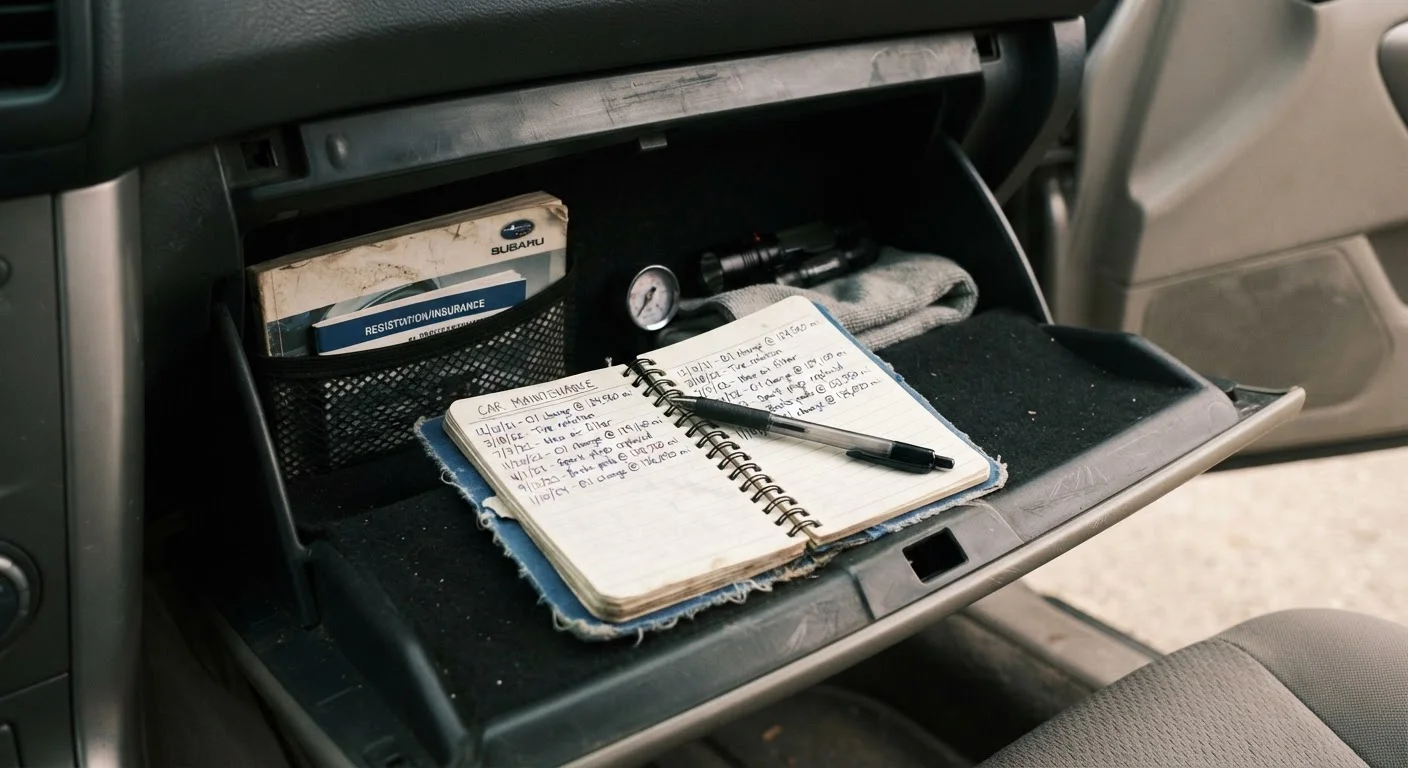
There's no single correct format for a maintenance log. A handwritten notebook kept in the glove box works just as well as a spreadsheet or a phone app, as long as entries are made consistently. What matters is that the information is accurate, complete, and easy to find when you need it.
What Every Entry Should Include
A good log entry doesn't need to be long — it needs to be complete. At minimum, record these four things for every service:
- Date of service — even approximate is better than nothing
- Odometer reading — mileage is often more useful than date for scheduling future services
- What was done — be specific (e.g., "oil change, 5W-30 synthetic" rather than just "oil change")
- Who did it — your name for DIY work, or the shop name for professional service
Adding cost is optional but useful, especially if you're tracking long-term ownership expenses. If parts were replaced, note the brand or part number when you have it — this can prevent ordering the wrong size next time. For deeper context on what each service involves, understanding your car's scheduled maintenance intervals is a practical companion read.
How to Spot Patterns That Warn You Early
A log's real power shows up over time. If you notice you're adding a quart of oil every 1,500 miles, that's worth mentioning to a mechanic — it may signal a leak or worn piston rings. If brake fluid keeps running low, that's not normal. These patterns are invisible if you're working from scattered receipts or memory alone.
Review your log every few months, even briefly. Look for any service that's coming up based on mileage — most manufacturer schedules are mileage-based rather than time-based, which is why recording odometer readings matters so much. Drivers who stick with a vehicle long-term find this especially valuable; for more on that approach, see our piece on high-mileage ownership.
Formats That Actually Work — and One That Doesn't
The format that works is the one you'll actually use. Options include:
- Small spiral notebook — kept in the glove box, low-tech, always there
- Spreadsheet — easy to sort and search, good for detail-oriented owners
- Dedicated app — some apps send service reminders and store receipts digitally
The format that doesn't work is a mix of all three with no consistent home. Pick one system and stick with it. If you switch formats, copy the old data over before you lose it. Consistency beats sophistication every time. Pairing a log with the smart ownership habits covered elsewhere on this site gives you a complete, low-effort maintenance system.
When it's time to sell or trade in your vehicle, a well-kept log signals to buyers that the car was taken care of — and that confidence often translates to a stronger offer. It's one of the few free things you can do that genuinely protects the value of your investment.