

Key Takeaways
Our Verdict
Urban and rural travel environments demand different mindsets and preparations rather than ranking one as safer than the other. City travelers should focus on situational awareness, secure storage of valuables, and transportation literacy. Wilderness and rural travelers need to prioritize emergency communication, navigation tools, and physical self-sufficiency. Matching your preparation to your actual environment is the key principle.
| Best for | Recommended |
|---|---|
| Travelers seeking structured access to services and infrastructure | Urban travel with city-specific safety habits |
| Travelers who prefer solitude, nature, and off-grid experiences | Rural or wilderness travel with thorough self-sufficiency planning |
| First-time or less experienced travelers building confidence | Urban environments with documented safety resources nearby |
| Experienced outdoor enthusiasts comfortable with navigation and first aid | Rural or backcountry travel with proper gear and communication devices |
Why Environment Shapes Your Risk Profile
Travel safety is not a single, universal checklist. The hazards you face in a dense city differ fundamentally from those you encounter on a remote trail or rural highway — and conflating the two leads to either under-preparation or misplaced anxiety. Understanding which environment you're entering lets you direct your energy toward the risks that actually apply to you.
For a practical foundation on core safety habits that apply across all travel contexts, see our introduction to travel safety before diving into environment-specific planning. And before any trip, consult official government travel advisories to get a current, verified picture of conditions at your destination — reading a destination's safety landscape is a skill worth developing early.
Urban Travel: The Risks of Density and Distraction
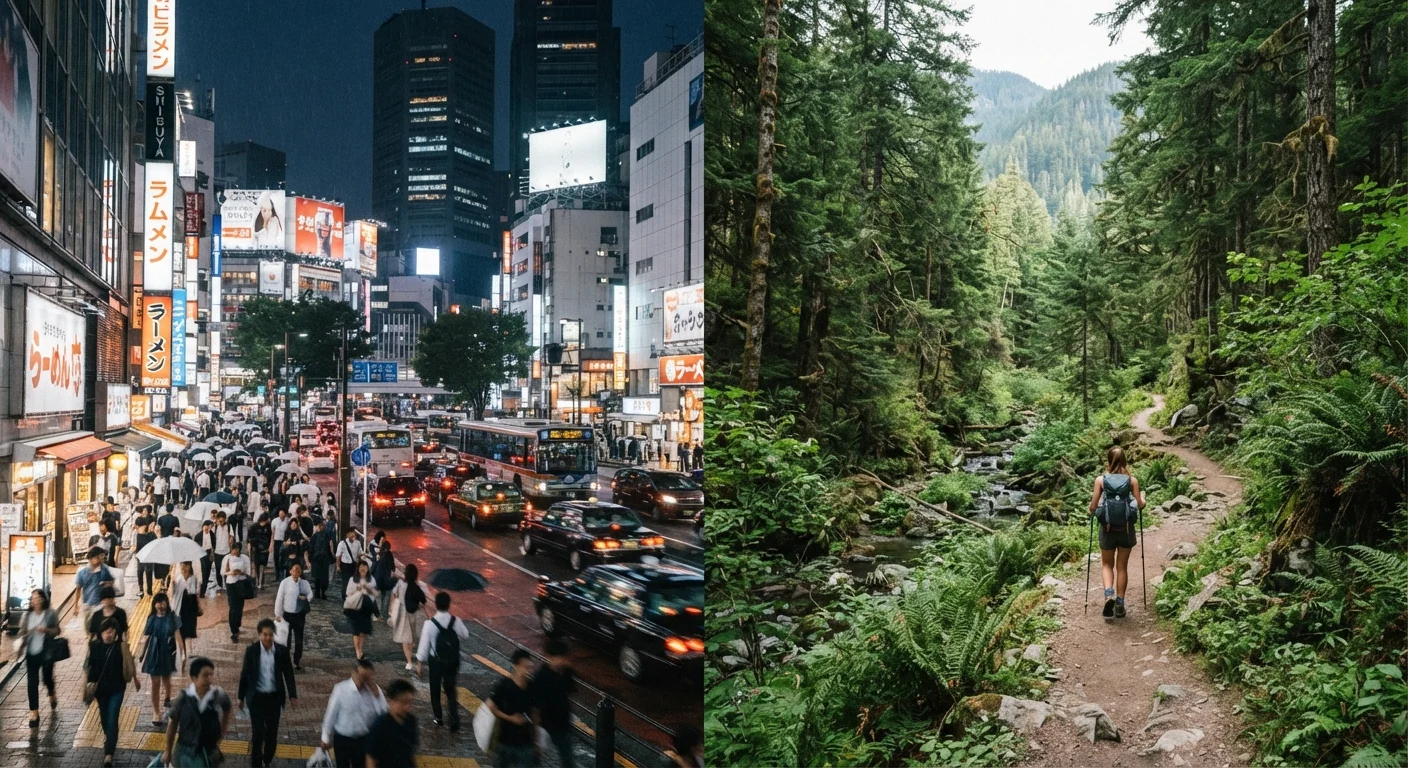
Cities concentrate people, opportunity, and — inevitably — crime. The most common urban travel hazards are opportunistic rather than violent: pickpocketing in crowded transit hubs, distraction scams, and bag snatching in tourist-heavy areas. These risks scale with crowd density and your visibility as a visitor.
Situational awareness is your primary tool. This means keeping bags close and in front of your body on metro systems, avoiding displaying expensive electronics unnecessarily, and being cautious of strangers who approach with unsolicited urgency. Unfamiliar street navigation also increases vulnerability — looking lost signals opportunity to those with bad intent.
Urban environments also carry traffic and pedestrian safety concerns that can catch visitors off guard. Traffic patterns, road crossing norms, and driving behavior vary significantly between cities and countries. Understanding how to evaluate local transport options is especially relevant here, since taxis, rideshares, and buses each carry distinct risk profiles depending on the city.
| Urban Travel | Rural / Wilderness Travel | |
|---|---|---|
| Primary hazard type | Theft, scams, traffic | Isolation, weather, medical emergencies |
| Emergency response access | Generally rapid (minutes) | Often slow or very limited (hours+) |
| Communication coverage | Usually reliable cell service | Patchy or no cell coverage |
| Key preparation focus | Situational awareness, document security | Navigation, first aid, emergency signaling |
| Physical self-sufficiency required | Low to moderate | High |
| Weather as a safety factor | Moderate (urban heat, flooding) | High — can change rapidly and severely |
Rural and Wilderness Travel: The Risks of Isolation
Rural and backcountry environments replace the social hazards of city travel with physical and logistical ones. The central challenge is isolation: when something goes wrong — a twisted ankle, a sudden storm, a wrong turn — help may be hours away rather than minutes.
Medical emergencies represent the most serious risk. Without nearby hospitals or cell service, a condition that would be minor in a city can become life-threatening in the backcountry. Carrying a well-stocked first aid kit and knowing how to use it is a baseline expectation, not an optional extra. A personal locator beacon (PLB) or satellite communicator is worth considering for any trip into areas without reliable cell coverage.
Weather exposure is the other major factor. Conditions in wilderness areas can shift rapidly, and hypothermia, heat exhaustion, and lightning strikes injure and kill travelers who were unprepared for the change. Checking forecasts from authoritative sources before departure — and building flexibility into your itinerary — reduces this risk substantially.
File a Trip Plan Before Going Remote
Before any backcountry or rural trip, leave a detailed itinerary with a trusted contact at home — including your route, campsites, and expected return date. Agree on a specific time after which they should contact local search-and-rescue if they haven't heard from you. This simple step costs nothing and can be life-saving if an emergency prevents you from calling for help yourself.
Preparation Strategies Side by Side
Once you know which environment you're entering, preparation becomes more focused and efficient. Urban travelers benefit from researching neighborhood safety, learning a few local phrases, keeping digital and physical copies of key documents, and identifying the nearest embassy or consulate. Solo versus group travel dynamics also matter more in cities, where a second person provides both deterrence and practical backup.
Rural and wilderness travelers should orient their preparation around self-sufficiency: navigation tools (map and compass as backup to GPS), sufficient water and food, weather-appropriate layers, and a filed trip plan with someone at home who knows when to alert authorities if they don't hear from you. Thorough trip planning is the single highest-leverage safety investment for backcountry travel.
In both settings, travel insurance that covers emergency evacuation is a prudent consideration — though travelers should review policy terms carefully and consult the insurer directly about what specific scenarios are covered.