

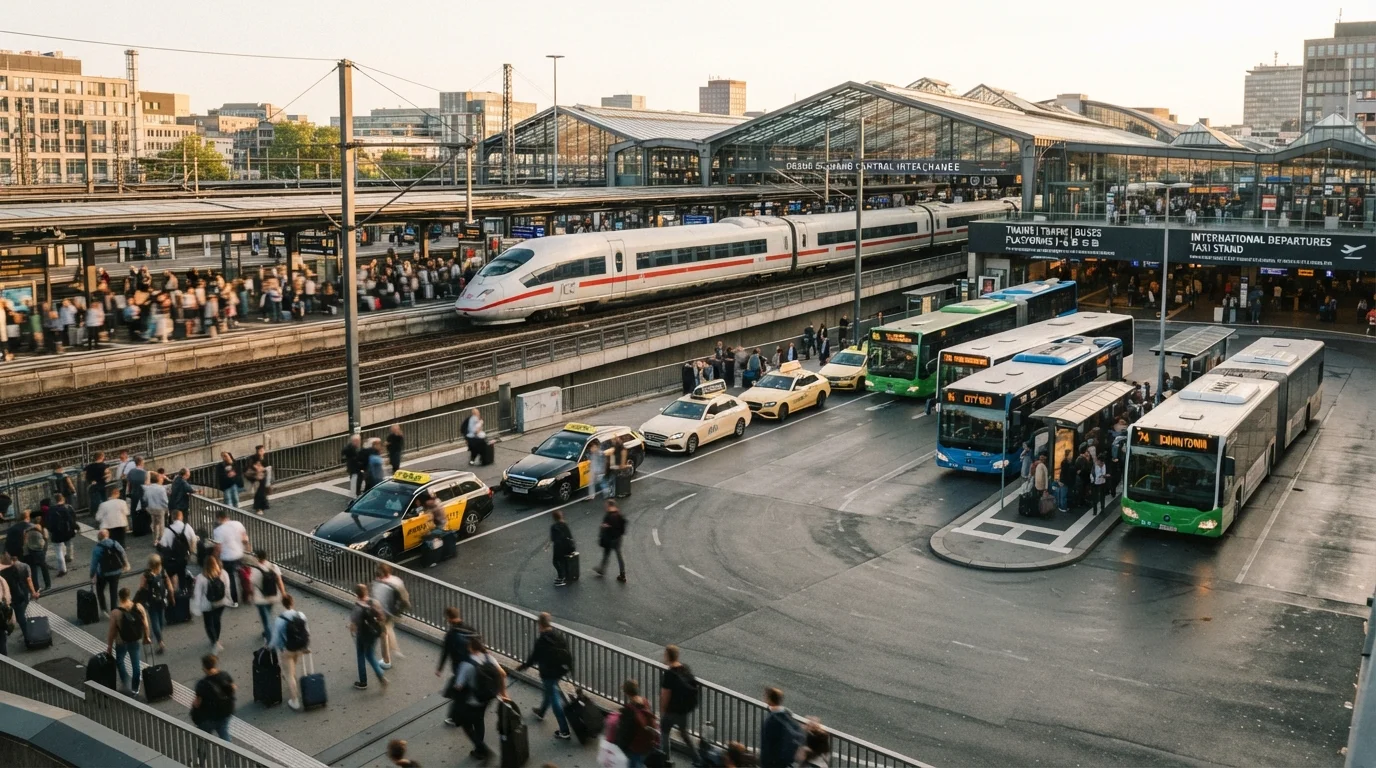
Why Transport Mode Matters for Safety Abroad
Choosing how to get from point A to point B in an unfamiliar country involves more than convenience or cost. Each transport mode carries its own risk profile, shaped by local infrastructure quality, regulation, driver training standards, and cultural road norms. Building awareness of these differences — rather than anxiety about them — is what separates confident travelers from stressed ones.
This reference guide covers the four most common surface transport types international travelers encounter: trains, taxis, buses, and rideshare apps. For each, we outline what to look for, what questions to ask, and what habits reduce your exposure to common problems. For a broader foundation, see our introductory travel safety guide.
Trains: Generally Reliable, but Context Counts
Rail travel is among the safer surface transport options in many regions, particularly where national networks are well-funded and regulated. High-speed and intercity trains in Western Europe, Japan, and parts of East Asia tend to maintain strong safety and punctuality records. However, rail infrastructure quality varies enormously — older regional networks in some countries may have less rigorous maintenance schedules.
Key considerations for train travel
- Official vs. unofficial ticketing: Purchase tickets through official station windows or verified apps to avoid counterfeit tickets and platform confusion.
- Secure your belongings: Overhead racks and seat pockets are common targets for opportunistic theft, particularly on overnight sleeper routes.
- Verify the platform and train number: In busy multilingual stations, boards may update rapidly — double-check before boarding.
- Overnight sleeper safety: Lock your compartment from the inside if possible and keep valuables close to your body while sleeping.
Licensed taxi
A for-hire vehicle officially registered and permitted to operate by a local transport authority. Licensed taxis are subject to safety inspections, fare regulations, and driver background requirements, though standards vary by country.
Rideshare platform
An app-based service that connects passengers with drivers who use their own vehicles. These platforms typically log trip data, verify driver identity, and offer digital payment — providing a layer of accountability not always present in informal taxi services.
Sleeper coach / sleeper train
Long-distance overnight transport with reclining seats or berths for sleeping. These routes can present heightened theft risk due to reduced passenger alertness and limited staff supervision overnight.
Meter fare
A taxi fare calculated automatically by an in-vehicle meter based on distance and time. When a meter is present, insisting it be switched on protects the passenger from arbitrary overcharging.
Intercity bus
A coach service connecting towns or cities, distinct from urban public transit. Safety and maintenance standards for intercity buses vary considerably across different countries and operators.
Travel advisory
An official government warning or notice about conditions in a destination, including safety risks, political instability, health concerns, and transport infrastructure issues. U.S. travelers can consult advisories published by the U.S. Department of State.
Taxis: Meter, License, and Route Awareness
Licensed taxis remain the default short-trip option in many cities without robust rideshare coverage. The core safety factors are consistent globally: confirm the driver is licensed, ensure the meter is running (or agree on a fare before departure), and have a general sense of your route.
Practical habits for taxi use abroad
- Use official taxi ranks: Designated stands at airports, hotels, and train stations are typically regulated and subject to more oversight than street hails.
- Note the license plate and driver ID: Many cabs display a driver identification card. A quick photo provides a reference if a dispute arises.
- Share your route: Pulling up your destination on a map and showing it — rather than only speaking the name — reduces misunderstanding, especially across language barriers.
- Have local currency ready: Many taxis do not accept cards, and a cash shortage can create awkward or pressured situations.
Note that the line between formal taxis and informal car services blurs considerably in some regions. In those contexts, hotel concierge referrals or locally advised operators are often a safer starting point.
Buses and Rideshares: Accountability and Verification
Public buses are often the most affordable option and vary widely — from modern, GPS-tracked urban transit systems to long-haul intercity coaches with inconsistent maintenance. Intercity buses in some regions are involved in a disproportionate number of road fatalities, often tied to overloaded vehicles, mountain routes, or fatigued drivers on overnight schedules. Checking operator reviews and avoiding the cheapest no-name options on high-risk mountain or overnight routes is a reasonable precaution.
Rideshare platforms (app-based services common across much of the world) offer a key safety advantage: digital accountability. Most platforms log your route, link the driver to a verified identity, and allow you to share your trip in real time with a contact. Standard habits apply regardless of platform:
- Confirm the driver's name, photo, and plate number before entering the vehicle.
- Sit in the back seat.
- Use the in-app payment feature to avoid cash disputes.
- Share your live trip status with someone who knows your itinerary.
Keep in mind that rideshare availability is uneven globally, and some countries have restricted or banned certain platforms. Research availability before you rely on it.
For context on how road risks differ when you're behind the wheel yourself, our guide to driving safety in the U.S. offers useful comparison. Environment also plays a role — the urban vs. rural travel safety breakdown covers how transport risks shift depending on where you're traveling.
This article is for general informational purposes only. Transportation conditions, regulations, and safety records vary by country and can change. Always verify current conditions through official government travel advisories and local sources before your trip.