

Key Takeaways
Secured vs. Unsecured Debt
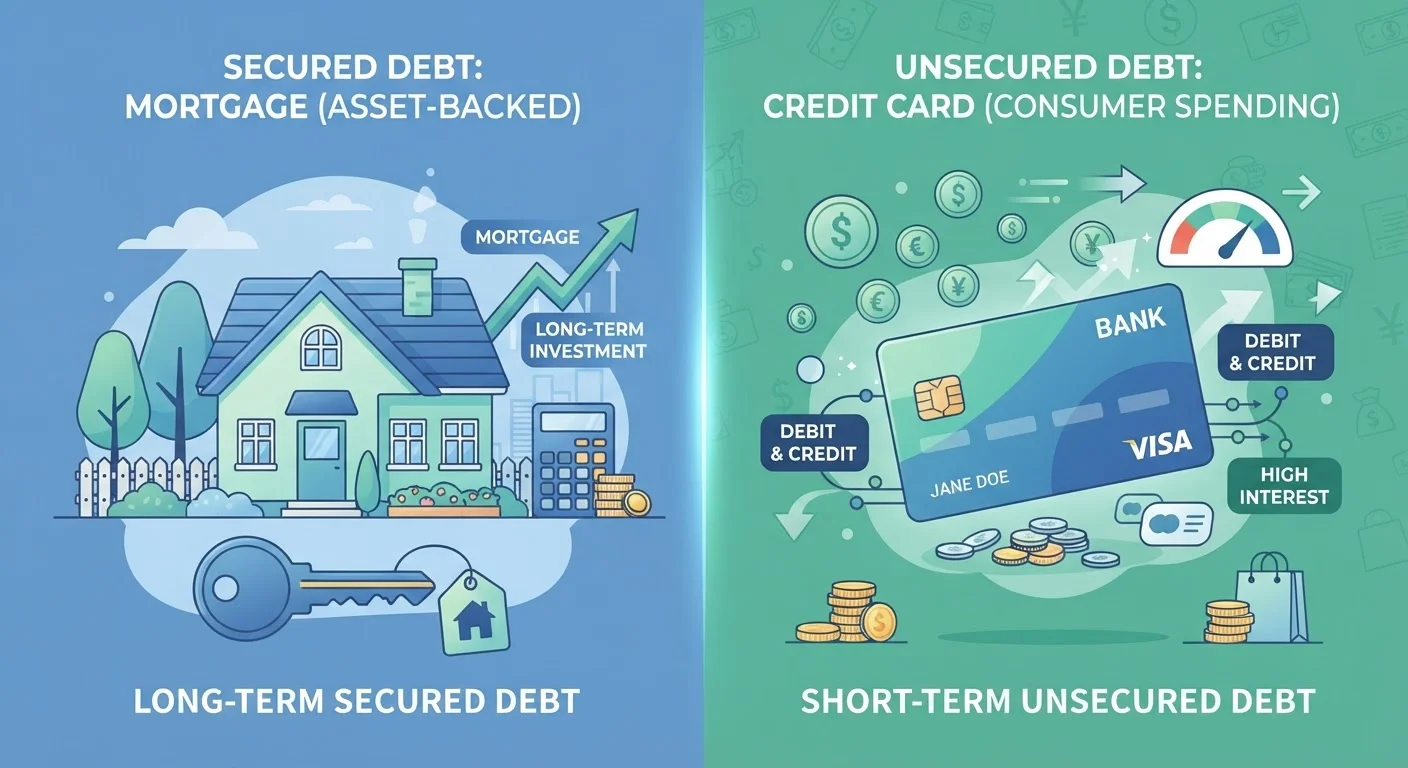
Secured debt is tied to a physical asset — like a home or car — that a lender can take back if you stop paying. Unsecured debt has no such collateral attached; the lender is relying on your promise to repay. The distinction affects your interest rate, your risk of losing property, and which debts deserve your attention first.
Legally, secured creditors hold a 'lien' on the collateral, giving them priority over unsecured creditors in bankruptcy proceedings.
The Core Distinction — and Why It Matters
When lenders talk about debt, one of the first things they look at is whether the loan is secured or unsecured. The difference is simple in principle but carries serious consequences in practice.
Secured debt is backed by collateral — an asset you own that the lender can claim if you default. Common examples include mortgages (collateral: your home) and auto loans (collateral: your vehicle). Because the lender has that safety net, they typically charge lower interest rates.
Unsecured debt has no collateral. The lender is extending credit based on your creditworthiness alone. Credit cards, personal loans, and most medical bills fall into this category. Without a backstop, lenders charge higher rates to offset their risk.
For a deeper look at how terms like APR, principal, and grace period apply to both types, see Financial Terms Every Debt-Carrier Should Know.
Not All Unsecured Debt Behaves the Same
Federal student loans, for example, are unsecured but carry special protections and repayment options not available on credit cards or personal loans. Similarly, tax debts owed to the IRS have unique enforcement powers. Knowing which category a debt falls into is just the starting point — the specific rules of each loan also matter. Check with a qualified professional if you're unsure how a particular debt is treated.
What's at Stake When You Miss Payments
The secured/unsecured split really shows its weight when payments get missed.
With secured debt, the consequences are swift and concrete. Miss enough mortgage payments and the lender can foreclose on your home. Stop paying your auto loan and the lender can repossess your car — sometimes with very little warning. These aren't abstract credit-score problems; they're losses of essential property.
With unsecured debt, the lender's tools are more indirect. They can report your delinquency to credit bureaus (damaging your credit score), sell your account to a collection agency, or eventually sue you in court. A court judgment can lead to wage garnishment in many states. You won't lose a physical asset immediately, but the financial damage compounds quickly — especially given how high interest rates on unsecured debt can be. See how debt compounds quietly to understand the real cost over time.
~$103K
Average American household debt load
According to Federal Reserve data, total household debt in the U.S. includes mortgages, auto loans, credit cards, and student loans — a mix of both secured and unsecured obligations.
20%+
Typical credit card APR
The Federal Reserve has reported average credit card interest rates regularly exceeding 20% annually in recent years, highlighting the cost of carrying unsecured revolving balances.
6–7%
Typical 30-year fixed mortgage rate range
Mortgage rates, representing secured debt, have historically remained well below credit card rates because lenders hold the home as collateral, reducing their risk.
How This Shapes Your Payoff Strategy
Understanding the secured/unsecured divide gives you a framework for sequencing your debt payoff — not just guessing which bill to attack.
Step 1: Protect your secured assets first. Always make at least the minimum required payment on your mortgage and auto loan. Losing your home or car creates problems that no debt payoff strategy can easily fix.
Step 2: Attack high-rate unsecured debt aggressively. Once secured debts are current, redirect extra dollars toward unsecured balances — especially credit cards with high APRs. This is where interest charges do the most quiet damage to your finances.
Step 3: Choose a structured method. The avalanche method (targeting highest-interest debt first) generally costs less overall. The snowball method (targeting smallest balance first) can provide quicker motivational wins. Avalanche vs. Snowball: Choosing the Right Method to find which fits your situation.
If you're also trying to build savings while paying down debt, the calculus gets trickier. Saving and Paying Off Debt at the Same Time walks through how to think about both goals at once.
List Your Debts by Type Before You Plan
Before deciding which debt to tackle first, write out every balance, its type (secured or unsecured), its interest rate, and its minimum payment. This simple inventory makes it much easier to see which obligations put your property at risk and which ones are costing you the most in interest — giving you a clear starting point for your strategy. Watch out for common misconceptions too: Debt Myths That Keep People From Making Progress can derail an otherwise solid plan.
This article provides general financial education and is not personalized financial or legal advice. Consult a licensed financial professional for guidance specific to your situation.