

Key Takeaways
The True Cost of Debt
When you borrow money and carry a balance over time, you pay back more than you originally borrowed. That extra amount — interest — is calculated as a percentage of what you owe and adds up faster than most people expect, especially when it compounds.
Compound interest means interest is charged not just on your original balance but on any previously accumulated interest. On revolving debt like credit cards, this cycle repeats monthly and can dramatically inflate the total amount owed.
How Interest Quietly Inflates What You Owe
When you swipe a credit card and don't pay the balance in full, you don't just owe what you spent. You owe that amount plus interest — calculated as a percentage of your remaining balance every billing cycle. The average credit card interest rate in the U.S. has historically exceeded 20% annually, meaning carrying a balance is genuinely expensive.
The math works against you in a specific way: interest compounds. Each month, the interest charge is applied not just to your original purchase amount, but to whatever your current balance is — including any interest that was added in previous months. To understand the broader mechanics behind this, it helps to review how compound interest works, since the same engine that builds wealth in savings accounts quietly drains it when you carry debt.
~$6,000
Average U.S. credit card balance per cardholder
According to Federal Reserve and industry data, the average American carrying a credit card balance owes roughly this amount — enough for interest charges to add up to thousands over time.
20%+
Average credit card interest rate in the U.S.
Federal Reserve data has shown average credit card APRs consistently above 20% in recent years, making revolving credit card debt among the most expensive consumer debt available.
47%
Americans who carry a credit card balance monthly
Survey data from the American Bankers Association and similar sources consistently shows that nearly half of credit cardholders carry a balance from month to month rather than paying in full.
The Minimum Payment Trap
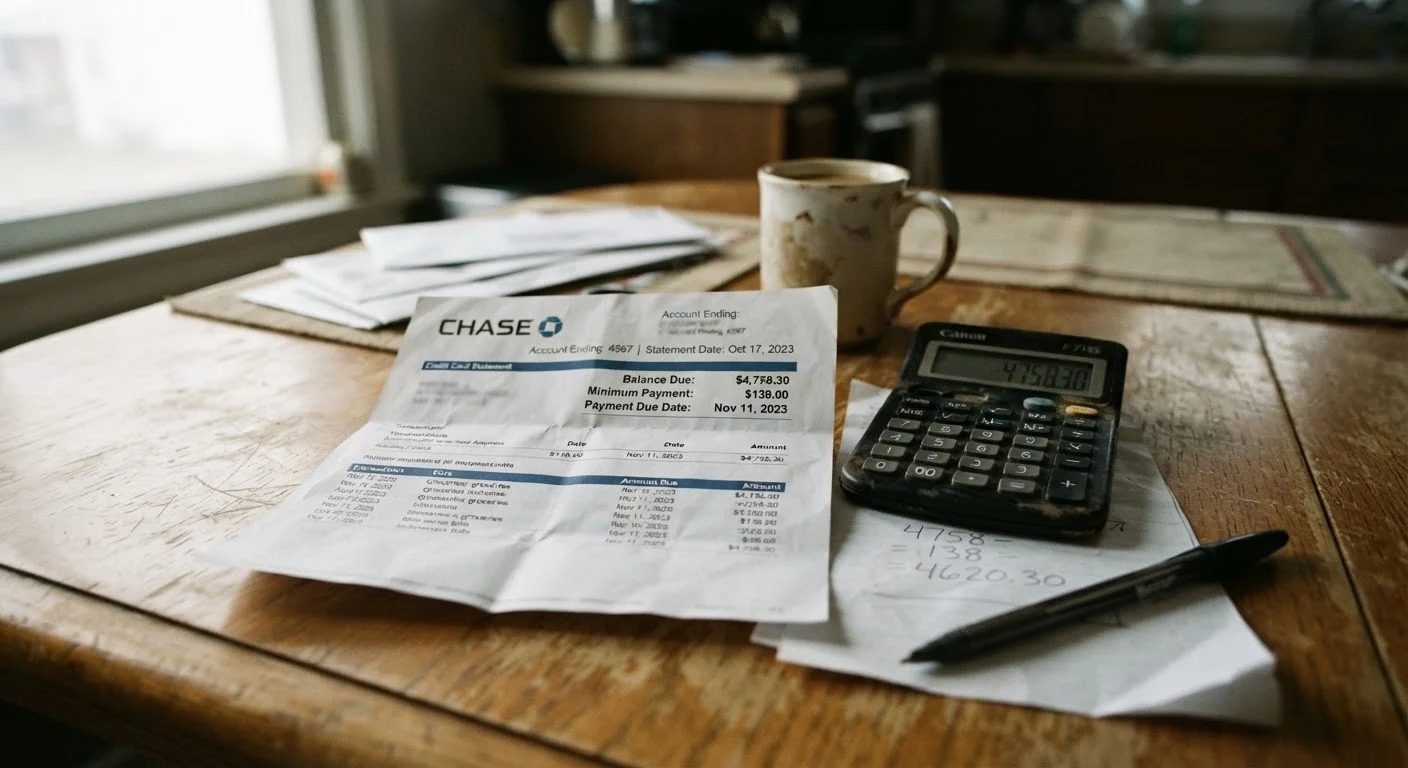
Credit card issuers set minimum payments low by design. A typical minimum might be just 1–2% of your balance or a flat amount like $25 — whichever is greater. On a $3,000 balance at 22% APR, making only the minimum payment could take over a decade to pay off and cost more than $3,000 in interest alone — meaning you'd effectively pay for the original purchases twice.
This isn't an edge case. Millions of Americans carry revolving balances month to month without a clear sense of how much those balances are actually growing. The minimum payment feels manageable, which is exactly what makes it so costly over time. Reducing or eliminating debt requires understanding your actual payoff timeline, not just whether you can afford this month's bill.
Use the Minimum Payment Warning on Your Statement
Federal law requires credit card statements to show how long it will take to pay off your balance if you make only the minimum payment — and how much total interest you'll pay. Find that box on your next statement. The numbers are often sobering enough to motivate a change in repayment strategy right away.
Which Types of Debt Cost the Most
Not all debt is equally expensive. Credit cards typically carry the highest interest rates. Personal loans and medical debt vary widely. Mortgages and federal student loans generally sit at the lower end of the rate spectrum. The type of debt matters when deciding what to prioritize paying down.
A useful starting framework: rank your debts by interest rate, not by balance size. The debt costing you the most per dollar owed each month deserves attention first. This is sometimes called the avalanche method. It's worth exploring common debt myths that lead people to prioritize the wrong balances.
For a deeper look at how debt types differ in risk and repayment rules, see our explainer on secured vs. unsecured debt.
Practical Steps to Stop the Bleed
You don't need to eliminate all debt overnight to make meaningful progress. Small, consistent changes reduce the total interest you pay and shorten the time you're in debt.
- Pay more than the minimum. Even an extra $30–$50 per month on a high-rate balance reduces both your payoff timeline and total interest cost noticeably.
- Know your rates. Check every debt you carry and identify which charges the highest rate. That's your priority target.
- Stop adding to high-rate balances. If you're carrying a credit card balance, using that card for new purchases makes the problem compound faster.
- Build a basic budget first. You can't find money to put toward debt without knowing where your money is going. Our budgeting basics hub is a good starting point.
This article is for general informational purposes only and does not constitute personalized financial advice. For guidance specific to your situation, consider speaking with a nonprofit credit counselor or licensed financial professional.