

Key Takeaways
What Envelope Budgeting Actually Is
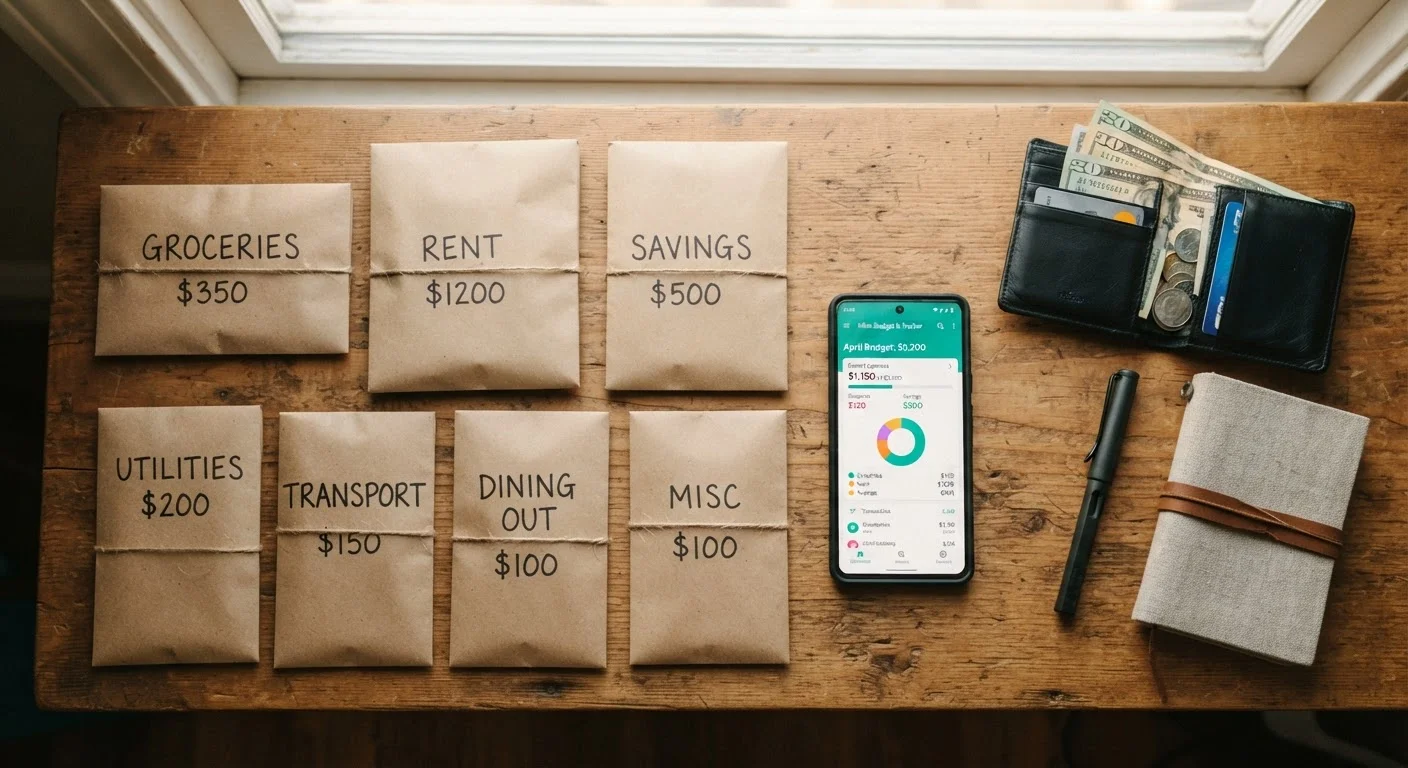
Envelope budgeting is a cash-allocation system. At the start of each pay period, you divide your take-home income into categories — groceries, gas, dining out, utilities — and set a spending limit for each. Traditionally, you'd stuff literal cash into labeled envelopes. When an envelope was empty, spending in that category stopped for the month.
The discipline comes from that constraint. Unlike tracking spending after the fact, the envelope method forces decisions before you spend. It makes the trade-off visible: buying new clothes means less money in the entertainment envelope, not an abstract number on a bank statement.
For a side-by-side look at how this compares to other popular frameworks, see our overview of zero-based budgeting vs. the 50/30/20 method. Envelope budgeting shares the zero-based philosophy: every dollar gets a job.
Start With Just Five or Six Envelopes
New budgeters often create too many categories, which becomes overwhelming to track. Start with broad buckets — housing, food, transportation, personal spending, savings, and everything else — and add more specific envelopes only after a month or two when you understand where the real decisions happen.
Why the Digital Version Works Just as Well
Most Americans rarely use cash for everyday purchases. Swiping a card or tapping a phone doesn't naturally trigger the same awareness as handing over bills. Digital envelope budgeting closes that gap by recreating the category limits in a format that works with how you actually spend.
You can run a digital envelope system three ways: a dedicated budgeting app with built-in envelope-style categories, a spreadsheet you update manually, or a simple notes app if your spending is straightforward. Each has genuine trade-offs. Our comparison of tracking formats can help you choose the right tool for your habits.
Whatever format you choose, the underlying rule doesn't change: when a category's balance hits zero, you stop spending there — or you consciously move money from another category and accept the consequence.
Digital Envelopes Require More Self-Enforcement
With physical cash, an empty envelope is an unmistakable signal. Digital systems rely on you checking the balance before you spend, not after. Set a habit of opening your budget tracker before discretionary purchases — the method only works if you look at it.
How to Set Up Your Envelope Budget
Follow these steps to build a working envelope system, whether you go physical or digital.
What you will need
Calculate your monthly take-home income
Add up all reliable after-tax income you receive each month — wages, freelance pay, side income. Use the lower end of your range if income varies. This total is the only number you're working with; do not budget more than you earn.
List every spending category
Write down all the ways your money goes out: housing, utilities, groceries, transportation, debt payments, subscriptions, clothing, dining, entertainment, personal care, and savings. Include irregular but predictable expenses like car registration or annual subscriptions — divide their yearly cost by 12 and create an envelope for them.
Don't forget to create an envelope for your emergency fund contribution. Treating savings as a spending category prevents it from being the first thing cut when the month gets tight.
Assign a dollar amount to each envelope
Starting with fixed expenses (amounts that don't change month to month), fill in the exact amounts. Then move to variable categories and set realistic limits based on your actual spending history — not what you wish you spent. The total of all envelopes must equal your monthly income exactly. If it doesn't, reduce discretionary amounts or identify income shortfalls before moving forward.
Fund the envelopes at the start of each pay period
For a cash system: withdraw the total variable spending amount in cash and distribute bills into labeled envelopes. For digital: update your spreadsheet balances or reset app categories to the planned amounts. Do this the day you get paid, before any discretionary spending begins.
Track spending and deduct from each envelope in real time
Every time you spend, subtract it from the correct envelope immediately — not at the end of the day or week. For digital systems, log the transaction as soon as you make it. This real-time awareness is what separates envelope budgeting from passive tracking.
Stop spending when an envelope hits zero — or consciously reallocate
When a category runs out, you have two choices: stop spending in that category for the remainder of the month, or move money from a lower-priority envelope to cover the difference. Both are valid — the key is making the decision deliberately rather than ignoring the limit. Document any reallocation so you know which categories to adjust next month.
Review and adjust amounts at the end of each month
Before funding next month's envelopes, look at which categories were consistently over or under their limits. Adjust amounts to reflect reality, not aspiration. A budget that fits your actual life is more useful than a perfect plan you can't follow. Use the monthly budget audit checklist to structure this review.
Once your system is running, pair it with a monthly budget audit to catch categories that are consistently over or under-funded. Budgets rarely get the amounts right on the first try — adjustment is part of the process, not a failure of it.
If you share finances with a partner, the envelope method can work well for joint spending. See budgeting as a couple for approaches that keep both people aligned without micromanaging each other.
This article is for general informational and educational purposes only and does not constitute personalized financial advice. Consider speaking with a qualified financial professional about decisions specific to your situation.