

Key Takeaways
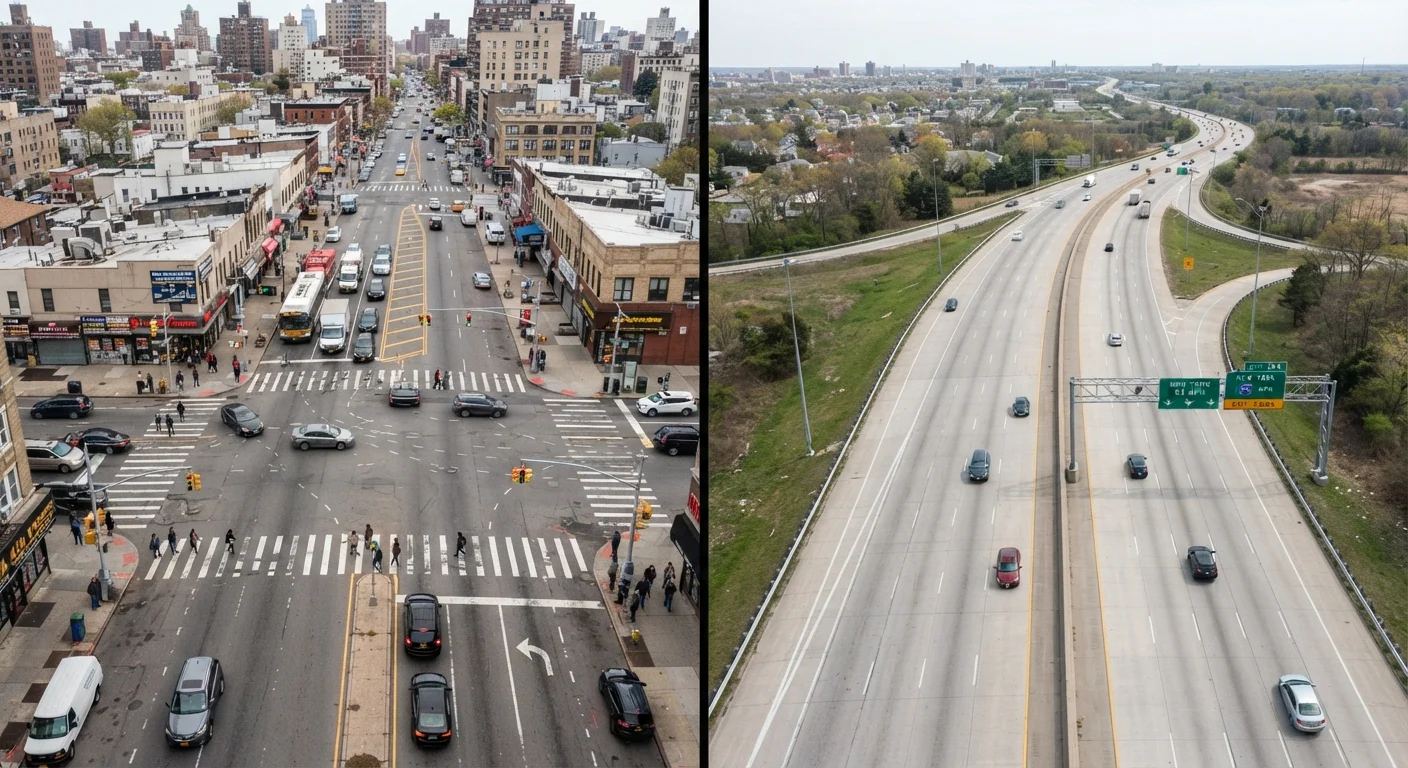
Option A
Highway Driving
High speed, lower density of interactions — but severe consequences when things go wrong.
Best for: Covering long distances efficiently, but demands sustained attention and strong speed-management habits.
Option B
City Driving
Slower speeds, far more frequent hazards and decision points per mile.
Best for: Short-distance navigation in dense traffic, requiring constant situational awareness and quick reactions.
If you spend most of your drive time commuting on interstates
Highway Driving awareness strategies
Focus on managing following distance at speed, combating fatigue on long stretches, and practicing safe lane-change technique.
If your daily drive is mostly urban stop-and-go
City Driving awareness strategies
Intersection behavior, pedestrian awareness, and minimizing distractions deliver the biggest safety gains in city environments.
If you are a new or teen driver building foundational habits
City Driving awareness strategies
High interaction frequency in cities accelerates learning, but also exposes new drivers to the most varied hazards earliest.
If you regularly drive both environments on the same trip
Both — with deliberate mental transitions
Consciously shifting your attention mode as you move between highway and city segments helps avoid applying the wrong habits to the wrong road type.
Why the Two Environments Carry Different Risks
At first glance, a crash is a crash. But where and how crashes happen on highways versus city streets differs in ways that matter for how you drive. According to data from the National Highway Traffic Safety Administration (NHTSA), fatality rates per mile traveled are actually higher on urban roads than on interstates — yet highway crashes, when they occur, tend to produce more catastrophic outcomes because of the speeds involved.
The core distinction comes down to interaction density versus consequence severity. City driving packs more potential conflict points into every mile: intersections, cyclists, pedestrians stepping off curbs, delivery vehicles double-parked, and traffic signals demanding constant decisions. Highway driving reduces those interaction points sharply, but raises the stakes when attention lapses — because a lapse at 70 mph leaves far less time to recover than one at 30 mph.
Understanding this difference is the first step toward building safer driving habits that actually match the road you're on.
| Criterion | Highway Driving | City Driving |
|---|---|---|
| Typical speed range | 55–80 mph | 20–45 mph |
| Crash frequency per mile | Lower | Higher |
| Crash severity (injuries/fatalities) | Higher when crashes occur | Lower on average |
| Top behavioral risk factor | Fatigue and distraction | Failure to yield, inattention |
| Pedestrian/cyclist exposure | Very low | High |
| Intersection hazard | Minimal (controlled access) | Very high (40% of crashes) |
| Required following distance | 300+ feet at 65 mph | 60–100 feet at 30 mph |
| Mental demand type | Sustained vigilance over time | Rapid, frequent decisions |
The City Driving Risk Profile
Urban roads account for a disproportionate share of total crash volume in the U.S. Intersections alone are the site of roughly 40% of all crashes nationally, according to NHTSA research. The hazards city drivers face include:
- Pedestrians and cyclists — often in blind spots or crossing mid-block
- Failure to yield — the leading behavioral cause of intersection crashes
- Distraction — navigation apps, frequent stops, and visual clutter compete for attention
- Unpredictable merges — lane changes made at low speeds but in tight quarters
Speed doesn't eliminate risk in cities — it amplifies it. Research consistently shows that the probability of a pedestrian fatality rises sharply as vehicle impact speed increases beyond 20 mph. Driving 10 mph over a 30 mph urban limit is not a minor infraction; it materially changes survivability outcomes for anyone struck.
City drivers can reduce risk significantly by scanning intersections early, covering the brake before crossing, and treating yellow lights as a cue to stop rather than accelerate. For new drivers especially, urban environments are high-learning but high-risk territory — a pattern explored in detail in the article on why early driving years carry the highest crash rates.
The Highway Driving Risk Profile
Highways look safer than city streets — traffic flows in one direction, lanes are wide, and pedestrians are absent. Yet the severity of crashes that do occur is substantially higher. At 70 mph, a vehicle travels roughly 103 feet every second. A one-second distraction — glancing at a phone, adjusting the radio — means traveling more than 100 feet without any conscious awareness of what's ahead.
The dominant risk factors on highways include:
- Drowsy driving — highway monotony accelerates fatigue faster than urban driving
- Following too closely — stopping distance at 65 mph is over 300 feet; tailgating eliminates that buffer entirely
- Unsafe lane changes and merging — a significant proportion of freeway crashes are linked to these maneuvers (see how merging errors cause freeway crashes)
- Large truck interactions — passenger vehicles sharing lanes with commercial trucks face specific blind-spot and braking-distance risks (what passenger car drivers need to know)
Highway safety is less about reacting quickly to many things and more about maintaining a sustained, calibrated attention over longer periods — and knowing when to pull off and rest.
~40%
U.S. crashes occurring at intersections
NHTSA research identifies intersections as the single most common crash location in urban environments.
103 ft/sec
Distance traveled at 70 mph per second
A one-second distraction at highway speed means over 100 feet covered with no driver awareness of road conditions.
300+ ft
Stopping distance needed at 65 mph
Total stopping distance including reaction time and braking on dry pavement, per standard traffic safety engineering estimates.
Adjusting Your Habits for Each Environment
The practical takeaway isn't that one road type is more dangerous than the other in absolute terms — it's that each demands a specific mental mode. Applying city-driving habits to a highway (short following distances, reactive scanning) or highway habits to urban streets (reduced vigilance for cross-traffic, slower reaction expectations) both increase risk.
A few evidence-aligned adjustments for each environment:
On highways
- Maintain at least a 3–4 second following gap — increase it in wet or low-visibility conditions
- Plan rest stops before fatigue sets in, not after — drowsiness impairs reaction time similarly to alcohol impairment
- Check mirrors every 5–8 seconds and signal well before lane changes
In cities
- Reduce speed approaching intersections even when you have the right of way
- Look left-right-left before proceeding through any green light
- Keep music and phone notifications at levels that don't mask pedestrian or cyclist sounds
Driving conditions also change dramatically after dark — a layer of complexity covered in the companion piece on how night driving changes your risk profile. For a broader framework on road safety across all conditions, the complete overview of safe driving in America is a useful reference point.