

Key Takeaways
Novice Driver Risk Period
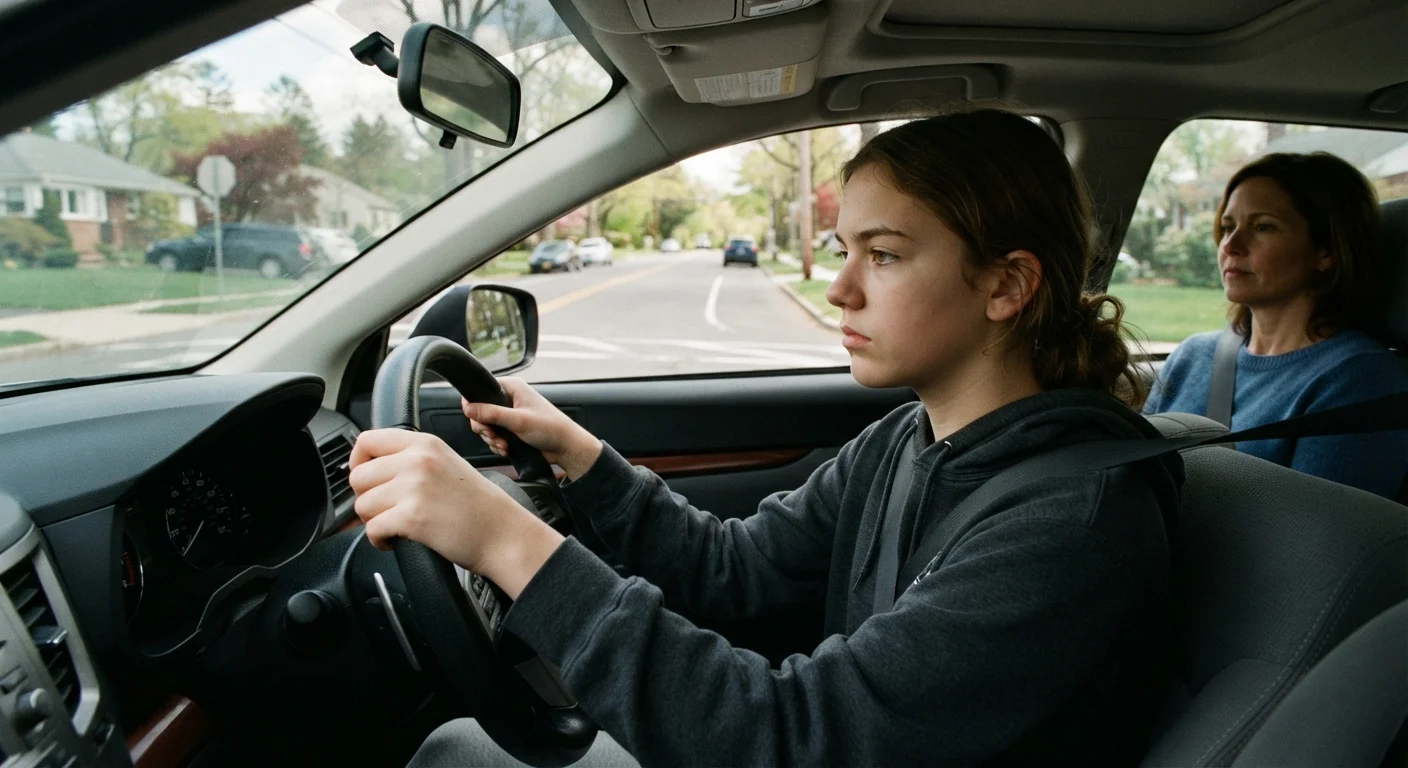
The novice driver risk period refers to the first 12 to 24 months after a new driver earns a license — a window during which crash rates are significantly higher than at any other point in a driver's life. This heightened risk isn't caused by age alone. It reflects the gap between legal permission to drive and the deeply practiced skills that experienced drivers take for granted.
Researchers distinguish between two overlapping risk factors: cognitive immaturity (still developing in the teenage brain) and skill inexperience (present in novice drivers of any age, though compounded in teens).
Why the First Two Years Stand Apart
Motor vehicle crashes are the leading cause of death for teenagers in the United States, according to the Centers for Disease Control and Prevention. That single statistic carries enormous weight — and understanding what drives it is essential for families, educators, and new drivers themselves.
The first 12 to 24 months after getting a license represent a period of compressed risk unlike anything else in a driver's lifetime. Crash rates per mile driven are highest during this window, and they fall dramatically as experience accumulates. But the reason isn't simply that teens are young. It's that several independent risk factors converge at once, each one compounding the others.
For a broader look at how road risks vary by environment, see how highway and city driving demand different skills.
~3x
Higher crash rate per mile for teen drivers
The CDC reports that teen drivers ages 16–19 are nearly three times more likely to be in a fatal crash per mile driven than drivers aged 20 and older.
First 6 months
Period of peak crash risk after licensure
Traffic safety research consistently identifies the first six months of independent driving as the single highest-risk window in a new driver's lifetime.
2x
Crash risk increase with one teen passenger
According to research from the AAA Foundation for Traffic Safety, the presence of one teenage peer passenger roughly doubles a teen driver's crash risk.
The Brain Is Still Being Built
Adolescent brain development plays a direct role in driving risk. The prefrontal cortex — the region responsible for impulse control, long-term thinking, and weighing consequences — continues maturing well into a person's mid-20s. For teen drivers, this means that even with solid technical knowledge of traffic laws, the mental machinery for consistently applying good judgment under pressure is still being assembled.
This shows up in specific, measurable ways. Teen drivers tend to underestimate the danger of tailgating, overestimate their ability to multitask, and respond more impulsively to social pressure from passengers. It's not recklessness for its own sake — it's a developmental stage that happens to intersect with one of the most cognitively demanding tasks people do every day.
“Adolescents aren't just small adults. Their brains are still developing the circuitry for impulse control and risk evaluation — and that has real consequences for how they perform in demanding, fast-changing environments like driving.”
— Anne McCartt, Senior Vice President for Research, Insurance Institute for Highway Safety (paraphrased from published research commentary)
Three Risk Amplifiers Research Points to Consistently
Peer passengers. The presence of teenage passengers is one of the most well-documented crash risk factors for young drivers. Research from institutions including the AAA Foundation for Traffic Safety has found that carrying even one teen passenger meaningfully raises crash risk, with additional passengers raising it further. Social dynamics — showing off, responding to noise and conversation, managing group pressure — pull attention away from the road in ways that are hard to control.
Nighttime driving. Darkness reduces visibility, increases fatigue, and shifts the population of other road users toward higher-risk drivers. For inexperienced drivers who already rely heavily on visual cues and have less automated response to road events, these challenges are amplified. Night driving presents specific hazards that experienced drivers learn to navigate over time — but new drivers encounter them before those habits are built.
Distraction. Phones are the most visible distraction, but new drivers are also more susceptible to distraction from any source because they haven't yet automated the core tasks of driving. Experienced drivers process routine inputs — lane position, following distance, mirror checks — largely without conscious thought. New drivers are still doing that work deliberately, which leaves less mental bandwidth for anything else.
How Graduated Licensing Addresses the Problem
Graduated Driver Licensing (GDL) programs, which now exist in all 50 states in some form, were designed specifically around the research on novice driver risk. Rather than granting full driving privileges the moment a teen passes a test, GDL creates a staged progression: a learner's permit phase with required supervised hours, an intermediate license with restrictions, and eventually full licensure.
The restrictions built into intermediate licenses — typically limits on nighttime driving and the number of passengers — directly target the two biggest risk amplifiers. States with stricter, more comprehensive GDL laws have seen measurable reductions in fatal crash rates among 16-year-olds compared to states with weaker programs.
What the research also makes clear is that supervised practice hours matter enormously. Quantity helps, but so does variety — practice in rain, at night (with a supervising adult), on highways, and in unfamiliar areas builds the perceptual experience that classroom instruction can't replicate. For strategies that extend beyond the learner phase, building consistent safe driving habits is a practical next step.
What Families and New Drivers Can Do
The evidence points to a few practical priorities. First, treat the learner's permit phase seriously — more hours in more varied conditions genuinely reduces post-licensure risk. Second, maintain GDL restrictions even when they feel inconvenient; the restrictions exist because the research on their effectiveness is solid. Third, keep open conversations about distraction, peer pressure, and the specific situations where new drivers are most vulnerable.
For new drivers themselves, self-awareness matters more than confidence. Knowing that the first year carries elevated risk — and actively choosing to drive more conservatively during that period — is itself a protective behavior. The goal isn't to avoid driving, but to build experience in ways that are deliberately lower-risk before tackling higher-stakes conditions independently.
For more context on the full landscape of driving safety in the U.S., this complete overview of rules, risks, and road habits covers the broader picture every driver should understand.