

Key Takeaways
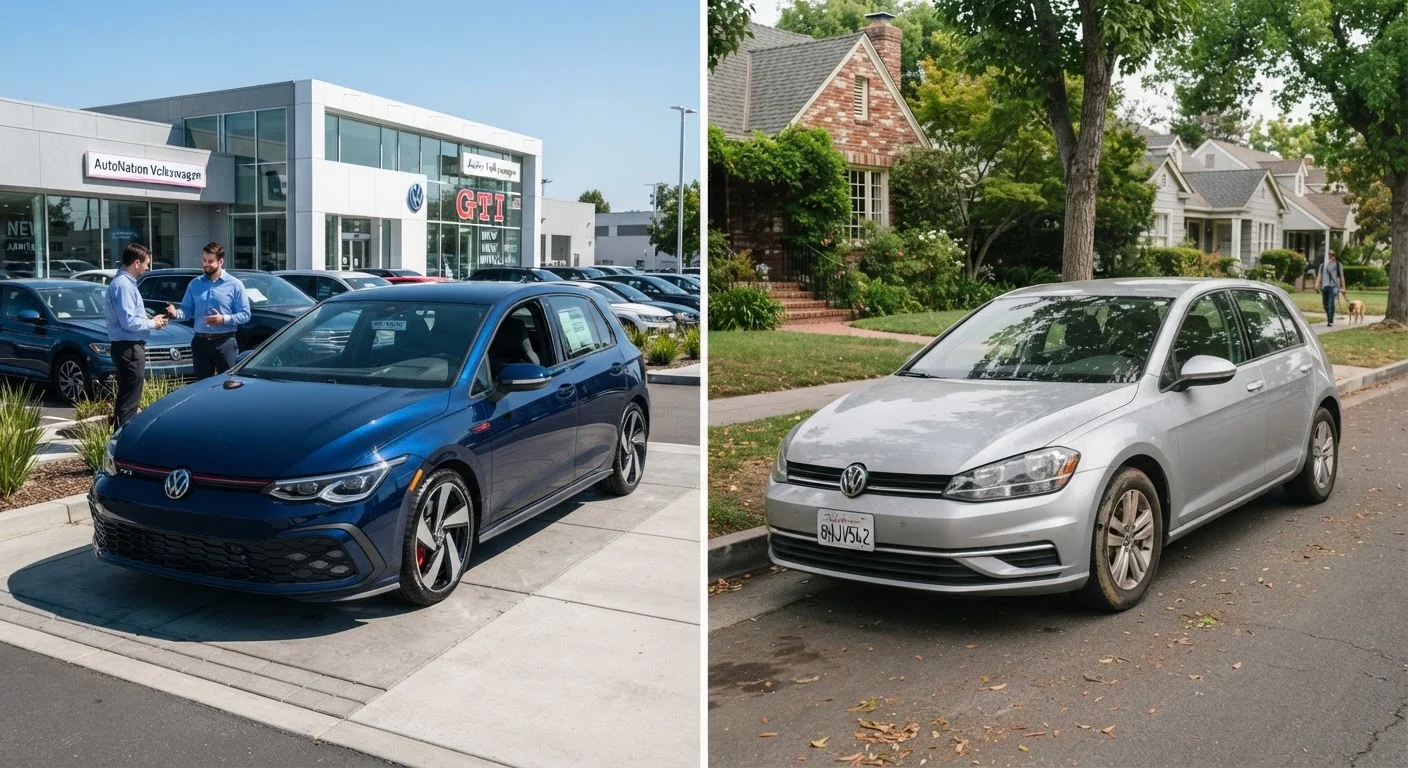
Option A
New Car
The full-warranty, zero-history option.
Best for: Buyers who prioritize peace of mind, the latest safety features, and predictable early-ownership costs.
Option B
Used Car
The lower-sticker, depreciation-absorbed alternative.
Best for: Budget-conscious buyers willing to do a bit more homework in exchange for significant upfront savings.
If you want the lowest possible monthly financial risk from unexpected repairs
New Car
Factory warranties typically cover major components for several years, giving you a predictable cost window and roadside support from day one.
If minimizing your total out-of-pocket purchase cost is the priority
Used Car
Someone else has already absorbed the steepest depreciation, so your initial investment — and likely your loan amount — is considerably lower.
If you plan to keep the vehicle for ten or more years
New Car
The depreciation hit matters less the longer you hold a vehicle, and you start the clock on condition and wear history yourself.
If you need reliable transportation but have limited financing options
Used Car
A lower vehicle price reduces the loan balance needed, which can make approval more accessible and monthly payments more manageable.
If you want advanced driver-assistance safety tech as standard equipment
New Car
Current model-year vehicles are more likely to include modern safety systems like automatic emergency braking and lane-keeping assist as standard features.
The Depreciation Reality
Depreciation is the single biggest financial factor separating new and used cars — and it almost always favors the used buyer in the short term. A new vehicle can lose a substantial portion of its value within the first couple of years simply through normal use and the passage of model years. By the time a car is two or three years old, the steepest drop is typically behind it.
That matters because when you buy used, you're not absorbing that initial plunge. The previous owner already did. What you pay reflects a value that has already adjusted to real-world market conditions. Understanding how depreciation works is worth doing before you sign anything — it shapes your total ownership cost more than most buyers realize.
New car buyers aren't necessarily making a bad financial decision, though. If you plan to hold the vehicle for a long time — a decade or more — the sting of early depreciation spreads out and matters less. The calculus changes when you're planning to trade in or sell after three to five years.
| Criterion | New Car | Used Car |
|---|---|---|
| Purchase Price | Higher sticker price | Lower upfront cost |
| Depreciation Exposure | Absorbs steepest first-year drop | Prior owner absorbed initial drop |
| Warranty Coverage | Full factory warranty included | Limited or none (CPO adds some) |
| Financing Rates | Often lower promotional rates | Typically higher interest rates |
| Maintenance Risk (Near-Term) | Low — covered under warranty | Higher — depends on vehicle history |
| Safety Technology | Latest standard features likely included | Varies by model year and trim |
| Vehicle History | None — you start the record | Requires review of history report |
| Insurance Cost | Generally higher premiums | Often lower premiums |
Financing, Warranties, and Hidden Costs
Financing terms can look more favorable on new vehicles. Manufacturers sometimes offer promotional interest rates to move inventory, which can lower your monthly cost compared to a used-car loan at a higher rate. But a lower rate on a larger loan balance doesn't automatically mean you pay less — it's worth running the total-interest math on any offer. How auto loans actually work explains the mechanics clearly if you want to evaluate any financing offer with confidence.
Warranties are where new cars have a real structural advantage. Most come with a basic bumper-to-bumper warranty covering several years, plus a longer powertrain warranty on the engine and transmission. With a used car, you're buying the vehicle's history along with its price. A certified pre-owned (CPO) vehicle — one that has passed a manufacturer-backed inspection and carries some warranty coverage — can narrow this gap, but CPO pricing reflects that added protection.
Used car buyers should also budget for a pre-purchase inspection by an independent mechanic and obtain a vehicle history report before committing. Reading a vehicle history report can surface title issues, accident records, and odometer concerns that aren't visible on a test drive.
Certified Pre-Owned: A Middle Ground
Certified pre-owned (CPO) vehicles go through a manufacturer- or dealer-defined inspection process and typically carry some extended warranty coverage. They cost more than non-certified used cars but less than new, and they offer more documented assurance about condition. CPO programs vary by manufacturer, so it's worth reading the specific coverage terms before assuming what's included.
New car buyers face their own set of surprise costs. Dealer add-ons, documentation fees, registration charges, and gap insurance can push the real purchase price well above the advertised figure. Costs that catch new car owners off guard is worth reviewing before you reach the finance office.
Making the Call: What Really Fits Your Situation
Neither new nor used is universally the right answer. The decision depends on your financial situation, how long you intend to keep the car, what reliability track record the model has, and how much uncertainty you're comfortable absorbing.
A honest look at the true cost of owning a car in America — including fuel, insurance, maintenance, and depreciation — gives you a more complete picture than the sticker price alone. And if you're still deciding between buying and another arrangement entirely, comparing buying with leasing may clarify which structure fits your circumstances best.
If you're leaning toward used, take the due-diligence steps seriously. What to check before signing on a used car walks through the inspection, paperwork, and test-drive steps that protect you before you commit. A used car bought carefully can be an excellent value. One bought without scrutiny can turn an attractive price into an expensive mistake.
This article is for general informational purposes only and does not constitute financial or legal advice. Consult a qualified financial professional for guidance tailored to your personal situation.