Always run a vehicle history report before agreeing to any price or paperwork.
A pre-purchase inspection by an independent mechanic is one of the most valuable steps you can take.
Clean title status and matching VINs are non-negotiable before signing anything.
The test drive should cover highway speeds, sharp turns, and hard braking — not just around the block.
Skipping any one of these steps can lead to costly surprises after the sale is final.
45–90 min
Summary
22 items · 45–90 minutes
Why a Checklist Matters Before Buying Used
Buying a used car is one of the larger financial decisions most Americans make, and unlike a new vehicle, a used one comes with an unknown history. Rust hidden under touch-up paint, a rolled-back odometer, an unresolved lien on the title — these are real problems that show up regularly in private-party and dealer sales alike.
This checklist gives you a structured way to work through the inspection, paperwork, and test-drive process before you commit. Use it as a physical or digital reference while you're standing in the driveway or at the dealership lot. If you're new to car ownership entirely, the first-time car owner guide is a good starting point for understanding the full picture of what ownership involves.
Work through each group below in order. If a seller resists any of these steps — especially an independent inspection — treat that as a meaningful red flag.
Before You Visit
Run a vehicle history report using the VIN to check for accidents, title issues, odometer discrepancies, and number of previous owners.Must
Verify the asking price against market data for the same make, model, year, mileage, and condition in your region.Must
Confirm the seller's name matches the name on the title before scheduling a visit.Must
Look up any open recalls for the vehicle using the VIN at the National Highway Traffic Safety Administration (NHTSA) website.Should
Exterior Inspection
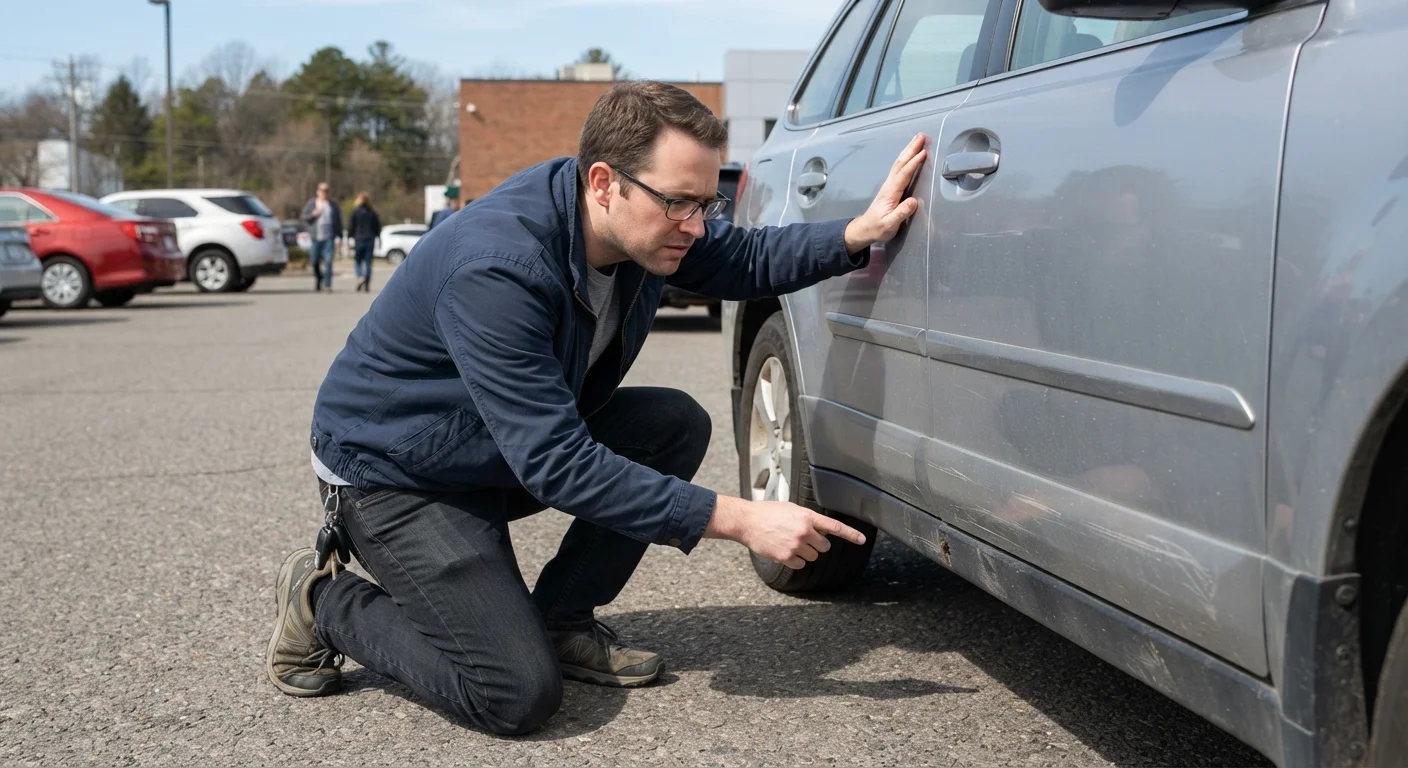
Walk the entire perimeter in daylight and check every panel for mismatched paint, rippling, or uneven gaps — signs of prior body work or collision repair.Must
Crouch at each corner and sight down the length of the car to spot dents, waves, or surface rust that's easy to miss straight-on.Should
Check all glass — windshield, side windows, and mirrors — for cracks, chips, or delamination.Should
Examine the tires for uneven tread wear, which can indicate alignment problems or worn suspension components.Must
Under the Hood
Check all fluid levels (oil, coolant, brake fluid, transmission fluid, power steering fluid) and note the color and smell of each.Must
Look for oily residue, corrosion, or cracked hoses around the engine bay — these can signal neglected maintenance or a developing leak.Must
Start the engine cold if possible and listen for knocking, ticking, or rattling noises during warm-up.Must
Check for smoke from the exhaust: blue smoke suggests burning oil, white smoke can indicate a coolant leak, and black smoke points to a fuel issue.Should
Interior and Electronics
Test every electrical function — windows, locks, mirrors, air conditioning, heat, audio system, and all dashboard warning lights.Should
Check that the odometer reading is consistent with the wear on the pedals, steering wheel, and seat fabric.Must
Smell the interior for mildew or a musty odor, which can indicate a history of water intrusion or flooding.Must
Test Drive
Drive at highway speeds to check for vibration, pulling, or wind noise that may not be apparent at low speeds.Must
Perform hard braking from around 35 mph in a safe area to check for brake fade, pulling, or shudder.Must
Turn the steering wheel through its full range at slow speed to listen for clunking or grinding from the front suspension.Should
Park on a level surface after driving and check underneath for any fresh drips of oil, coolant, or transmission fluid.Nice to have
Paperwork and Title
Confirm the VIN on the dashboard, door jamb, and title all match exactly — a discrepancy is a serious warning sign.Must
Verify the title is clean (not salvage, rebuilt, or branded) and free of any recorded liens before signing.Must
Get a signed bill of sale that includes the vehicle description, VIN, sale price, date, and both parties' names and signatures.Must
Tools and Resources You'll Want on Hand
You don't need expensive equipment to complete this checklist, but a few resources will make the process significantly more reliable.
Required
Vehicle History Report Service
Pulls accident history, title records, odometer readings, and owner count using the vehicle's VIN.
Required
NHTSA Recall Lookup (nhtsa.gov)
Free government tool to check whether the vehicle has any open safety recalls by VIN.
Required
Independent Mechanic
A pre-purchase inspection by a trusted, independent mechanic can catch hidden mechanical issues that no visual check will reveal.
Optional
OBD-II Scanner
Plugs into the car's diagnostic port to read any stored error codes, including emissions and engine faults the seller may not disclose.
Required
Flashlight
Essential for inspecting the undercarriage, engine bay corners, and trunk floor in low-light conditions.
Never Skip the Independent Inspection
A seller — private party or dealer — may tell you the car has been inspected or is certified. That is not a substitute for having your own mechanic look it over. Pre-purchase inspections typically cost between $100 and $200 and can reveal issues worth far more than that in repairs. If a seller refuses to allow an independent inspection, walk away.
Once you've confirmed the car passes this checklist, ongoing upkeep becomes your next responsibility. The car maintenance hub covers essential service intervals and seasonal checks to keep your vehicle running safely after the purchase.
Cars & Driving Editorial Team is the collective byline for our editorial team and contributor network. Articles published under this byline or an editorial pen name are researched, written, and reviewed according to our editorial standards for clarity, consistency, and independence before publication.
Disclaimer: The content on this site is for informational purposes only and is not a substitute for professional advice. Always consult a qualified professional for guidance specific to your situation.