

Key Takeaways
Option A
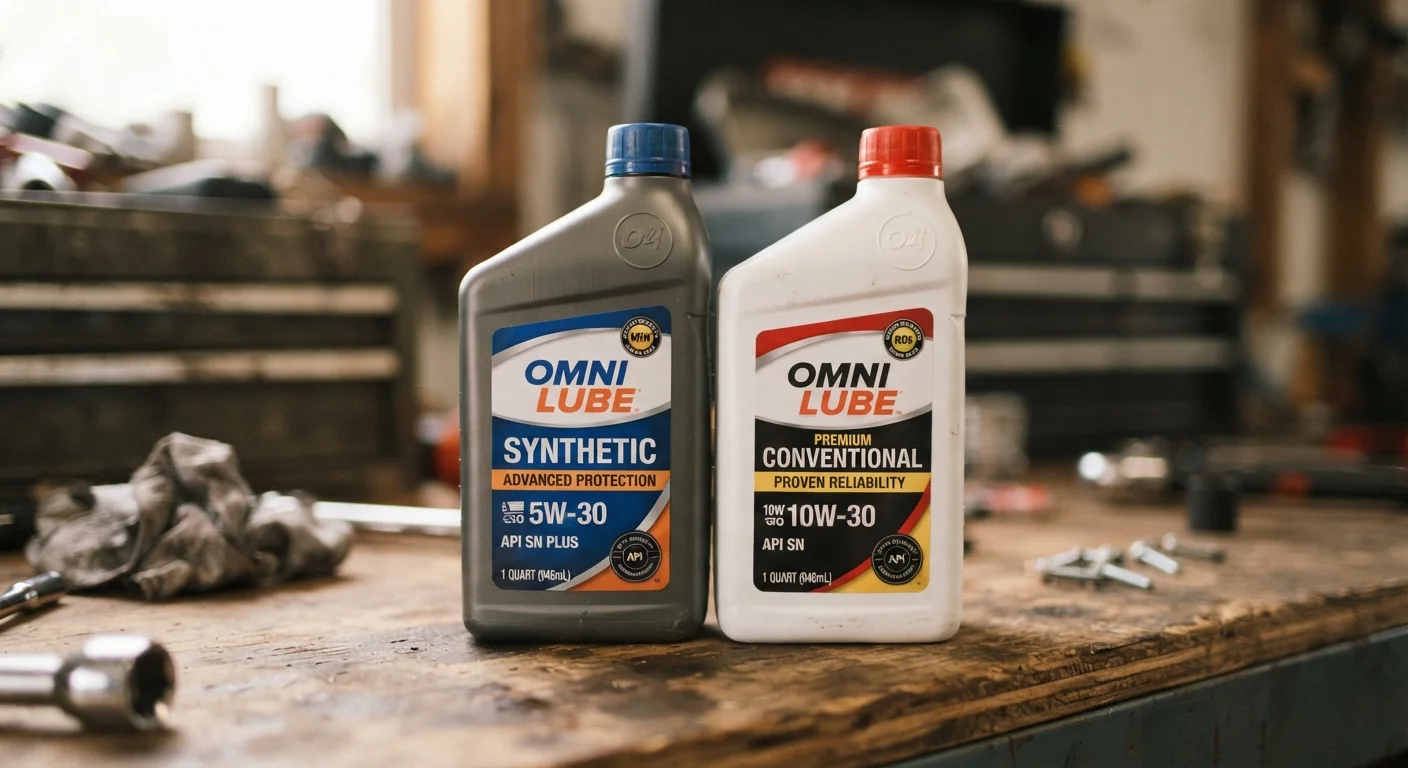
Synthetic Motor Oil
The engineered, high-performance option.
Best for: Drivers who want longer change intervals, better protection in extreme temperatures, or own a high-performance or newer vehicle.
Option B
Conventional Motor Oil
The time-tested, straightforward choice.
Best for: Owners of older, lower-mileage vehicles with simple engines who follow a regular maintenance schedule.
If you drive a newer vehicle or one with a turbocharged engine
Synthetic Motor Oil
Many modern and turbocharged engines are factory-specified for synthetic oil. Using conventional may leave critical components underprotected.
If you own an older vehicle with a simple engine and change oil regularly
Conventional Motor Oil
Conventional oil can be perfectly adequate for older engines designed before synthetic became common, provided you stick to recommended intervals.
If you drive in extreme climates — very hot summers or cold winters
Synthetic Motor Oil
Synthetic oil maintains stable viscosity across a wider temperature range, protecting your engine better at startup in freezing weather and under heat stress.
If you want to stretch the time between oil changes
Synthetic Motor Oil
Synthetic oil degrades more slowly, allowing longer change intervals — which can mean fewer service appointments over the life of the vehicle.
What Actually Makes These Two Oils Different
At their core, both synthetic and conventional motor oil do the same job: lubricate your engine's moving parts, reduce friction, carry away heat, and keep contaminants from building up. The difference lies in how each oil is made — and that affects how well it holds up under pressure.
Conventional oil is refined from crude petroleum. It works well, but because it starts life as a natural product, it contains trace impurities and molecular irregularities that can't be fully eliminated through refining.
Synthetic oil is chemically engineered, typically from a base oil that's been heavily processed or built from scratch using organic compounds. The result is a more uniform molecular structure with fewer impurities. That consistency translates to more predictable behavior inside your engine, especially under stress.
For a deeper look at oil grades and what those numbers on the bottle actually mean, see our guide to engine oil and viscosity grades.
| Criterion | Synthetic Oil | Conventional Oil |
|---|---|---|
| Source | Chemically engineered base stocks | Refined crude petroleum |
| Molecular consistency | High — uniform structure | Lower — natural impurities remain |
| Typical change interval | 7,500–15,000 miles | 3,000–5,000 miles |
| Cold-weather performance | Flows readily at low temperatures | Thickens more at cold startup |
| High-heat resistance | Better viscosity stability | Breaks down faster under heat |
| Engine deposit protection | Stronger, longer-lasting | Adequate if changed on schedule |
| Cost per quart | Higher upfront cost | Lower upfront cost |
| Best engine fit | Modern, turbocharged, high-performance | Older, simpler engine designs |
Performance, Longevity, and What It Costs You
Synthetic oil generally outperforms conventional in three practical areas: temperature resistance, longevity, and engine cleanliness.
Temperature extremes: In cold weather, conventional oil thickens more noticeably than synthetic, which means your engine works harder on startup before adequate lubrication reaches all the parts that need it. Synthetic flows more readily at low temperatures. In high heat — especially in turbocharged engines — synthetic also holds its viscosity more reliably, reducing wear.
Change intervals: Most conventional oil is recommended for changes every 3,000 to 5,000 miles. Synthetic typically lasts 7,500 to 15,000 miles, depending on the oil formulation and your vehicle. That longer interval is one reason many drivers find the higher upfront cost of synthetic less significant over time.
Engine deposits: Over time, conventional oil breaks down and can leave sludge in the engine. Synthetic resists this breakdown longer, helping keep internal surfaces cleaner.
7,500–15,000 mi
Typical synthetic oil change interval
Compared to 3,000–5,000 miles for conventional oil, per general industry guidance and manufacturer recommendations.
~75,000 mi
Mileage threshold for high-mileage oil consideration
Many oil manufacturers design high-mileage formulations specifically for engines that have crossed this approximate threshold.
That said, the right choice isn't always the more expensive one. Many older, simpler engines were designed when synthetic wasn't widely available and run fine on conventional oil — as long as the owner changes it on schedule. Our article on common car maintenance myths addresses some of the outdated thinking — like the blanket 3,000-mile rule — that still shapes how many drivers approach oil changes.
How to Know Which One Your Engine Needs
The single most reliable answer is in your vehicle's owner's manual. Automakers specify which oil type and viscosity grade they've engineered the engine for — and that recommendation should take priority over general rules of thumb.
A few practical guidelines:
- Modern and turbocharged engines almost universally call for synthetic. Check your manual; using conventional in these engines can void warranty protections or accelerate wear.
- High-mileage vehicles (typically over 75,000 miles) can sometimes benefit from high-mileage oil formulations — a variant of synthetic blended with conditioners designed to reduce leaks and burning in older engines.
- Switching from conventional to synthetic in an engine that's been on conventional for years isn't automatically risky, but it's worth a conversation with a qualified mechanic if your engine has high mileage or known seal issues.
It's also worth checking whether your vehicle has an oil life monitoring system. These systems calculate remaining oil life based on driving conditions — not just mileage — and can be a more accurate guide to when you actually need a change.
Oil choice is one piece of the broader routine maintenance picture. Our routine maintenance guide covers what else to track and when. And if you're weighing whether your vehicle is worth maintaining at all, the factors in new car vs. used car may help you think it through.
This article is for general informational purposes only. Always consult your vehicle's owner's manual and a qualified mechanic for advice specific to your engine and driving conditions.