

Key Takeaways
Situational Awareness
Situational awareness is the ongoing practice of noticing and understanding what is happening around you so you can respond thoughtfully rather than react in surprise. For travelers, it means staying connected to your environment — the people, spaces, and dynamics — without becoming anxious or hypervigilant. It is a calm, learned habit, not a state of constant alertness.
The concept originates in aviation and military training, where psychologist Mica Endsley's three-level model — perception, comprehension, and projection — describes how individuals process environmental cues to anticipate outcomes.
What Situational Awareness Actually Is
Most travelers encounter the phrase "situational awareness" in the context of safety warnings, which makes it sound like a constant state of suspicion. In practice, it is the opposite. Situational awareness is simply the habit of knowing what is going on around you — and understanding what that information means — so you are rarely caught completely off guard.
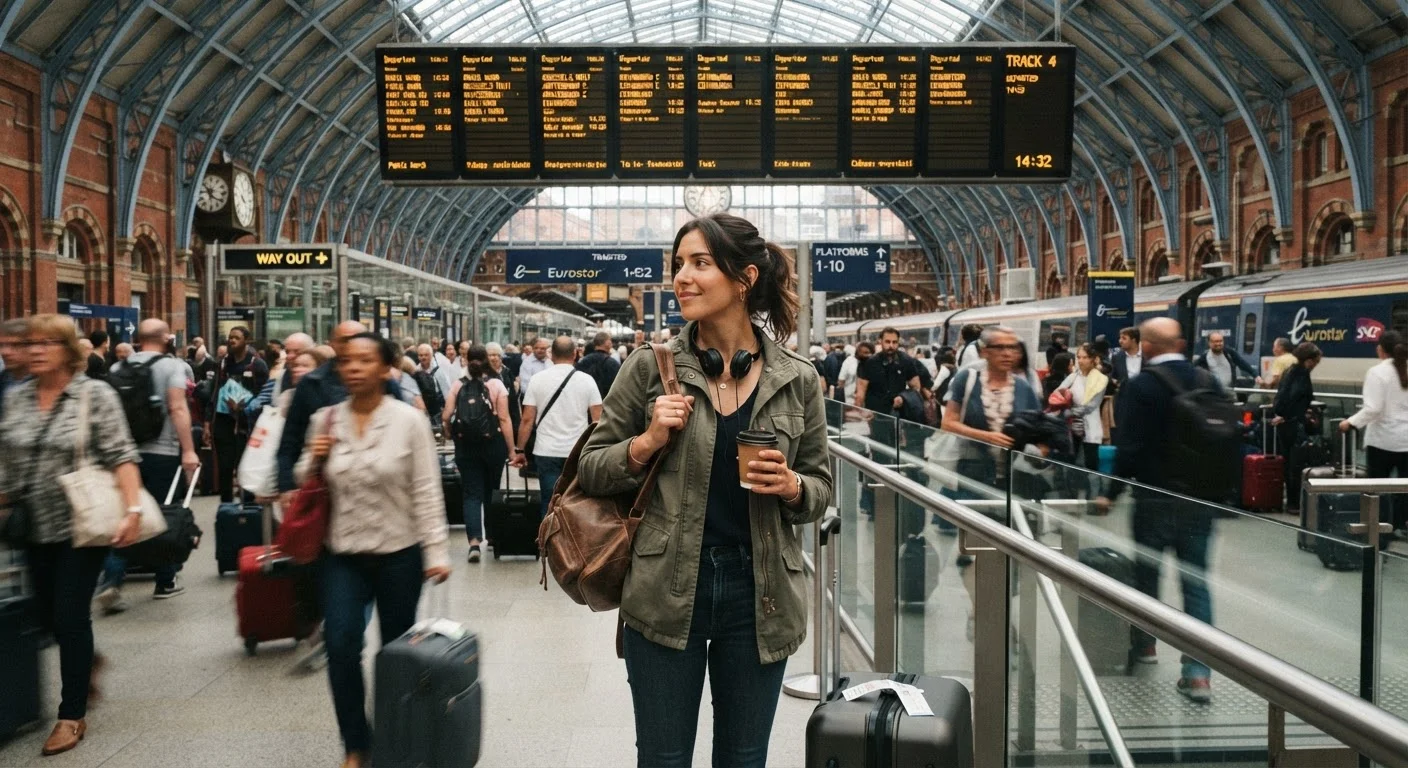
Think of it as the difference between walking through a train station while staring at your phone versus walking through with your head up, noting the layout, the crowd flow, and where the exits are. The second traveler is not fearful. They are just present. That presence creates options.
For a broader grounding in the safety mindset that underpins this skill, see Travel Safety From the Ground Up, which covers the core habits every first-time traveler should develop.
74%
Travelers who report feeling unsafe at least once abroad
According to a survey by the U.S. Travel Insurance Association, a significant majority of international travelers have encountered at least one moment where they felt their safety was at risk.
~1 in 3
Travel incidents linked to distraction
Travel safety researchers and insurers frequently cite distraction — particularly mobile phone use in public — as a contributing factor in a substantial share of theft and accident incidents abroad.
The Three Layers of Awareness in a Travel Context
Situational awareness operates at three levels that build on each other:
- Perception: What are you noticing? This includes physical surroundings — entrances and exits, crowd density, lighting — as well as social cues like body language, volume levels, and how people are moving.
- Comprehension: What does what you're noticing mean in this context? A loud argument in a market might be normal bargaining in one culture and a precursor to conflict in another. Context shapes interpretation, which is why pre-trip research matters.
- Projection: Where is this situation likely heading? This does not mean predicting the future — it means recognizing when something is escalating and giving yourself enough lead time to move, ask for help, or simply step back.
Most travelers already operate at the first level instinctively. The second and third levels develop with practice and, critically, with some baseline knowledge of your destination. Reading a destination's safety landscape before you arrive gives you the tools to build that knowledge before you board.
Start With Your Arrival Window
The first 60–90 minutes in any new destination are when awareness matters most. You are tired, possibly disoriented, and managing logistics — all of which reduce your natural observation. Make a deliberate habit of slowing down during arrival: choose a quiet spot to reorient before moving through crowds, and keep valuables secured and out of sight until you have a feel for the environment.
Common Barriers That Undermine Awareness
Even experienced travelers lose situational awareness in predictable ways. Identifying these barriers is itself part of the practice.
- Screen immersion: Looking at a phone is the single most common awareness gap. It narrows your field of vision and signals to others that you are distracted.
- Arrival disorientation: The first hour in a new place — navigating unfamiliar transit, reading maps, managing luggage — is often when travelers are most vulnerable and least aware of their surroundings.
- Travel fatigue: Long flights and disrupted sleep dull cognitive processing, making it harder to read environments accurately. Recognizing when you are tired enough to impair judgment is itself a form of self-awareness.
- Overfamiliarity: Travelers who have visited a destination before sometimes relax their observation habits on the assumption that they know what to expect. Environments change.
Many of the incidents documented in common traveler mistakes that create avoidable risk trace directly back to one of these lapses.
Building the Habit Without Anxiety
Situational awareness does not require constant vigilance — that level of alertness is exhausting and counterproductive. Instead, think of it as a rhythm: a brief, deliberate scan when you enter a new environment, followed by relaxed engagement with your surroundings.
A few practical anchors:
- When you enter any new space, take five seconds to identify two exits and note the general crowd feel.
- Periodically put your phone away for a stretch of time — especially in transit hubs or unfamiliar neighborhoods.
- Check in with your own emotional state. Unusual anxiety or unease is data worth noticing, even if you're not sure what triggered it.
- Trust that discomfort is a signal to pause and observe, not necessarily to act immediately.
This practice pairs naturally with digital security habits on the road, since reducing screen time in public also limits the physical vulnerability that comes with visible device use.
And if something does go wrong despite good awareness, having a calm response framework ready matters enormously. When something goes wrong abroad outlines a practical sequence for exactly those moments.