

Travel Smarter

Before You Land: The Safety Prep Checklist Seasoned Travelers Follow

Share
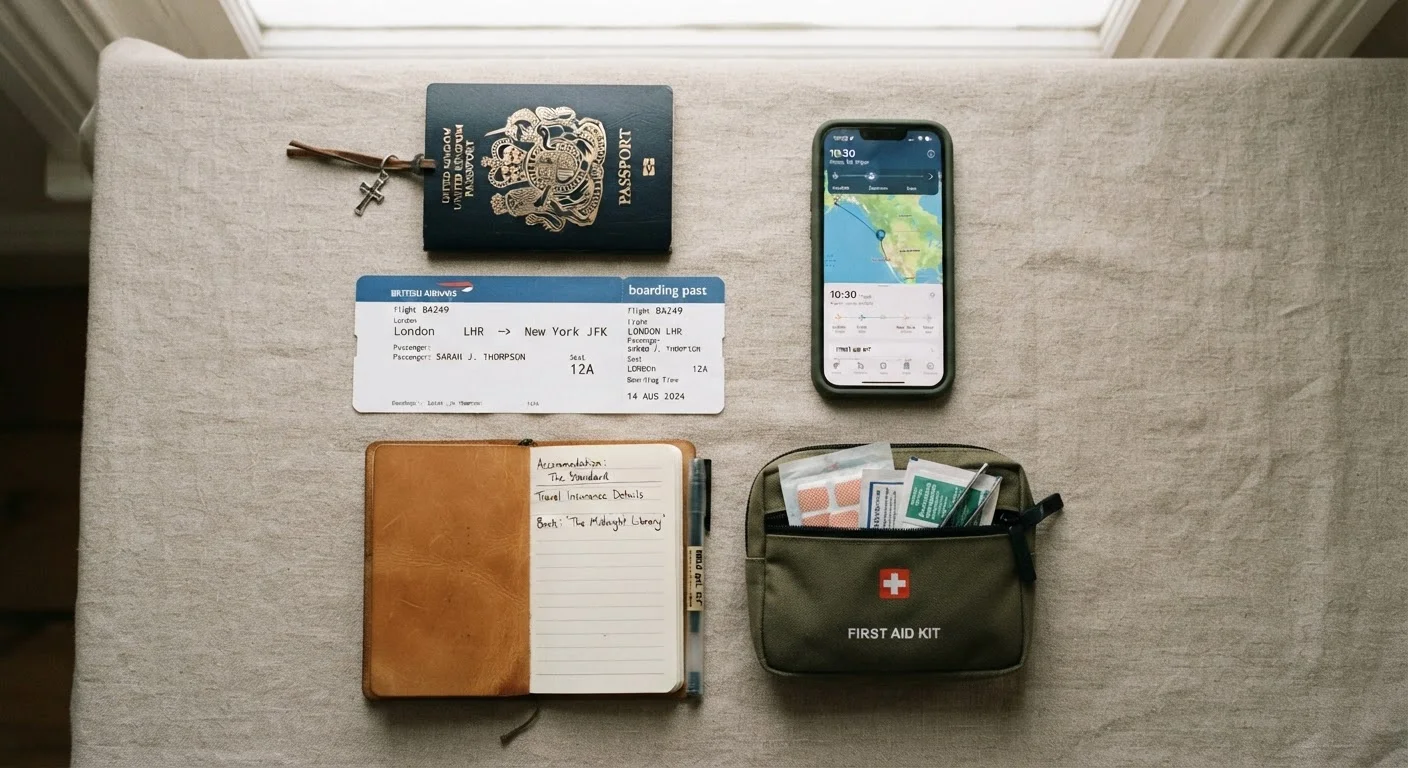
Flat-lay of travel essentials including passport, boarding pass, first aid kit, and notebook on a linen background

Key Takeaways

Securing physical and digital copies of key documents before departure prevents major disruptions if originals are lost or stolen.
Registering with the U.S. State Department's STEP program gives the government a way to reach you in emergencies abroad.
Health preparation — including checking vaccination requirements and packing a basic medical kit — should begin weeks before travel.
Simple digital security steps, like enabling two-factor authentication, protect your accounts while you're on public networks.
Researching local laws, emergency numbers, and neighborhood safety norms gives you a practical edge wherever you land.
30–60 min

Summary

22 items · 30–60 minutes

Why a Safety Prep Checklist Beats Winging It

Experienced travelers don't rely on luck — they rely on preparation they've already made before stepping off the plane. The goal isn't to travel in fear; it's to travel with clarity. When you've done the groundwork, minor disruptions stay minor, and genuine emergencies don't spiral into full-blown crises.

This checklist targets the safety-specific preparation that often gets skipped in the rush of packing and booking. It complements — rather than duplicates — the broader logistics covered in our pre-trip departure checklist. Think of this as the layer underneath: the preparation that protects you when plans change unexpectedly.

Work through these items in the days and weeks before departure. Some take five minutes; others, like health consultations, need to be scheduled well in advance.

Documents & Identity

Make physical photocopies of your passport, driver's license, travel insurance card, and any visas, and store them separately from the originals. Must
Save encrypted digital copies of all key documents to a secure cloud service you can access from any device. Must
Confirm your passport has at least six months of validity remaining beyond your return date — many countries require this as an entry condition. Must
Share a copy of your itinerary, accommodation addresses, and emergency contact info with a trusted person at home. Must

Health & Medical Prep

Consult a travel medicine clinic or your primary care provider at least four to six weeks before departure to review destination-specific health considerations. Must
Pack a basic travel health kit including any prescription medications (with enough supply to last beyond your trip), over-the-counter pain relievers, antidiarrheal medication, bandages, and antiseptic. Must
Carry prescription medications in their original, labeled containers and bring a letter from your prescribing doctor when traveling internationally. Should
Check whether your health insurance plan covers international medical care; if not, research travel health insurance options independently. Should
Note the location of the nearest hospital or clinic to each accommodation on your itinerary. Nice to have

Government Registration & Emergency Contacts

Enroll in the U.S. State Department's Smart Traveler Enrollment Program (STEP) so the nearest U.S. embassy can contact you during an emergency. Must
Save local emergency numbers (police, ambulance, fire) for each destination in your phone before you arrive — 911 does not work in most countries. Must
Locate and record the address and phone number of the nearest U.S. embassy or consulate at your destination. Should

Digital Security

Enable two-factor authentication on email, banking, and any accounts you'll access while traveling. Must
Avoid using unsecured public Wi-Fi for sensitive transactions; consider using a virtual private network (VPN) — software that encrypts your internet connection — on public networks. Should
Set up remote-wipe capability on your smartphone and laptop in case a device is lost or stolen. Should
Notify your bank and credit card providers of your travel dates and destination to prevent automatic fraud blocks on your accounts. Must

Destination Research & Local Safety

Check the U.S. State Department's travel advisory page for your destination and review any active alerts or advisories before departure. Must
Research neighborhood-level safety for each area you plan to stay or visit, not just the city as a whole. Should
Learn a few basic phrases in the local language, especially how to ask for help and how to identify yourself as a tourist needing assistance. Nice to have
Understand any local laws or customs that could put you at legal or personal risk — including photography restrictions, dress codes, or substance regulations. Should

Financial & Communication Backup

Carry a small amount of local currency in cash as a backup in case card systems are unavailable in your destination. Should
Know the protocol for canceling and replacing your cards if they are lost or stolen abroad, including international customer service numbers. Must

Tools That Make This Checklist Easier to Complete

You don't need specialty gear to complete this checklist — but a handful of reliable tools make the process faster and more thorough. Below are the essentials worth having in place before you start working through the items above.

Required

U.S. State Department STEP Program

Free government service that registers your trip and allows embassies to contact you during emergencies or natural disasters.

Required

Travel Health Clinic or Primary Care Provider

A qualified healthcare provider can assess destination-specific health risks and advise on vaccinations or preventive measures.

Required

Secure Cloud Storage Service

Stores encrypted digital copies of your documents so they're accessible from any device if originals are lost.

Optional

VPN (Virtual Private Network) App

Encrypts your internet connection on public Wi-Fi networks to reduce the risk of data interception while traveling.

Optional

Password Manager App

Securely stores and autofills account credentials so you don't rely on weak or reused passwords while abroad.

For destination-specific health guidance, the health preparedness guide for international travel offers a deeper look at vaccinations, food and water precautions, and what to discuss with a healthcare provider before you go. And if you're still building out your overall research process, our guide on what to research before visiting a new country covers entry requirements, local laws, and cultural norms in one place.

Don't Wait Until the Week Before

Several items on this checklist — particularly health consultations, vaccination schedules, and passport renewals — require lead time of weeks or even months. Starting this checklist the week before departure may leave you unable to complete critical steps. Build your safety prep into your planning timeline as soon as your trip is confirmed.

This article is for general informational and educational purposes only. It does not constitute medical, legal, or financial advice. Always verify entry requirements, health recommendations, and safety conditions with official government sources and qualified professionals before traveling.

Travel Smarter Editorial Team is the collective byline for our editorial team and contributor network. Articles published under this byline or an editorial pen name are researched, written, and reviewed according to our editorial standards for clarity, consistency, and independence before publication.

View all articles by Travel Smarter Editorial Team →
Disclaimer: The content on this site is for informational purposes only and is not a substitute for professional advice. Always consult a qualified professional for guidance specific to your situation.