

Key Takeaways
Summary
22 items · 20–40 minutes
Why Health Prep Belongs on Every International Itinerary
Planning an international trip involves far more than flights and accommodations. Your health is one of the most important things to protect while abroad — and the good news is that most travel-related illness is preventable with the right preparation. Whether you're heading to Western Europe or rural Southeast Asia, a few targeted steps before you leave can dramatically reduce your risk of getting sick and ensure you know what to do if something does go wrong.
This checklist is organized to walk you through the most important health considerations in roughly the order you should address them. Start with your medical consultation, then work through documentation, food safety habits, and what to pack. For a broader picture of pre-trip safety planning, see our guide for first-time travelers.
This Is General Information, Not Medical Advice
The information in this article is intended as general education to help you prepare questions for your healthcare provider. It is not a substitute for personalized medical advice. Vaccination needs, medication recommendations, and health risks vary significantly by destination, individual health history, and travel style. Always consult a qualified healthcare professional before making decisions about vaccinations, medications, or managing a health condition while traveling abroad.
Before You Go: Consultations, Vaccines, and Documentation
The most impactful health decisions happen before you board the plane. A pre-travel medical consultation — ideally with a travel medicine specialist — gives you a tailored picture of the health risks at your destination and what you can do to address them. The CDC's Travelers' Health website is a reliable starting point for researching destination-specific recommendations, but it's not a replacement for a conversation with your provider.
Vaccination timelines matter more than most travelers realize. Some vaccines need weeks to become fully effective; others require a series of doses. If your departure is still a couple of months away, you have time to complete even multi-dose series. If you're leaving soon, talk to your provider about what's still feasible.
Some Countries Require Proof of Vaccination for Entry
Certain destinations — particularly those in parts of sub-Saharan Africa and South America — require proof of yellow fever vaccination as a condition of entry. Requirements can change, so verify entry rules with the destination country's official government sources and the CDC before you travel. Failing to carry required documentation can result in denied boarding or quarantine upon arrival.
Don't Wait Until the Week Before Departure
Several travel vaccines require multiple doses over a period of weeks to be effective. Some, like the hepatitis B series, take months to complete. Starting your health prep too late may leave you without adequate protection for your destination. Aim to see a healthcare provider at least 4–6 weeks before your trip — earlier if your itinerary includes high-risk regions.
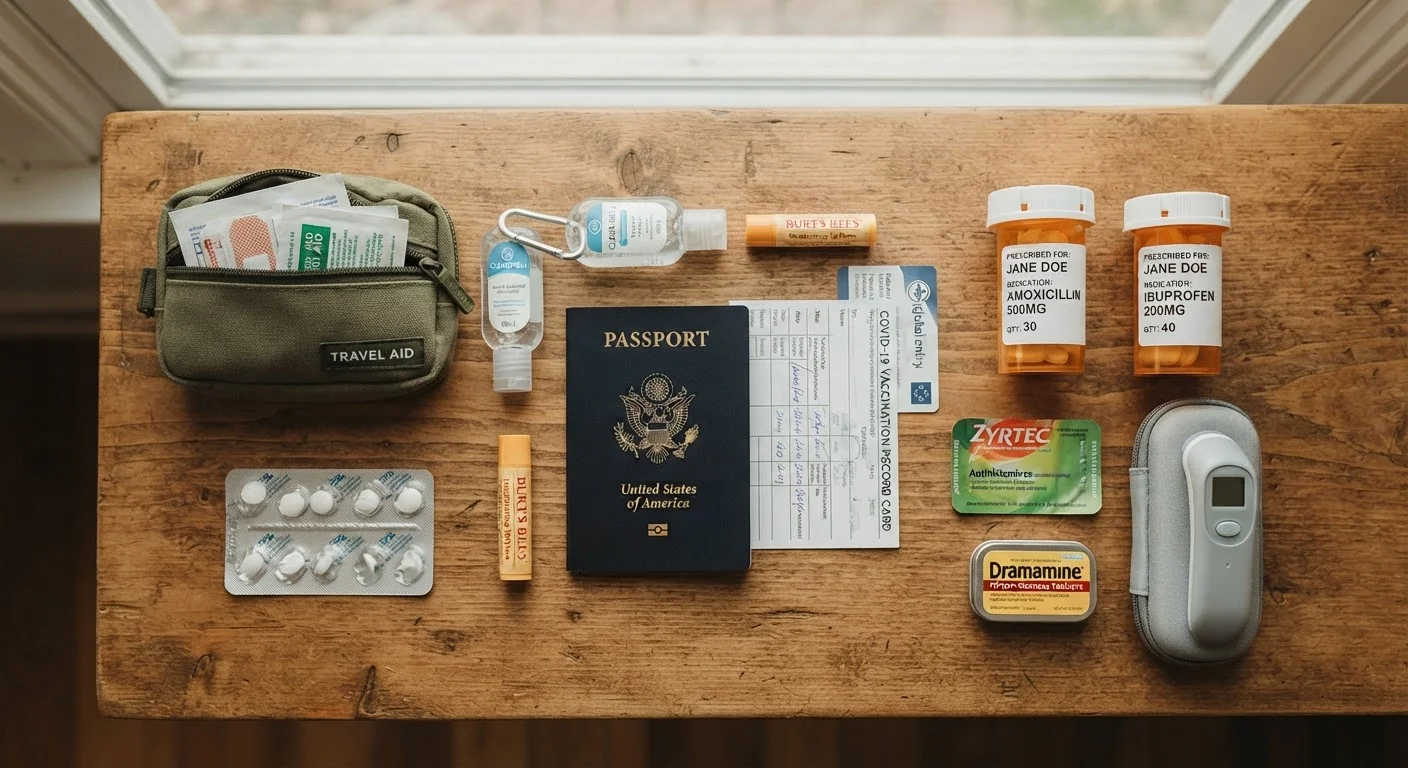
On the documentation side, make sure your vaccination records, insurance information, and a summary of your medical history travel with you — both in physical form and stored digitally somewhere accessible. This preparation pairs well with the broader pre-departure tasks covered in our pre-trip checklist.
Pre-Departure Medical Consultation
Health Insurance and Documentation
Food and Water Safety
Travel Health Kit
Ongoing Health Habits During Travel
Staying Well During Your Trip
Once you're abroad, your habits matter as much as your vaccines. Foodborne and waterborne illness account for a significant share of travel-related health problems — and they're largely avoidable. The core rule is straightforward: if you're unsure about the safety of water or food, err on the side of caution. "Boil it, cook it, peel it, or forget it" remains a practical heuristic in many destinations.
Insect-borne illnesses like malaria, dengue, and Zika are a concern in tropical and subtropical regions. Consistent use of insect repellent, protective clothing, and physical barriers (like bed nets) significantly reduces exposure risk. Your provider can advise on destination-specific precautions.
For a comprehensive look at what to research about your specific destination — including local health infrastructure — see what to research before visiting a new country. And if you're still building out your overall departure checklist, useful things to organize before an international trip covers health documentation alongside other key pre-departure tasks.
CDC Travelers' Health Website (wwwnc.cdc.gov/travel)
Look up destination-specific health notices, vaccination recommendations, and disease outbreak alerts from the U.S. Centers for Disease Control and Prevention.
U.S. Department of State Smart Traveler Enrollment Program (STEP)
Register your international trip to receive safety and health alerts, and help the U.S. Embassy locate you in an emergency.
Travel Medicine Clinic or Primary Care Provider
Get personalized vaccination recommendations, prescriptions for destination-specific medications, and a pre-travel health review.
Travel Health Insurance Provider
Supplement your domestic health coverage with international medical and evacuation coverage for the duration of your trip.
WHO International Travel and Health Resource
Access the World Health Organization's country-by-country health guidance for travelers as a secondary reference.
This article is for general informational and educational purposes only and does not constitute medical advice. Health risks, vaccination requirements, and recommended precautions vary by destination and individual health profile. Always consult a qualified healthcare professional before making decisions about travel vaccinations, medications, or managing a health condition while traveling. Verify entry requirements with official government and health sources before departure, as conditions can change.