

Key Takeaways
Start here
What an Emergency Fund Actually Is
Next
How Much Should You Save?
Then
Where to Keep Your Emergency Fund
When you're ready
How to Build It When Money Is Tight
What an Emergency Fund Actually Is
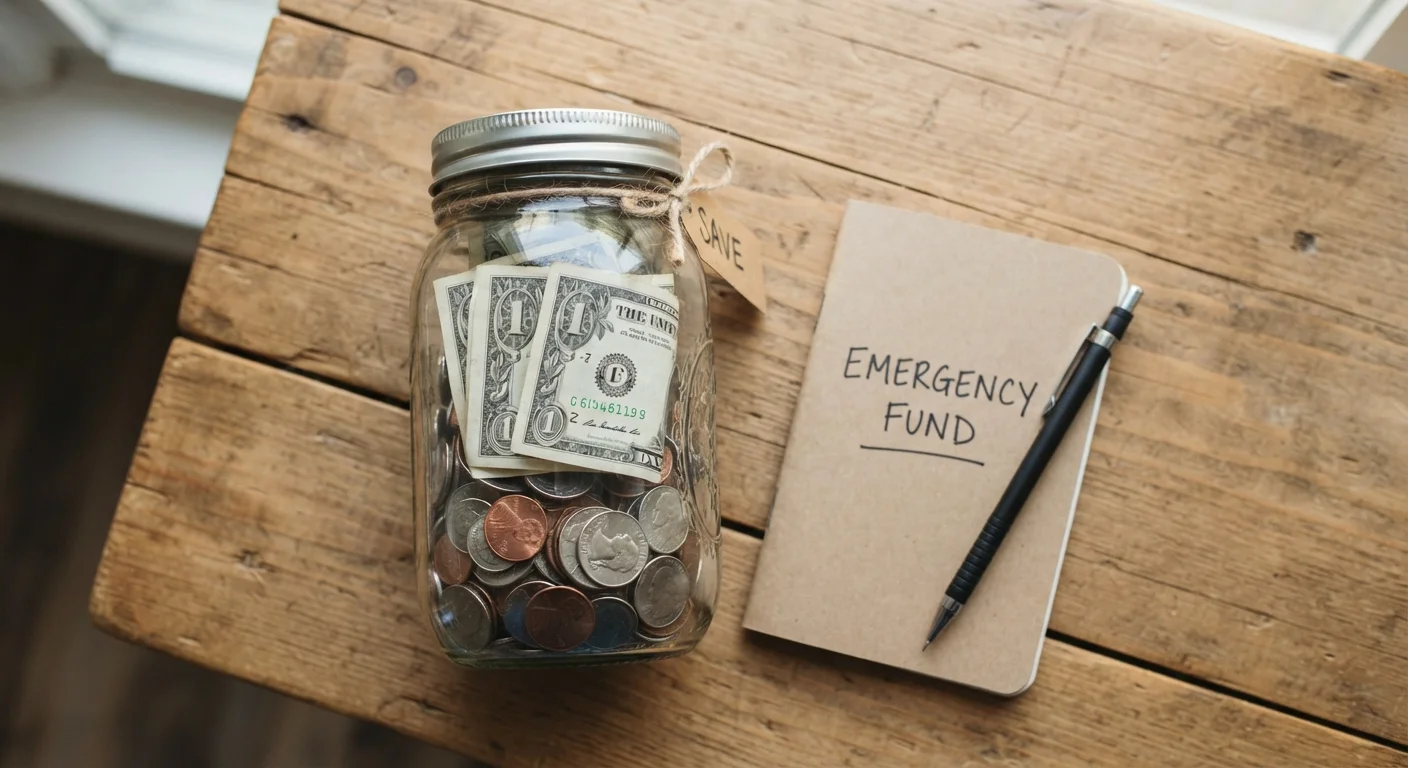
An emergency fund is a dedicated pool of money set aside exclusively for genuine, unplanned financial surprises — a sudden job loss, an unexpected medical bill, a car breakdown you can't avoid, or a major appliance failure. It is not a vacation account, a holiday shopping fund, or a general-purpose savings buffer. That distinction matters, because clarity about what the money is for makes it far less tempting to raid for non-emergencies.
The core purpose of an emergency fund is to break the cycle of putting every crisis on a credit card or borrowing from friends and family. Without one, even a modest unexpected expense — say, a $600 car repair — can send a household into debt. With one, the same expense is simply a withdrawal, not a financial setback.
Emergency Fund
A dedicated savings reserve used only for genuine, unplanned financial crises — not routine expenses or discretionary spending.
Liquidity
How quickly and easily you can convert an asset into cash without losing value. A savings account is highly liquid; real estate is not.
FDIC Insurance
Federal Deposit Insurance Corporation protection that guarantees bank deposits up to $250,000 per depositor per institution if a bank fails.
High-Yield Savings Account (HYSA)
A federally insured savings account — typically offered by online banks — that pays a higher interest rate than standard savings accounts while keeping your money accessible.
Essential Expenses
The monthly costs you genuinely cannot skip, such as housing, utilities, groceries, insurance, and minimum debt payments — the baseline for calculating your emergency fund target.
Think of it as the foundation of any solid money plan. Before investing, before extra debt payments, before almost anything else, having at least a basic emergency cushion is widely recommended by personal finance educators. Once you have one in place, you are far better positioned to tackle other financial goals — including the steps covered in our Budgeting Basics hub.
How Much Should You Save?
The most commonly cited guideline is three to six months of essential living expenses. Essential means the spending you truly cannot skip: rent or mortgage, utilities, groceries, minimum debt payments, insurance, and transportation to work. It does not include subscriptions, dining out, or entertainment.
To calculate your target, add up those core monthly costs and multiply by three (for a leaner fund) or six (for a fuller one). A household with $2,500 in monthly essentials would aim for $7,500 to $15,000.
The right number for you depends on a few personal factors:
- Job stability: Freelancers, contractors, or those in volatile industries generally benefit from a larger fund — six months or more.
- Household income sources: Two-income households may be comfortable with a smaller cushion than single-income ones.
- Dependents: Children, aging parents, or others who rely on you increase the stakes of any income disruption.
- Health: Chronic conditions or high out-of-pocket medical costs may warrant a larger reserve.
If three to six months feels completely out of reach right now, that is normal. Many personal finance educators recommend a starter goal of $500 to $1,000, particularly while also paying down high-interest debt. A small fund prevents most everyday surprises from becoming crises, even if it would not cover a prolonged job loss.
Where to Keep Your Emergency Fund
Your emergency fund needs two qualities: safety and liquidity. Safety means the money won't lose value. Liquidity means you can access it quickly without penalty. That combination rules out most investments and points squarely toward a savings account.
Separate the Account, Separate the Temptation
Opening your emergency fund at a different bank than your everyday checking account adds a small but meaningful friction to spending it impulsively. That slight delay — logging into a different app, initiating a transfer — gives you time to decide whether the expense is truly an emergency. Many people find this simple separation dramatically improves their ability to leave the fund untouched.
A high-yield savings account (HYSA), typically offered by online banks, is the most widely recommended home for an emergency fund. These accounts are federally insured (FDIC for banks, NCUA for credit unions) up to $250,000 per depositor, meaning your money is protected even if the institution fails. They also tend to pay meaningfully higher interest rates than traditional brick-and-mortar savings accounts, so your fund grows slightly while it sits.
A few practical tips on placement:
- Keep it separate from your checking account. When emergency savings sit in the same account as daily spending money, the line blurs. A distinct account makes it harder to accidentally spend and easier to track.
- Avoid locking it up. Certificates of deposit (CDs) may offer higher rates, but early withdrawal penalties can defeat the purpose. Your emergency fund needs to be accessible when a crisis hits, not two years from now.
- Don't invest it. Stock market accounts can decline sharply at exactly the moment you might need the money most. Stability outweighs growth here.
This approach is meaningfully different from a sinking fund, which is money intentionally set aside for a known future cost like a car registration or annual insurance premium. Both are useful tools; they just serve different purposes.
How to Build It When Money Is Tight
Building an emergency fund on a limited income is genuinely difficult — but it is also the situation where it matters most. A few strategies make it more manageable:
- Start smaller than you think necessary. Even $10 per paycheck builds a habit and a balance. The goal at first is consistency, not speed.
- Automate the transfer. Set up an automatic transfer from checking to your emergency savings account on the same day you get paid. Saving what's left after spending rarely works; paying yourself first does.
- Direct windfalls there first. Tax refunds, work bonuses, birthday money, or any unexpected income bump can meaningfully accelerate your fund without changing your regular budget.
- Look for small spending cuts. Even freeing up $30 to $50 a month — by adjusting a subscription or reducing one spending category — adds $360 to $600 per year to your fund.
If you are currently living paycheck to paycheck, the Building a Starter Budget When Money Is Already Tight guide offers step-by-step help for making room in a very constrained budget. And once your emergency fund is in place, you will be ready to think about the next step: building long-term wealth through foundational investing.
This article is for general informational and educational purposes only. It does not constitute personalized financial, tax, or investment advice. Consult a qualified financial professional for guidance specific to your situation.