

Key Takeaways
The Real Reason Your Living Room Feels Tight
A small living room isn't automatically a bad living room — but certain habits reliably make it feel worse than it needs to. The good news is that most of these problems aren't about square footage. They're about how the space is arranged, lit, and filled. Spatial perception is surprisingly malleable: the same room can feel open and relaxed or crowded and stressful depending almost entirely on choices you can change without moving walls or spending a lot of money.
Understanding what's actually causing that cramped feeling is the first step. Once you can name it, you can fix it. The mistakes below are among the most common culprits in American living rooms — and most of them are easier to correct than you'd expect.
If you're setting up a space from scratch, our room-by-room setup checklist covers the functional priorities worth addressing first.
Common Mistakes That Make Small Rooms Feel Smaller
These aren't obscure design theory — they're the specific, avoidable errors that interior designers flag again and again in compact spaces.
Pushing all furniture against the walls in an attempt to 'open up' the center of the room.
Why it happens: It feels counterintuitive to move furniture away from the walls in a small space, so most people default to perimeter placement assuming it maximizes floor area.
Using a rug that is too small for the seating area.
Why it happens: Smaller rugs are less expensive and seem like they take up less visual space, which sounds like a benefit in a compact room.
Relying on a single overhead light fixture for all the room's illumination.
Why it happens: Overhead lights come standard in most homes, so people assume that's the primary — or only — source of light needed.
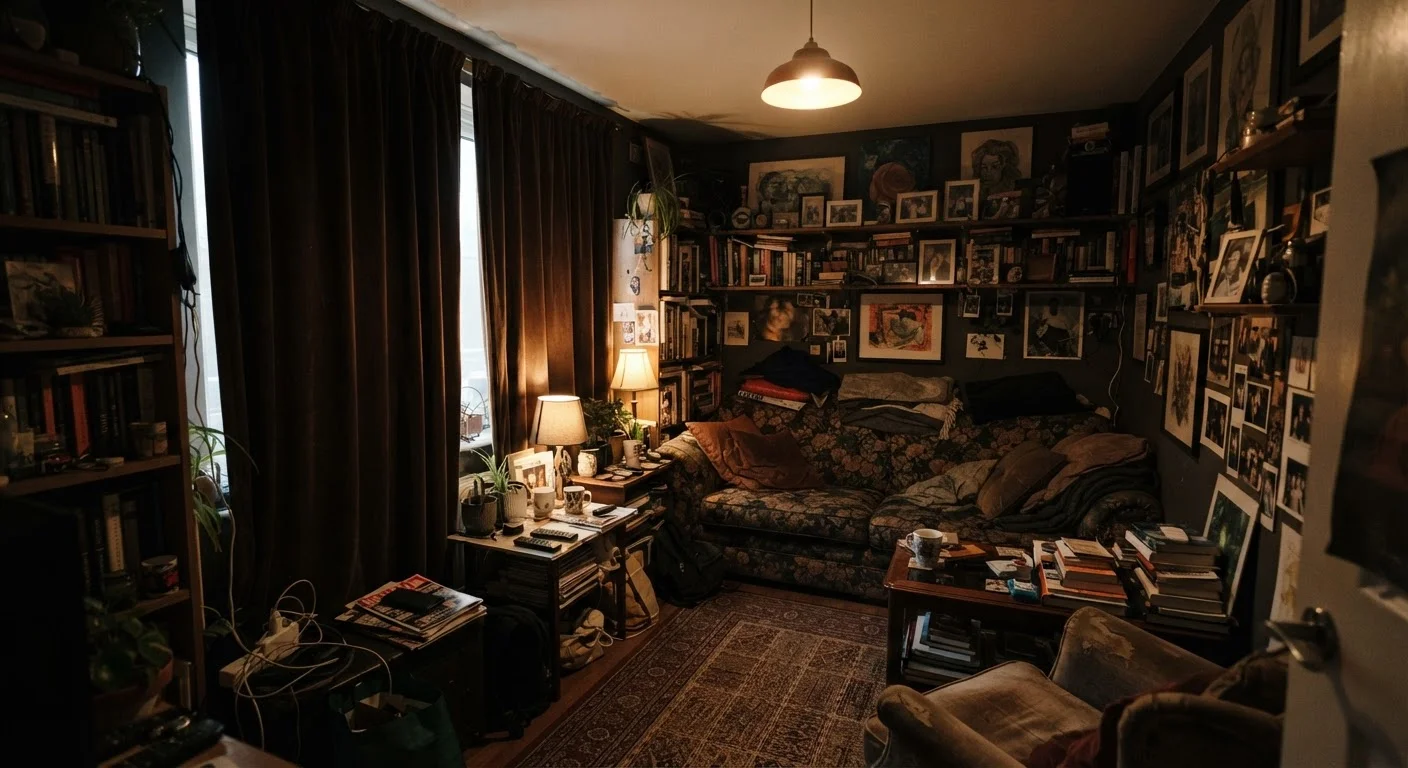
Overcrowding surfaces and shelves with decorative objects and collections.
Why it happens: Personal items make a space feel lived-in and meaningful, and it's easy to accumulate objects gradually without noticing the visual effect.
Choosing furniture that is scaled for a larger room — oversized sofas, bulky entertainment centers, or multiple large pieces that crowd the floor plan.
Why it happens: Showroom floors are large, so furniture looks proportionate in the store. Buyers underestimate how dominant pieces become once placed in a smaller home.
Hanging curtains at window height rather than close to the ceiling.
Why it happens: Mounting curtains directly above the window frame seems logical — that's where the window is.
Don't Solve Clutter by Adding More Storage Furniture
It's tempting to buy additional shelving units or storage pieces to manage a crowded room — but adding more furniture to a small space typically makes the problem worse. Each new piece reduces floor visibility and walkable area. Before bringing in any new storage, edit what you already own. Remove items you no longer use, then assess whether more storage is actually needed.
Lighting and Color: The Invisible Space-Makers
Two of the most powerful tools for changing how a room feels cost relatively little and require no heavy lifting. Lighting and color work on perception directly — they don't add square footage, but they reliably change how much space your brain registers.
~900 sq ft
Median size of the smallest U.S. home quartile
According to U.S. Census data, a significant share of American housing stock falls under 1,000 square feet, making efficient use of living room space a practical necessity for millions of households.
3x
Light reflection difference between dark and light wall colors
Interior design research consistently shows that light-value paint colors can reflect several times more light than dark colors, substantially affecting how bright and open a room feels.
Layered lighting — combining overhead fixtures with floor lamps, table lamps, and task lighting — eliminates the flat, shadow-heavy look that makes rooms feel smaller. For more on what actually works versus common assumptions, see lighting myths that affect home comfort.
Color follows similar logic. Lighter walls reflect more light and visually recede, which reads as more space. That doesn't mean every small room must be white — cooler medium tones and soft neutrals can work well — but very dark or highly saturated walls absorb light and close a room in. Painting a single accent wall darker than the others can actually work in a small room if it's the wall you look toward rather than sit against, because it creates a sense of depth.
Mirrors placed opposite or adjacent to windows multiply the light in a room and reflect the space back on itself, effectively doubling the visual depth. A large mirror leaned against a wall costs less than most furniture pieces and has a disproportionate impact on how open a room feels.
If others share your living space and have different instincts about color or layout, navigating shared style preferences is worth reading before making big changes.
Quick Principles to Keep in Mind
No single fix transforms a room overnight, but consistent application of a few spatial principles makes a measurable difference over time. Keep pathways clear — at minimum 30 to 36 inches of walkable space between major furniture pieces. Choose furniture with exposed legs where possible, since you can see the floor underneath, which reads as more open than pieces that sit flat on the ground. Use vertical space: tall bookshelves and artwork hung higher than eye level draw the gaze upward and make ceilings feel higher.
Storage that hides clutter matters more in small rooms than large ones. Closed cabinets and ottomans with interior storage keep surfaces clear. The same logic applies to shelving decisions in adjacent spaces — the trade-offs discussed in open shelving versus closed cabinets in the kitchen apply to living room display shelves too.
Finally, resist the urge to fill every corner. Negative space — areas with nothing in them — isn't wasted space. It's visual breathing room, and in a small living room, it's one of the most valuable things you can preserve.
This article provides general home design information for educational purposes. Costs, results, and suitability vary by space and individual circumstances.