

Key Takeaways
Option A
Open Shelving
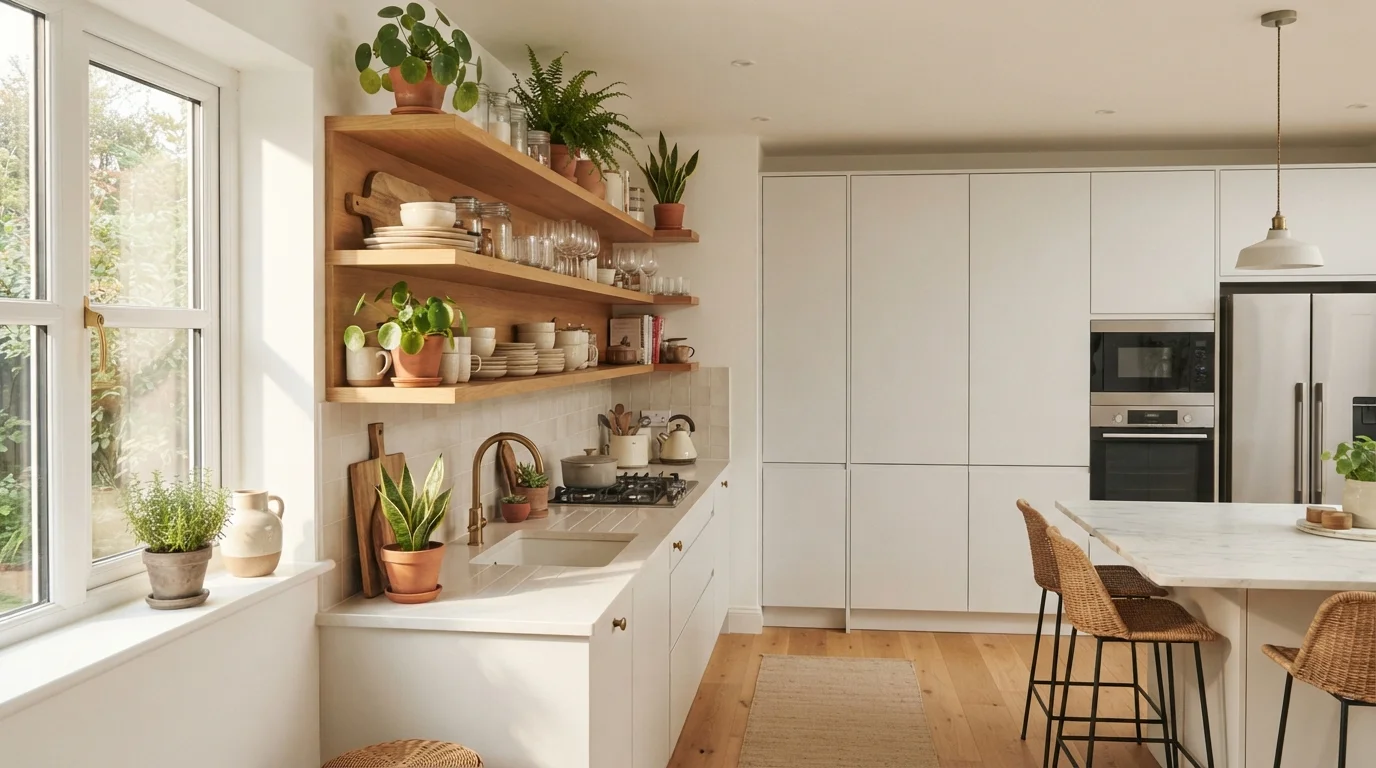
The airy, display-forward option.
Best for: Households that keep a tidy, curated kitchen and want an accessible, visually open storage style.
Option B
Closed Cabinets
The practical, hide-it-all workhorse.
Best for: Households that prioritize low-maintenance storage and want to keep everyday clutter out of sight.
If you prefer low-maintenance, hide-everything storage
Closed Cabinets
Cabinets let you close the door on mess without any daily effort. Dust, grease, and visual clutter stay contained behind solid doors.
If your kitchen is small and feels cramped
Open Shelving
Removing upper cabinet doors opens up sightlines and can make a tight space feel noticeably less boxed-in — a principle explored in making cramped spaces feel larger.
If you cook heavily and have a lot of equipment
Closed Cabinets
Heavy-use kitchens accumulate grease and cooking residue quickly. Closed cabinets protect stored items and reduce cleaning frequency considerably.
If you want a curated, styled look on a modest budget
Open Shelving
Basic floating shelves cost far less to install than full cabinet replacement, making open shelving an accessible option when funds are limited.
If multiple household members have different tidiness standards
Closed Cabinets
When a kitchen is shared, closed cabinets reduce friction by keeping storage styles private — relevant if you're navigating shared living space dynamics.
The Core Trade-Off: Visibility vs. Concealment
Open shelving puts everything in plain sight. That can be a genuine plus — frequently used items are easy to grab, and a well-arranged shelf of dishes or glassware can serve as décor in its own right. But that same visibility means any disorder is equally on display. Mugs crammed at odd angles, mismatched containers, and stacks of odds and ends become part of your kitchen's visual identity whether you want them to or not.
Closed cabinets work the other way: they absorb chaos quietly. You can stuff a cabinet with an imperfect collection of Tupperware lids and nobody sees it. That's a meaningful practical advantage in a high-traffic room that sees real daily use. The trade-off is a heavier visual weight — rows of cabinet doors can feel solid and enclosing, particularly in smaller kitchens.
Neither option is inherently superior. The right fit depends on how you actually use your kitchen, not how you imagine using it.
| Criterion | Open Shelving | Closed Cabinets |
|---|---|---|
| Visual effect | Airy, open, display-oriented | Solid, enclosed, uniform look |
| Clutter management | Everything on display | Mess hidden behind doors |
| Dust & grease exposure | High — items exposed to air | Low — contents protected |
| Cleaning frequency | More frequent wiping needed | Less frequent interior cleaning |
| Installation cost | Generally lower | Generally higher |
| Access to items | Immediate, no doors to open | Requires opening cabinet doors |
| Best kitchen size fit | Works well in smaller kitchens | Works in any size kitchen |
Maintenance and Cleaning Reality
Open shelves collect dust and grease from cooking — there's no door to intercept airborne particles. In a kitchen where you fry, roast, or cook frequently, surface residue can accumulate on dishes and shelf surfaces within days. That means more regular wiping down of both the shelves and anything sitting on them. If that kind of routine cleaning sounds realistic for your household, open shelving is manageable. If it sounds like one more task that will slide, it isn't.
Closed cabinets shift the cleaning burden to the outside of the doors and the interior hinges, both of which are easier to wipe down quickly. The interior stays relatively protected. That said, cabinet interiors still need periodic cleaning — grease migrates, crumbs accumulate, and the back corners of deep cabinets become forgotten storage zones.
Your cooking habits are the deciding factor here. Light cookers and households with consistent organization routines — the kind covered in sustainable home organization systems — often find open shelving manageable. Heavy cooks typically don't.
Renter Considerations
If you're renting, major cabinetry changes typically require landlord approval and may not be permitted at all. Open shelving installed with proper wall anchors is often a reversible option — but always check your lease and get written permission before altering walls or removing existing cabinet doors. Restoring the kitchen to its original condition is usually the tenant's responsibility.
Cost, Installation, and the Hybrid Middle Ground
From a pure cost standpoint, open shelving is considerably cheaper to install than full cabinetry. Basic floating shelves — wood, metal, or laminate — can be wall-mounted for a fraction of what new cabinets cost. Cabinet replacement is one of the more expensive kitchen upgrades a homeowner can undertake, often running into thousands of dollars depending on scope and finish.
That cost gap matters if you're working within a realistic household budget. If a full cabinet overhaul isn't financially practical right now, removing a few upper cabinet doors or adding a run of open shelves in a specific zone can meaningfully refresh a kitchen without major outlay. If you're thinking through larger home spending decisions, a review of budgeting fundamentals can help frame what's worth prioritizing.
Many homeowners land on a hybrid approach: closed lower cabinets for bulky, less attractive storage, and open upper shelves for curated, everyday items. This combination captures the visual benefit of open shelving while keeping the concealment where it matters most. It also allows gradual transition — you can start with one open section and assess how well it fits your household before committing further.
If clutter is already a challenge in your home, it's worth working through a decluttering process before deciding on shelving type — open shelving specifically tends to amplify existing clutter rather than resolve it.