

Key Takeaways
Tire Pressure & Tread Depth
Tire pressure is the amount of air inside your tire, measured in PSI (pounds per square inch). Tread depth is how much rubber remains on the tire surface, measured in 32nds of an inch. Together, these two numbers determine how well your tires grip the road, how efficiently your car burns fuel, and how long your tires last.
Tire pressure fluctuates with temperature — roughly 1 PSI for every 10°F change — so readings taken in a cold garage versus a hot afternoon can differ meaningfully.
Why These Two Numbers Matter More Than Most Drivers Realize
Most drivers know tires are important — but far fewer think about them until something goes wrong. Tire pressure and tread depth are easy to overlook because tires tend to look fine right up until they aren't. Understanding these two measurements doesn't require mechanical expertise; it just requires knowing what to check and what the numbers mean.
Both figures directly affect your safety on the road. Proper pressure keeps the tire's contact patch — the small area of rubber actually touching the pavement — the right size and shape. Adequate tread depth gives that rubber the ability to channel water away and maintain grip. When either is off, braking distances increase, handling suffers, and the risk of losing control rises. These aren't edge-case concerns; they apply every time you drive.
Beyond safety, both numbers affect your wallet. Under-inflated tires create more rolling resistance, which costs you at the pump. Worn or improperly inflated tires also wear unevenly, shortening their usable life. A few minutes of attention each month can stretch both your fuel budget and the life of your tires. For more on building this into a broader routine, see habits that extend vehicle life.
~1 in 4
Passenger vehicles with at least one significantly under-inflated tire
Based on National Highway Traffic Safety Administration (NHTSA) data from roadside tire surveys.
0.5%
Fuel economy lost per 1 PSI drop in tire pressure
According to the U.S. Department of Energy, properly inflated tires can improve gas mileage by a small but meaningful margin over time.
4/32"
Tread depth threshold where wet stopping distance increases notably
Tire and safety organizations including the Rubber Manufacturers Association have noted measurable performance differences below this depth on wet roads.
Tire Pressure: How to Check It and What to Do
The right pressure for your tires is listed on a sticker inside the driver's side door jamb — not on the tire itself. The number on the tire sidewall is the maximum the tire can hold, which is different from what your car actually needs. The door jamb number is what you're targeting.
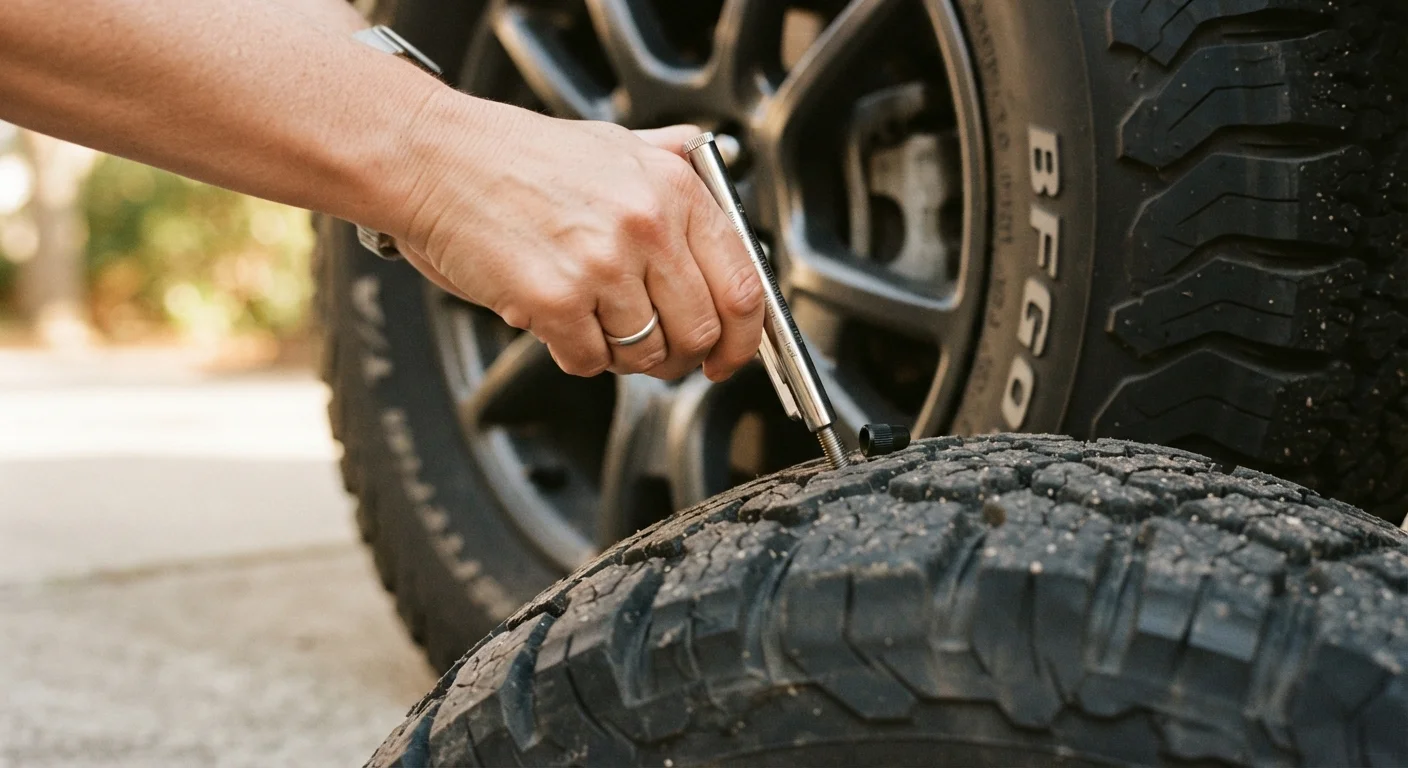
To get an accurate reading, check pressure when the tires are cold — meaning you haven't driven more than a mile in the past three hours. Driving heats the air inside the tire and raises pressure, which will give you a falsely high reading. Use a quality tire pressure gauge (digital or dial-type gauges are more reliable than the cheap pencil-style ones) and compare your reading to the recommended PSI.
If pressure is low, add air. Most gas stations have air compressors, and many now include a built-in gauge. Add air in short bursts, recheck often, and don't overfill. If a tire consistently loses pressure between checks, have it inspected — there may be a slow leak or a faulty valve stem.
Check Pressure Before You Drive, Not After
Tire pressure readings taken after even a short drive will be higher than the true cold reading, because heat expands the air inside. Always check in the morning before driving, or wait at least three hours after parking. This gives you the most accurate comparison against the recommended PSI on your door jamb sticker.
Tread Depth: Simple Tests and What the Numbers Mean
New tires typically start with about 10/32" of tread depth. As that rubber wears down, the tire's ability to grip — especially on wet pavement — decreases. The legal minimum in most U.S. states is 2/32", but safety-focused organizations often recommend replacing tires at 4/32" because stopping distance in rain increases considerably below that threshold.
You don't need a tread depth gauge to get a quick read, though they are inexpensive and more precise. Two common coin tests work well:
- Penny test: Insert a penny into the tread groove with Lincoln's head pointing down. If you can see the top of Lincoln's head, the tread is at or below 2/32" — replacement is due.
- Quarter test: Insert a quarter the same way with Washington's head pointing down. If you can see the top of Washington's head, you're at or below 4/32" — consider replacing soon, especially if you drive in wet conditions.
Also look for wear indicators — small raised bars molded into the tread grooves at 2/32". When the tread surface is level with these bars, the tire has reached the legal wear limit.
Uneven wear patterns (more wear on the edges than the center, or on one side only) can signal pressure problems or alignment issues. For more on how alignment fits into tire care, see tire rotation, balancing, and alignment.
Making These Checks a Habit
Neither check takes more than five minutes. The simplest approach is to build tire pressure checks into something you already do — fill up your gas tank once a month and check pressure at the same time. A basic tire pressure gauge kept in the glove box costs just a few dollars and removes any excuse not to check.
For tread depth, a quick visual or coin test every couple of months is enough for most drivers. If your tires are getting older (generally past five to six years) or have high mileage, inspect more often and consider having a mechanic look at them during routine service visits.
Tire care doesn't exist in isolation. It fits into a broader picture of routine vehicle upkeep — see routine maintenance every car owner should know for a practical overview of what gets checked and when. Two numbers, a few minutes a month, and a coin in your pocket are genuinely enough to stay ahead of most tire problems before they become safety issues or unexpected expenses.
“Tires are the only part of your vehicle actually touching the road. Everything else — brakes, steering, suspension — works through them. If the tires aren't right, nothing else matters as much as you'd think.”
— Cars & Driving Editorial Team, Automotive content team specializing in practical driver education