

Key Takeaways
Brake Wear
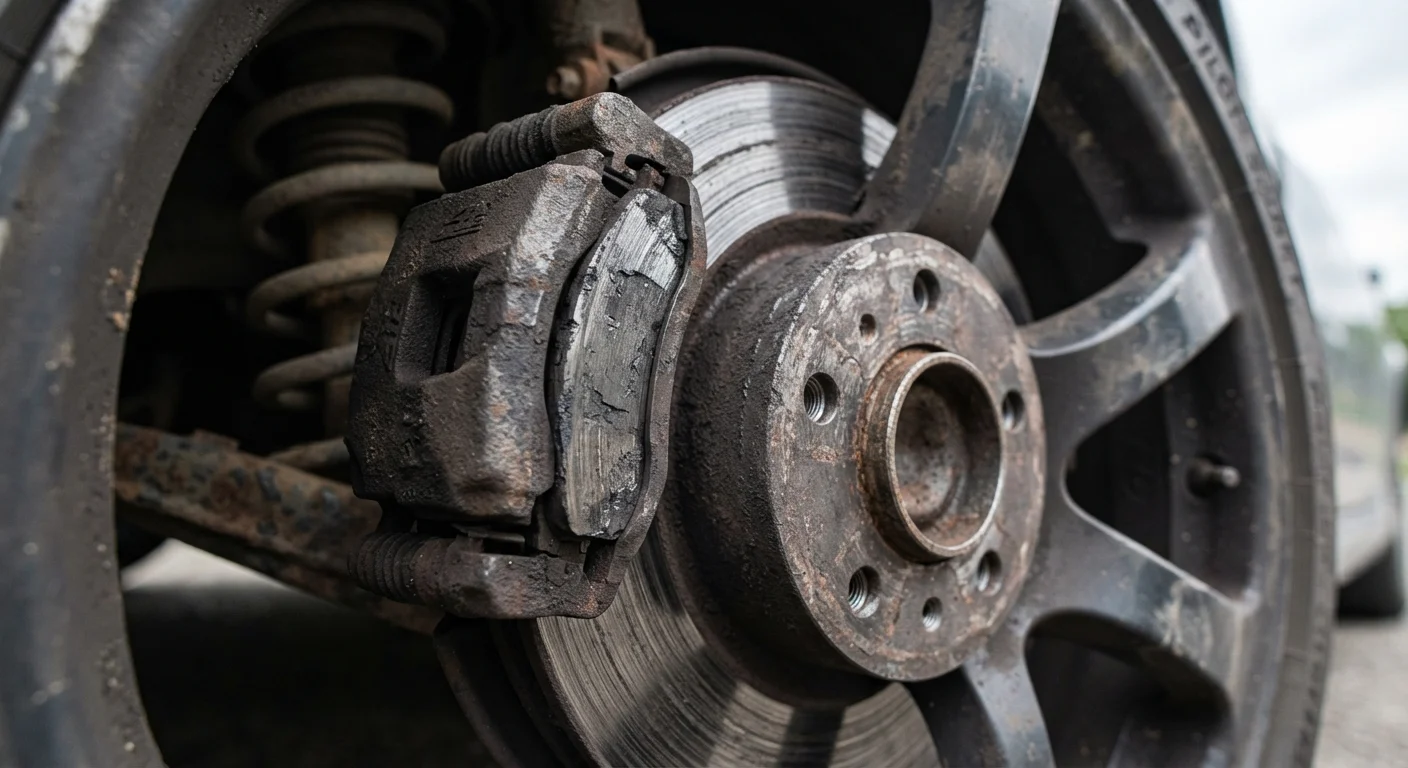
Brake wear refers to the gradual thinning of the friction material on your brake pads — and, over time, the rotors they press against. Every time you slow down, that material erodes slightly. When it wears too thin, your vehicle's stopping power is compromised and metal-on-metal contact can damage components that cost significantly more to replace.
Most brake pads start with 10–12mm of friction material and should be inspected or replaced when they reach approximately 3–4mm. Rotors have a minimum thickness spec stamped directly on them; once worn past that point, they must be replaced.
What Your Brakes Are Actually Telling You
Your brakes communicate — loudly, subtly, and through feel — long before they fail. The challenge is knowing how to interpret those signals. Most drivers encounter brake wear gradually, which makes it easy to tune out changes that happen slowly over thousands of miles.
The brake system works by pressing friction material (the pads) against metal discs (rotors) to slow the vehicle. As the pads erode, the system becomes less effective. The good news: the warning signs are predictable and recognizable, even without any mechanical training.
25,000–65,000 mi
Typical brake pad lifespan range
Driving style and conditions — especially stop-and-go city traffic — are the biggest variables determining where in that range your pads fall.
3–4 mm
Pad thickness that signals replacement time
Most brake pads start at 10–12mm; industry guidance generally recommends inspection or replacement at around 3–4mm of remaining friction material.
~12,000 mi
Recommended brake inspection interval
Many automotive professionals suggest annual brake inspections or checks every 12,000 miles, often timed alongside tire rotations for convenience.
Understanding what normal brake behavior feels and sounds like is the starting point. From there, anything that deviates — a new noise, a different pedal feel, a slight pull to one side — is a signal worth paying attention to.
The Warning Signs, From Early to Urgent
Squealing or High-Pitched Screeching
This is typically the earliest sign of wear. Most brake pads include a small metal tab called a wear indicator, specifically designed to squeal when the pad material gets low. If you hear squealing during normal stops that goes away when you release the brake pedal, that tab is likely making contact with the rotor. It's a heads-up, not an emergency — but it means an inspection is overdue.
Grinding or Growling
Grinding is a more serious sound. It usually means the friction material has worn through entirely and metal is contacting metal. At this stage, the rotors themselves are likely being damaged. Driving on grinding brakes significantly increases repair costs and, more importantly, degrades your stopping ability.
Soft, Spongy, or Sinking Pedal
If the brake pedal feels mushy, travels further than usual, or slowly sinks toward the floor under steady pressure, that's a hydraulic system concern — often air in the brake lines or a fluid leak. This should be inspected by a qualified mechanic without delay.
Pulling to One Side
A vehicle that drifts left or right under braking may have unevenly worn pads, a sticking caliper, or a fluid contamination issue on one side. This isn't just a brake problem — it's a control problem. Have it looked at promptly.
Vibration or Pulsing Through the Pedal
A pedal that pulses or a steering wheel that vibrates during braking often points to warped rotors. Rotors can warp from excessive heat — sometimes from riding the brakes down a long hill, or from a very hard stop. Warped rotors reduce consistent contact between pad and disc, affecting braking efficiency.
How Often Should Brakes Be Checked?
There's no single universal answer, because brake wear depends heavily on how and where you drive. A commuter who sits in stop-and-go traffic puts far more stress on their pads than someone logging mostly highway miles.
As a general reference point, many automotive professionals suggest brake inspection every 12,000 miles or at least once a year — whichever comes first. Brake inspections are often included as part of tire rotations, making it relatively easy to get eyes on them regularly. See our overview of routine maintenance every car owner should know for a broader service schedule reference.
If you drive a high-mileage vehicle, staying on top of brake condition becomes even more important. Components on older vehicles can wear in less predictable patterns. Our piece on high-mileage ownership covers what to watch as the miles add up.
Driving habits also matter. Smooth, gradual braking instead of hard, last-second stops extends pad life noticeably. That's one of the practical habits explored in smart habits that extend vehicle life.
When to Bring In a Professional
Visually checking brake pad thickness through the wheel spokes gives a rough sense of where you stand, but it has limits. A mechanic can measure pad thickness precisely, assess rotor condition (thickness, surface scoring, runout), check brake fluid quality, and inspect calipers and brake lines — none of which are visible from the outside.
Any of the following should prompt a professional inspection sooner rather than later:
- Grinding or metal-on-metal sounds during braking
- A soft, spongy, or sinking brake pedal
- The brake warning light illuminating on your dashboard
- Noticeable pulling to one side under braking
- Visible pad material that appears very thin
If a seasonal check is coming up, brakes are a natural item to add to the list. Our seasonal car maintenance checklist includes brake inspection as a key pre-winter and pre-summer step.
The bottom line: brake wear is predictable and manageable when you pay attention to what your car is telling you. The cost of catching it early is almost always lower — in money and stress — than reacting after something goes wrong.
This article is for general informational purposes only. Brake system work involves safety-critical components; when in doubt, have your vehicle inspected by a qualified mechanic.