

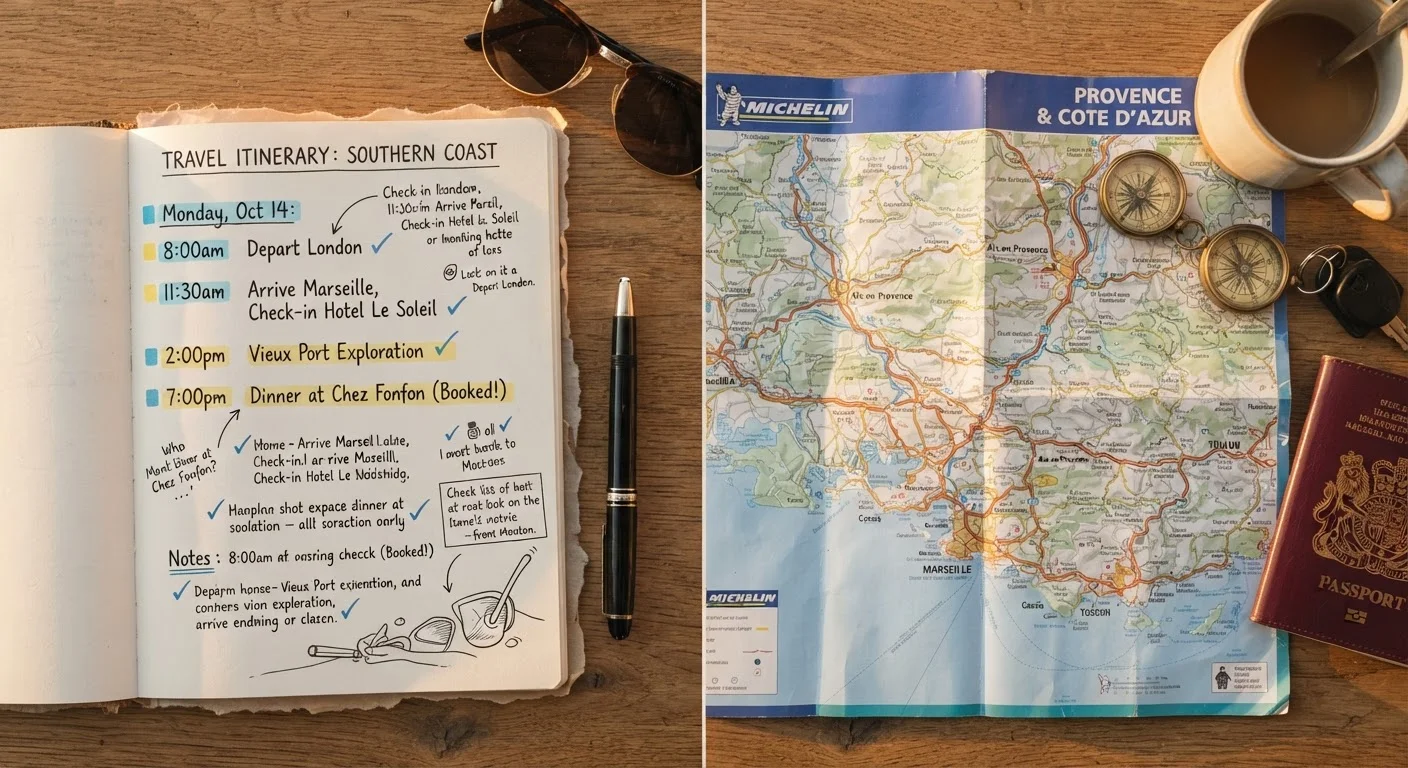
Key Takeaways
Option A
Rigid Itinerary
The structured, pre-planned approach to every travel day.
Best for: Travelers with limited time, must-see bucket-list sites, or group trips requiring coordinated logistics.
Option B
Flexible Travel Plan
The open-ended framework that adapts as you go.
Best for: Solo travelers, longer trips, or anyone who values spontaneity and local discovery over scheduled efficiency.
If you have limited vacation days and high-priority sites to cover
Rigid Itinerary
Pre-booking tours, timed entries, and transport eliminates guesswork and ensures you see what matters most within a compressed window.
If you're traveling solo for two weeks or more
Flexible Travel Plan
Longer timelines absorb detours gracefully, and solo travelers can pivot quickly without coordinating with others.
If you're planning a group trip with four or more people
Rigid Itinerary
Shared logistics fall apart without structure; confirmed reservations and set meeting points prevent the coordination breakdowns common in group travel.
If your destination is remote or has limited infrastructure
Rigid Itinerary
Scarce transport links and limited accommodation availability in remote areas reward advance planning over improvisation.
If you want to experience a destination like a local rather than a tourist
Flexible Travel Plan
Unscheduled time lets you follow a recommendation from a neighbor, linger at a neighborhood market, or take a detour that no guidebook lists.
What Each Approach Actually Means
A rigid itinerary is a day-by-day, often hour-by-hour schedule with confirmed reservations, timed entry tickets, and predetermined routes. Every meal window, museum visit, and transit connection is mapped in advance. A flexible travel plan, by contrast, establishes anchor points — usually outbound and return flights plus lodging — but leaves most of each day open for in-the-moment decisions.
Neither term means what the extremes suggest. A rigid itinerary doesn't have to be minute-by-minute military scheduling, and a flexible plan isn't simply showing up at a destination with no preparation at all. The real distinction is how much decision-making happens before versus during the trip.
For a deeper look at what goes into building either kind of schedule, our guide on how travel itineraries actually work walks through the structural choices involved.
| Criterion | Rigid Itinerary | Flexible Travel Plan |
|---|---|---|
| Decision-making timing | Mostly before departure | Mostly during the trip |
| Best trip length | Short trips (2–7 days) | Longer trips (10+ days) |
| Group size suitability | Groups of 3 or more | Solo or pairs |
| Handles disruptions | Poorly — cascading delays | Well — easily redirected |
| Access to high-demand sites | Strong — pre-booked entry | Weaker — may sell out |
| Spontaneous discovery | Limited | High |
| Budget control | Predictable costs upfront | Variable — needs a ceiling |
| On-trip stress level | Low if plan holds; high if disrupted | Low for adaptable travelers; high for planners |
The Case for Planning Every Detail in Advance
Structured itineraries deliver their clearest value when time is the constraining resource. A traveler with five days in a city can't afford to spend a morning searching for options — every hour of indecision costs them sightseeing. Pre-booked timed entries to high-demand attractions (common at major museums and archaeological sites) also often sell out weeks ahead, making advance planning a practical necessity rather than a stylistic preference.
Group trips are another scenario where structure pays off. Coordinating meals, transport, and activities across four or more people without a shared plan tends to unravel quickly. Our overview of group trip logistics covers exactly why coordination breaks down and how pre-trip planning prevents it.
The psychological benefit is real too: knowing where you're going next and that the reservation is confirmed reduces cognitive load during the trip itself. Many travelers report that a tight plan actually frees them to be present, because decisions have already been made.
72%
Travelers who pre-book at least one activity
According to Expedia Group's annual travel trends research, a large majority of leisure travelers confirm at least one activity or experience before departure.
1 in 3
Travelers who change plans mid-trip
Industry surveys consistently find that roughly a third of travelers deviate significantly from their original itinerary due to weather, local recommendations, or unexpected discoveries.
The Case for Leaving Room to Wander
Flexible planning trades efficiency for adaptability. A loose itinerary can absorb a delayed train, a spontaneous conversation with a local who points you toward an unmarked trail, or a weather shift that makes an outdoor plan unworkable. Rigid schedules treat disruptions as failures; flexible ones treat them as redirects.
Open-ended travel also tends to surface experiences that aren't bookable — the street festival you stumble into, the restaurant with no English menu that turns out to be the meal of the trip. These moments are structurally impossible in a fully scheduled day.
Budget travelers often find flexibility financially useful as well. When you're not locked into specific dates for every component, you can respond to price windows, choose free activities over paid ones, or extend a stay somewhere inexpensive. Our Travel on a Budget hub covers practical strategies for keeping costs low — many of which are easier to execute with a looser plan in place.
It's worth noting that flexibility requires a certain tolerance for uncertainty. If not knowing where you'll have dinner produces anxiety rather than excitement, an open itinerary may create more stress than it relieves.
How to Build a Hybrid That Works
For most travelers, the most practical answer isn't choosing one extreme — it's engineering a hybrid. The general principle: lock in the non-negotiables, leave everything else open.
- Book fixed-date logistics early: Flights, overnight trains, and accommodations carry real costs if missed. Confirm these in advance regardless of how flexible your daily plan will be. See what evidence suggests about booking flights for timing guidance.
- Identify two or three anchor experiences per destination: These are the sites or activities you'd genuinely regret missing. Reserve those; leave the rest of each day unscheduled.
- Build in one completely unplanned day per week of travel: A blank day isn't wasted — it's a pressure valve. It absorbs overruns, weather delays, or simply the desire to do nothing at all.
- Know your budget ceiling before you go: Flexibility without a spending framework can lead to costly improvisation. Our budgeting basics hub offers straightforward strategies for setting a workable travel spending limit.
The anatomy of a well-planned trip explores how these planning stages fit together — useful reading whether you lean structured or spontaneous.