

Key Takeaways
Electrical Panel (Breaker Box)
An electrical panel — also called a breaker box, load center, or service panel — is the metal box that distributes electricity from the utility line into the individual circuits throughout your home. It houses circuit breakers that automatically cut power to a circuit if too much current flows through it, protecting your wiring and appliances from damage. Think of it as a traffic controller for electricity: every outlet, light, and appliance in your home traces back to this one central hub.
Panels are rated by amperage capacity — typically 100A, 150A, or 200A in modern homes. Each breaker is rated for the maximum current its circuit can safely carry, commonly 15A or 20A for general household circuits.
What's Actually Inside the Box
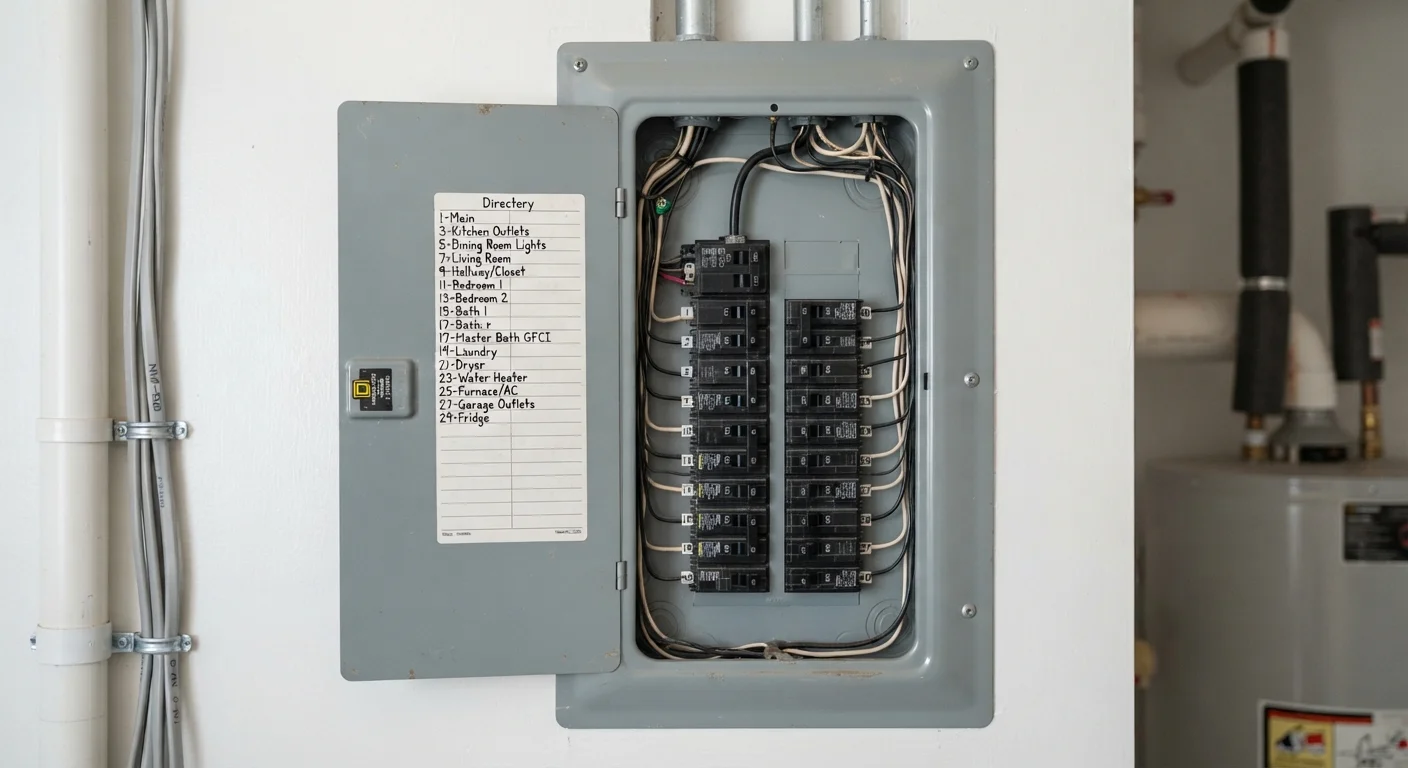
Open the metal door of your electrical panel and you'll see rows of switches — those are your circuit breakers. At the top sits the main breaker, a large double-pole switch that controls power to the entire panel. Below it, smaller breakers are arranged in two columns, each one controlling a separate circuit in your home.
Every breaker has a rating stamped on it — usually 15 or 20 amps for standard circuits. That number tells you how much current the circuit can carry before the breaker trips and cuts power automatically. This isn't a flaw; it's a safety feature designed to prevent wiring from overheating.
A well-maintained panel should have each breaker clearly labeled — "kitchen outlets," "master bedroom," "garage," and so on. If yours isn't labeled, that's worth correcting. Grab a helper, turn breakers off one at a time, and note which outlets or lights go dark. It takes an hour and makes every future repair or emergency easier to handle safely.
Label Your Breakers Now — Not During an Emergency
Taking an hour to properly label every breaker in your panel is one of the most useful things you can do as a homeowner. Write the labels in pencil first, confirm them with a helper walking through the house, then use permanent marker or printed labels. An accurately labeled panel saves time, reduces stress during outages, and helps any electrician who works on your home.
Reading the Panel: What the Labels and Numbers Tell You
Each breaker position corresponds to one circuit. In a typical home, you'll find dedicated circuits for high-draw appliances — the refrigerator, electric range, dryer, and HVAC system often each have their own breaker. General-purpose circuits serving multiple outlets share a breaker, which is why plugging too many power-hungry devices into the same room can trip one.
The main breaker's amperage rating tells you the total capacity of your panel. A 100-amp panel was once common and is still found in many older homes, but it can be pushed hard by today's loads — multiple large appliances, home offices, and electric vehicle chargers all add up. A 200-amp service is now the standard recommendation for new construction and major remodels.
51%
Home fires attributed to electrical failures
According to the U.S. Fire Administration, electrical fires account for a significant share of residential fires annually, with wiring and equipment failures among the leading causes.
200A
Standard panel capacity for new homes
Most new residential construction in the U.S. now uses 200-amp service panels to accommodate modern appliance loads, home offices, and EV charging infrastructure.
25–40 years
Typical lifespan of a residential breaker panel
Industry guidance generally suggests panels be evaluated by a licensed electrician after 25–40 years of service, or sooner if signs of wear or inadequate capacity appear.
If you're noticing the same breaker trips repeatedly, that circuit is being asked to carry more current than it was designed for. The solution isn't to swap in a higher-rated breaker — that can actually create a fire hazard by allowing wires to overheat. The right fix is to redistribute the load or have an electrician add a dedicated circuit.
What Homeowners Can Safely Do — and What They Can't
Resetting a tripped breaker is a completely normal homeowner task. So is labeling circuits, keeping the panel area clear of storage, and knowing where your main shutoff is in an emergency. These are basic household skills, not electrician territory.
Everything else inside the panel is a different story. Adding breakers, replacing the panel, running new wiring, or modifying existing circuits involves working with components that carry live voltage even when individual breakers are off. Mistakes can cause electrocution, fires, or code violations that create problems when you sell your home.
Most panel-related work also requires a permit and inspection under local building codes. This isn't bureaucratic inconvenience — it's how communities verify that the work was done safely. See our guide to navigating home repairs for practical advice on when to call a licensed professional and how to work through the process.
Permits Matter for Electrical Work
In most U.S. jurisdictions, adding circuits, upgrading a panel, or making significant electrical modifications requires a permit and inspection by a local code official. Unpermitted electrical work can complicate home sales, void homeowner's insurance claims, and — most importantly — create hidden hazards. Always ask your electrician about permit requirements before work begins, and verify requirements with your local building department.
When to Call an Electrician Right Away
Some signs around your electrical panel are not things to wait on. Contact a licensed electrician promptly if you notice any of the following:
- A burning smell or visible scorch marks near the panel
- The panel box or breakers feel warm or hot to the touch
- You hear buzzing, crackling, or humming from inside the panel
- Breakers won't stay reset or trip immediately after resetting
- Lights flicker throughout the house, not just in one room
- Your home still uses fuses rather than breakers
Older panels — particularly certain brands manufactured decades ago — have known safety records that prompted widespread industry concern. If your home is more than 30 years old and the panel has never been evaluated, a licensed electrician's inspection is a reasonable investment. If you're also thinking about adding smart home devices that rely on stable, sufficient power, understanding your panel's capacity is a practical starting point — see our overview of smart home devices for beginners for more context on power requirements.
This article is for general informational purposes only. Electrical work involves serious safety risks. Always consult a licensed electrician for any work beyond basic breaker resets, and verify local permit requirements before any panel modifications.