

Key Takeaways
Option A
Everyday Stress
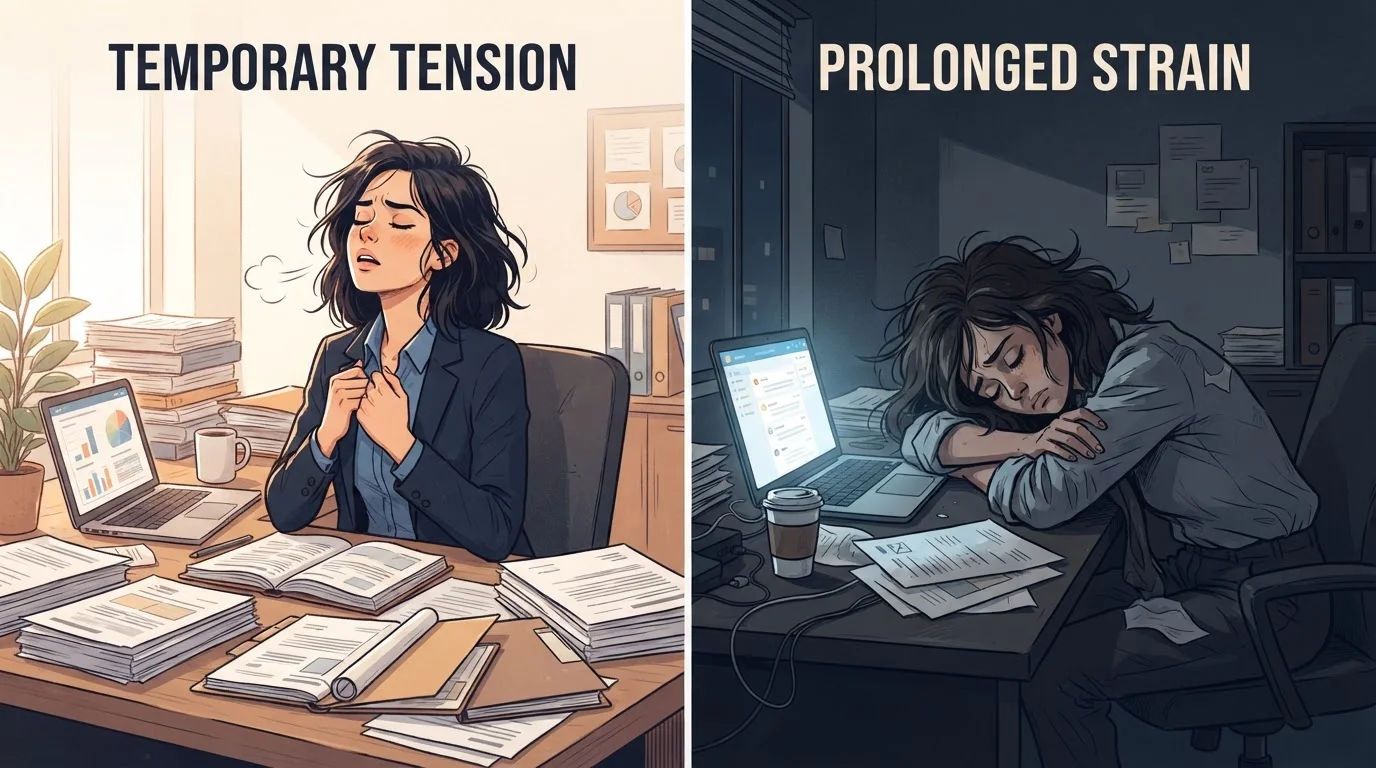
The normal, temporary pressure that comes and goes.
Best for: Understanding short-term tension tied to specific events or deadlines that resolves once the situation passes.
Option B
Chronic Stress
Persistent strain that lingers long after the trigger fades.
Best for: Recognizing when ongoing pressure has built up to a point that affects your health and daily functioning.
If your stress is tied to a specific deadline or event
Everyday Stress
Short-term tension that resolves after the trigger passes is normal and generally manageable with rest, exercise, and basic self-care.
If you've felt on edge or exhausted for weeks with no clear relief
Chronic Stress
Persistent, unrelenting stress needs more deliberate attention — including a conversation with a doctor or mental health professional.
If you're noticing physical symptoms alongside your stress
Chronic Stress
Recurring headaches, digestive trouble, or poor sleep alongside prolonged tension suggest the body's stress response has shifted from temporary to sustained.
What Makes Stress 'Everyday' in the First Place
Stress is a normal biological response. When you face a challenge — a work deadline, a difficult conversation, a crowded commute — your body activates its stress response to help you cope. Heart rate rises, attention sharpens, energy mobilizes. Once the moment passes, everything settles back down.
This kind of stress is often called acute stress. It's tied to a specific trigger, it's time-limited, and it generally doesn't leave lasting damage. Most adults deal with it regularly without it becoming a problem. In fact, modest amounts of short-term stress can actually sharpen focus and motivation, according to general psychophysiology research.
The key feature of everyday stress isn't that it's mild — it can feel intense in the moment. What makes it "everyday" is that it resolves. The presentation ends, the argument settles, the deadline passes. Your nervous system catches a break.
| Criterion | Everyday Stress | Chronic Stress |
|---|---|---|
| Duration | Hours to a few days | Weeks to months |
| Trigger | Specific, identifiable event | Ongoing or unclear source |
| Recovery | Full relief once trigger passes | Little to no relief between stressors |
| Physical symptoms | Temporary (racing heart, tension) | Persistent (fatigue, headaches, poor sleep) |
| Impact on daily life | Minimal once resolved | Ongoing disruption to work, relationships, health |
| Typical response | Rest, self-care usually sufficient | Professional support often beneficial |
When Stress Stops Being Temporary
Chronic stress is what happens when the stress response never fully switches off. The trigger may be ongoing — a difficult job situation, financial strain, caregiving responsibilities, a troubled relationship — or it may be that your system has stayed in high-alert mode even after the original cause faded.
Duration is the defining feature. General medical guidance suggests stress that persists for several weeks or months, with little to no relief, crosses into chronic territory. Importantly, it doesn't have to feel dramatic. Low-grade, background tension that simply never lets up is still chronic stress — and its effects on the body accumulate over time.
For a closer look at what that accumulation actually does inside the body, see our overview of chronic stress and long-term health.
Duration, Not Intensity, Is the Key Marker
A common misconception is that chronic stress must feel overwhelming. In reality, stress can be relatively mild in moment-to-moment intensity and still qualify as chronic if it's unrelenting. Think of it less like a wave and more like a tide that never fully goes out. That steady, low-level activation of the body's stress systems is what researchers associate with longer-term health effects.
Physical and Behavioral Signals Worth Noticing
One practical way to tell the two apart is to pay attention to your body between stressful moments. With everyday stress, you generally feel like yourself once the pressure lifts. With chronic stress, the symptoms tend to linger — or build — independent of any particular trigger.
Common physical signs that stress may have become chronic include:
- Persistent fatigue even after adequate sleep
- Frequent headaches or muscle tension, especially in the neck and shoulders
- Digestive changes — nausea, upset stomach, or irregular bowel habits
- Getting sick more often than usual (a sign of immune suppression)
- Difficulty falling or staying asleep
Behavioral shifts matter too. Withdrawing from people you normally enjoy, losing interest in activities that used to feel rewarding, leaning more heavily on alcohol or food for relief — these patterns are worth taking seriously. The signs your mental health may need more attention checklist covers these indicators in more detail.
It's also worth noting that chronic stress and anxiety can overlap in how they feel. For more on how to tell them apart, see anxiety vs. everyday worry.
77%
Adults reporting physical stress symptoms
According to the American Psychological Association's Stress in America survey, a large majority of adults report experiencing physical symptoms they associate with stress.
3 in 10
Adults describing stress as extreme
The APA's Stress in America research has consistently found that a notable share of U.S. adults rate their stress levels at extreme or high on a standard scale.
What to Do With This Information
If your stress sounds more like the everyday variety — connected to identifiable triggers and followed by genuine recovery — practical self-care approaches are a reasonable place to start. The complete picture on managing stress covers a range of approaches, from daily habits to longer-term resilience strategies.
If your stress sounds more like the chronic kind — persistent, physically felt, affecting your relationships or work — self-care alone may not be enough. That's not a failure; it's simply a signal that your body needs more support than rest and breathing exercises can provide. Speaking with a primary care doctor or a licensed mental health professional is a reasonable and practical next step. They can assess what's going on and help you figure out a path forward that fits your life.
Both the Mental Wellness hub and the Physical Health hub have accessible resources that can help you build a fuller picture of your overall well-being.
This article is for general informational purposes only and does not constitute medical advice. If you are concerned about your stress levels or overall health, please consult a qualified healthcare professional.