

Key Takeaways
Our Verdict
Collision and comprehensive coverage protect against entirely different risks, and most drivers benefit from carrying both when their vehicle holds meaningful value. As a car ages and its market value falls, the math on maintaining those coverages shifts — making it worth reassessing periodically rather than letting policies renew on autopilot.
| Best for | Recommended |
|---|---|
| Drivers with financed or leased vehicles | Both comprehensive and collision coverage (typically required by lender) |
| Owners of newer or higher-value paid-off vehicles | Both comprehensive and collision coverage |
| Owners of older, low-value paid-off vehicles | Consider dropping one or both; evaluate deductible vs. vehicle value |
| Drivers in areas with high theft, severe weather, or heavy wildlife activity | Comprehensive coverage is especially worth keeping |
The Core Difference: What Triggers Each Coverage
These two coverage types are bundled together so often that many drivers assume they're essentially the same thing. They're not — they respond to completely different situations.
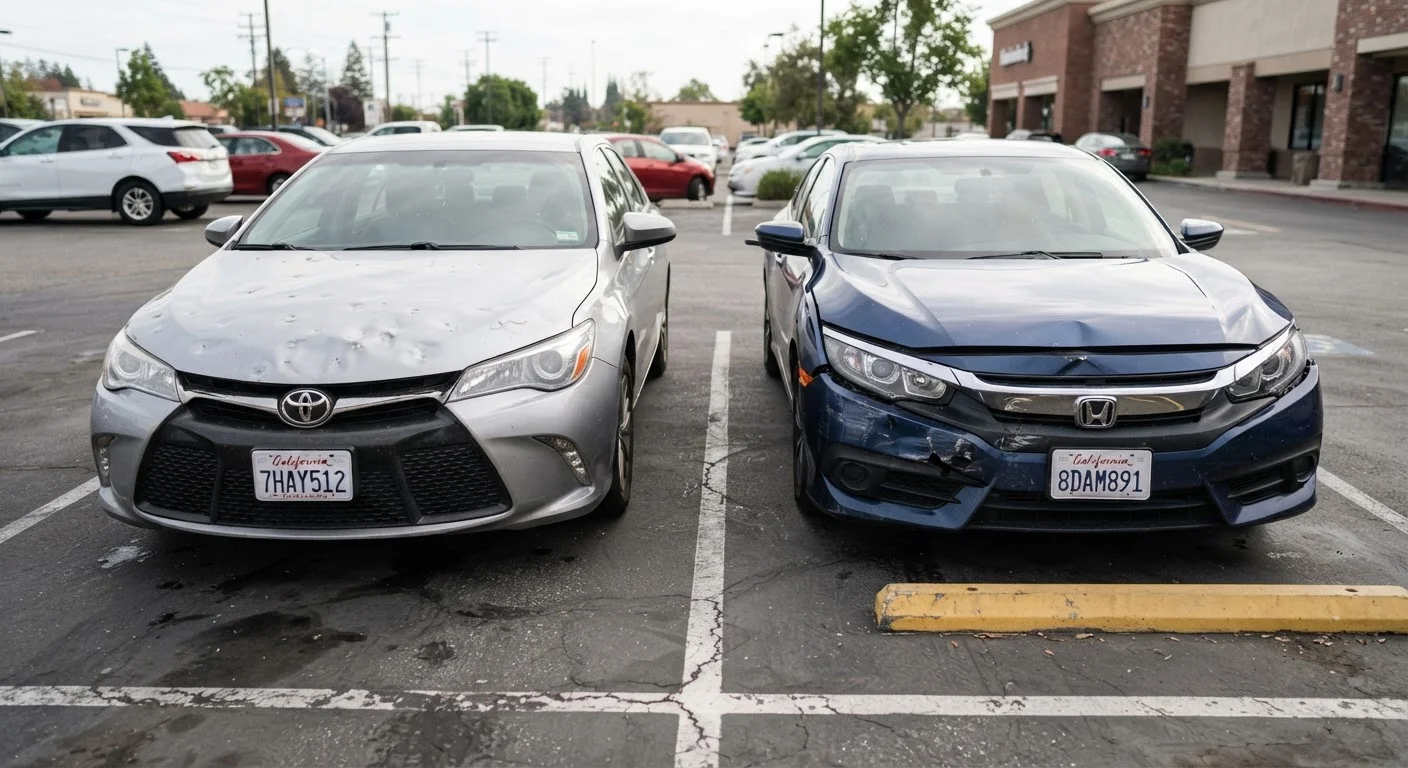
Collision coverage applies when your vehicle makes physical contact with something: another car, a guardrail, a telephone pole, or even a pothole that causes damage. It doesn't matter who's at fault. If your car is moving and hits something — or something moving hits your parked car — collision is the relevant coverage.
Comprehensive coverage handles losses that happen without a collision. Think of it as the "everything else" bucket: hail, flooding, fire, falling tree branches, vandalism, theft, or hitting a deer. These are events largely beyond a driver's control, and that's the key distinction. If a storm crushes your roof, that's comprehensive. If you back into a pillar in a parking garage, that's collision.
A simple way to remember it: collision involves your car moving and making contact; comprehensive involves damage from the world acting on your stationary (or moving) vehicle through forces other than a crash.
How Deductibles and Payouts Work
Both coverage types work the same way structurally: you choose a deductible — commonly $250, $500, or $1,000 — and your insurer pays the remaining covered loss up to your vehicle's ACV (actual cash value).
A higher deductible lowers your premium but means more out-of-pocket cost when you file a claim. A lower deductible costs more monthly but reduces your exposure after a covered loss. Neither choice is universally correct — it depends on your cash reserves and how risk-tolerant you are.
One important nuance: if your car is declared a total loss (repair costs exceed the vehicle's ACV), the insurer pays the ACV minus your deductible. This is why coverage becomes harder to justify on older vehicles — if your car is worth $4,000 and you carry a $1,000 deductible, your maximum payout is $3,000. If your annual premium for that coverage is $600, you're paying a significant percentage of the potential benefit each year.
| Comprehensive Coverage | Collision Coverage | |
|---|---|---|
| What triggers a claim | Non-collision events: weather, theft, fire, animals | Your car striking another vehicle or object |
| Fault required? | No — covers regardless of fault | No — covers regardless of fault |
| Legally required? | No (lenders may require it) | No (lenders may require it) |
| Common deductible range | $100–$1,000 | $250–$1,000 |
| Payout cap | Vehicle's actual cash value minus deductible | Vehicle's actual cash value minus deductible |
| Most relevant for | High-theft areas, severe weather regions | Frequent drivers, urban/highway driving |
When Lenders Make the Decision for You
If you're financing or leasing a vehicle, the choice may not be entirely yours. Most lenders and leasing companies require you to carry both collision and comprehensive coverage for the duration of the loan or lease. This protects their financial interest in the vehicle — if the car is destroyed, they want assurance they'll recover the remaining loan balance.
Some lenders also require gap coverage — a separate add-on that pays the difference between what you owe and what the car is worth if those figures diverge (which they often do early in a loan when depreciation outpaces payoff). Gap coverage works alongside comprehensive and collision; it doesn't replace them.
Once a loan is paid off, the lender's requirements disappear. That's a natural moment to reassess your coverage levels — particularly if the vehicle has aged considerably. For a deeper look at how ownership structure affects your overall vehicle costs, see our guide to buying vs. leasing.
Review Coverage When Your Car Is Paid Off
The moment your auto loan is fully paid is a smart time to call your insurer and request a breakdown of what you're paying for collision and comprehensive separately. Compare those figures against your vehicle's current market value. You may find the math still justifies keeping both — or you may find one coverage no longer pencils out. Either way, knowing the numbers puts you in control.
Running the Numbers on an Older Vehicle
The general rule of thumb is to compare your annual premium for each coverage against the realistic payout you'd receive after your deductible. If the annual cost of collision coverage is more than 10% of your car's current market value, dropping it becomes financially reasonable for many drivers — though this isn't a guarantee that dropping coverage is the right move for your situation.
You can look up your vehicle's approximate market value through resources like the NADA Guides or similar valuation tools. Then ask your insurer to break out the cost of collision and comprehensive separately from your overall premium — most will provide this on request.
Keep in mind that dropping coverage means accepting the full financial risk of those scenarios yourself. If a hailstorm totals your car, you'd pay out of pocket for a replacement. That's a manageable risk for some drivers and an unacceptable one for others, depending on their financial cushion. This kind of decision fits naturally into a broader personal finance review — the same discipline that applies to building savings and managing debt.
~78%
Insured drivers carrying collision coverage
According to the Insurance Information Institute, roughly 78% of insured U.S. drivers carry collision coverage, making it one of the most common optional add-ons.
~80%
Insured drivers carrying comprehensive coverage
The Insurance Information Institute also reports that approximately 80% of insured drivers carry comprehensive coverage, slightly more than those with collision alone.