

Key Takeaways
Our Verdict
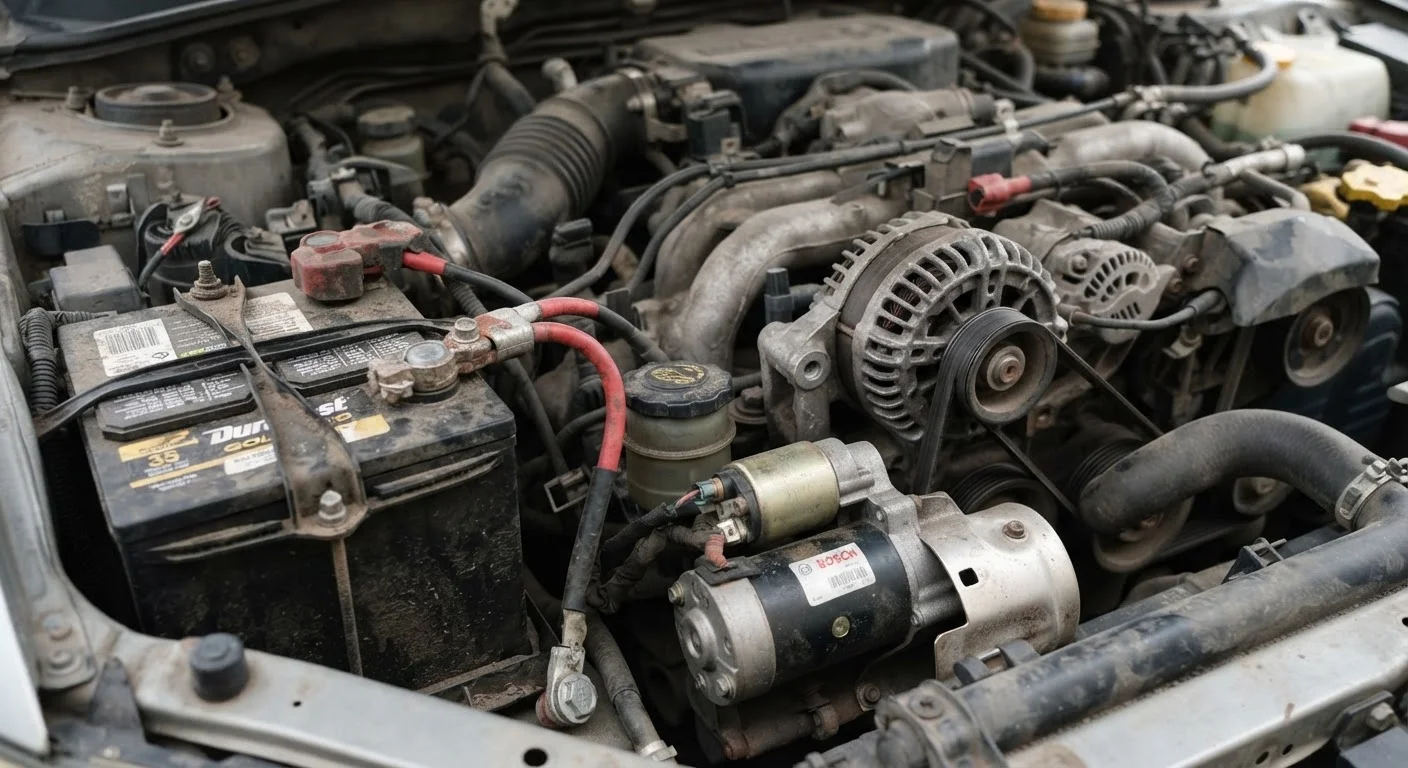
Battery, alternator, and starter failures each produce recognizable patterns. Matching the symptom to the component — rather than guessing — avoids unnecessary repairs. Free testing at auto parts stores makes that diagnosis accessible to any driver.
| Best for | Recommended |
|---|---|
| Car that won't crank at all and you hear a single click | Inspect the starter motor |
| Slow cranking, dim lights, or warning light after sitting overnight | Test the battery first |
| Engine starts but dies shortly after, or battery repeatedly goes flat | Have the alternator tested |
| Multiple electrical oddities alongside a no-start condition | Full charging system test covering all three components |
What Each Component Actually Does
Think of the three parts as a relay team. The battery is the stored-energy reserve — a lead-acid (or, in newer vehicles, absorbed glass mat) unit that holds enough electrical charge to start the engine and power electronics when the engine is off. It doesn't generate electricity; it stores it.
The alternator is the generator. Once the engine is running, the alternator — driven by a belt off the crankshaft — converts mechanical energy into electricity. It simultaneously recharges the battery and powers every electrical system while you drive: lights, climate control, infotainment, and more.
The starter motor is the muscle. When you turn the key or press the start button, the starter draws a large burst of current from the battery to spin the engine fast enough for combustion to take over. It operates for only a few seconds, but it draws more current in that time than almost any other component in the vehicle.
Because all three are linked, a failure in one often creates symptoms that look like a failure in another — which is exactly why misdiagnosis is so common.
Spotting the Symptoms: A Side-by-Side Look
Each component fails in its own recognizable way. Knowing the pattern is the first step toward an accurate diagnosis.
| Battery | Alternator | Starter | |
|---|---|---|---|
| Primary role | Stores electrical energy | Generates electricity while running | Cranks the engine at startup |
| Typical failure symptom | Slow or no crank, dim lights | Battery warning light, repeated dead battery | Single click or no response with good battery |
| When it fails | Usually after sitting or in cold weather | While driving or over several days | At the moment of startup only |
| Jump-start response | Often resolves temporarily | Engine may die after cables removed | No effect if starter motor is seized |
| Average lifespan | 3–5 years | 7–10 years | 100,000–150,000 miles |
| DIY difficulty | Low to moderate | Moderate | Moderate to high |
One important caveat: a failing alternator can drain a healthy battery over time, so you may replace the battery only to find the new one dead within days. If your battery keeps going flat, test the alternator before assuming the battery is simply old.
How to Confirm the Diagnosis Without Special Tools
The good news: you don't need an automotive engineering degree to narrow this down.
- Free store testing. Most major auto parts retailers will test your battery and alternator at no charge using a dedicated load tester. This takes about ten minutes and gives you a printed result — not a guess.
- The jump-start test. If a jump-start gets the engine running and it stays running normally, the battery is likely the culprit. If the engine dies again shortly after the cables are removed, the alternator may not be charging.
- Listen at startup. A rapid clicking sound when you turn the key usually means the battery lacks enough charge to engage the starter. A single loud clunk, or no sound at all despite a charged battery, more often points to the starter relay or the starter motor itself.
- Watch the dashboard. A battery-shaped warning light that illuminates while driving is the alternator's distress signal in most modern vehicles. Don't ignore it — driving with a failing alternator can leave you stranded.
Keep a Simple Record of Your Battery Age
Most batteries are stamped with a manufacture date on the case. If yours is approaching four years old and you're experiencing any electrical oddities, proactive testing is worthwhile — especially before winter. Cold temperatures significantly reduce battery capacity and are the most common trigger for battery-related no-start events.
For a broader look at which car tasks you can handle yourself versus when to call a professional, see our guide to DIY car maintenance.
Replacing the Right Part — and What It Typically Involves
Battery replacement is generally the most straightforward of the three. In most vehicles it involves disconnecting the negative terminal first, removing a hold-down bracket, and reversing the process with the new unit. That said, some modern vehicles store critical settings (power window positions, radio presets, transmission adaptation data) in volatile memory — consult your owner's manual or a mechanic before disconnecting if you're unsure.
Alternator replacement is more involved. It typically requires removing the drive belt and may mean working around other components depending on engine layout. It's a job many experienced DIYers handle, but it's also one where a mistake can damage the electrical system. If you're not comfortable, this is a reasonable task to hand to a shop.
Starter replacement varies widely by vehicle. On some engines the starter is easily accessible; on others it's buried under intake manifolds. Labor cost, not just parts cost, often drives the total bill for starter work.
You may also be surprised to learn that some beliefs about batteries — like needing to "condition" a new one with a full discharge — don't hold up. The car ownership myths that cost drivers money article covers several of these misconceptions worth setting aside.
This article is for general informational purposes only. For diagnosis or repair of your specific vehicle, consult a qualified mechanic.